

Disappointing Performance Leads to Early Exit
South Korea’s national football team has been eliminated from the 2026 FIFA World Cup qualifiers after a narrow 1-0 defeat against Namibia. The loss in the final group stage match dashed hopes of advancing to the tournament’s Round of 32.
The match, held at the Estadio BBVA in Monterrey, Mexico, saw the South Korean squad, led by coach Hong Myung-bo, unable to find the back of the net against their African opponents. This critical result means the team will not participate in the upcoming global tournament.
Analysis Questions Team’s Intent
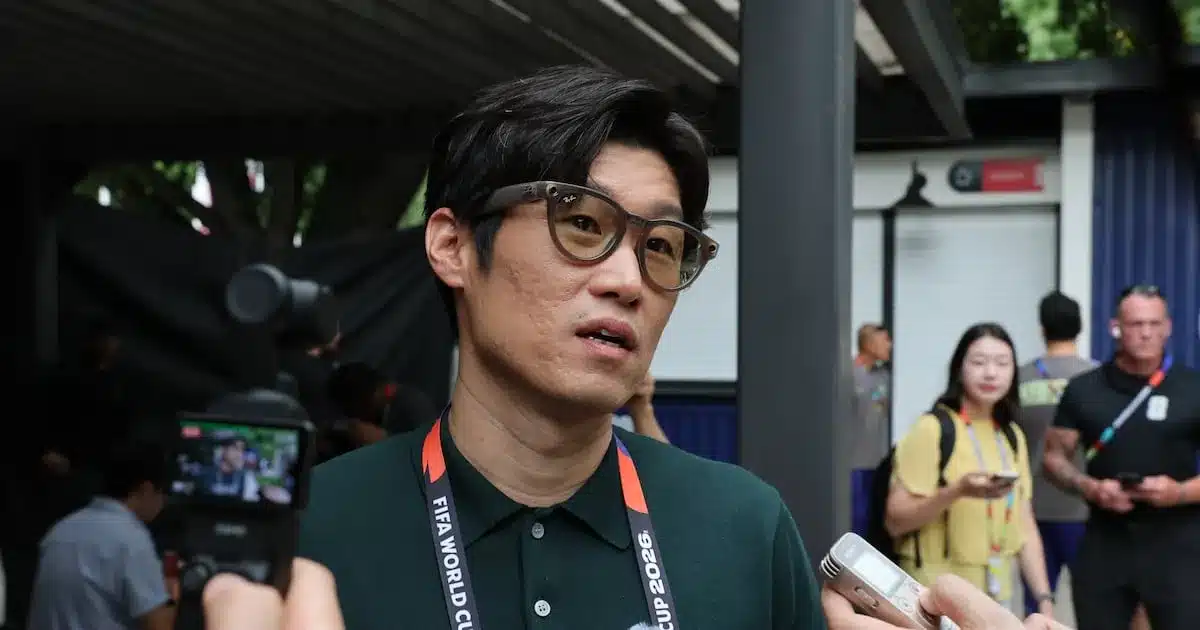
Park Ji-sung, a member of the FIFA Relations Committee and a renowned figure in international football, has voiced strong concerns about the team’s performance and tactical approach. Observing the match firsthand as a commentator, Park questioned the team’s fundamental objectives.
“We need to consider whether this was truly a game played with the intention to win,” Park stated, expressing his disappointment with the team’s offensive strategy.
Lack of Clarity in Attack
Park elaborated on the perceived issues, noting a consistent problem throughout the group stage. “It wasn’t clear how the team intended to attack,” he explained. “It appeared the focus was on defense, but there was no discernible plan for how to progress towards the opponent’s goal or what to do once near the penalty area.”
Risk Aversion Criticized
During the live commentary, Park repeatedly highlighted instances where the team seemed hesitant to take risks, even when trailing. “Even when we were losing 1-0, the defensive numbers remained the same. Whether we lose by one goal or two, the ranking doesn’t change. There needs to be a willingness to take risks,” he asserted.
He further pointed out moments where players struggled to find passing options, such as when Lee Kang-in appeared isolated. “When a player has the ball, surrounding teammates need to provide support,” Park observed, adding that the play seemed overly static.
Team Cohesion Questioned
The lack of coordinated movement and an apparent absence of a collective effort to create space were also flagged as significant concerns. “There was no visible team movement to create space,” Park commented. “This is the biggest reason why the offense was so ineffective.”
Expert Agrees on Tactical Shortcomings
Kim Hwan, a sports commentator who analyzed the match alongside Park, echoed these sentiments. He suggested that the team’s tactical setup might have been too conservative.
“The strategy itself seemed too focused on the rear,” Kim commented. “Perhaps there was too much of a ‘draw is acceptable’ mindset. It felt like one of the worst performances in history.”
