

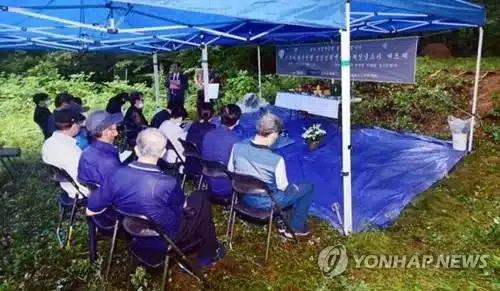
A court has ruled that the state must compensate over 70 surviving relatives approximately 2.9 billion Korean Won (roughly $2.1 million USD) for civilian deaths that occurred in the Gimpo region during the Korean War. This landmark decision became final on March 10th, as neither side appealed the ruling.
Gimpo Civilian Massacre Compensation Ordered
According to judicial records, the Civil Division 14 of the Seoul Central District Court, presided over by Judge Jeong Ha-jeong, issued a partial victory in a lawsuit filed by relatives, including a Mr. Im, against the state. The court recognized 2.92 billion Korean Won of the 4.91 billion Korean Won sought by the plaintiffs as compensation.
In determining the compensation amount, the court considered precedents from similar state compensation cases. The damages were calculated based on 100 million Won for the deceased individual, 50 million Won for a spouse, 10 million Won for a child, and 5 million Won for a sibling.
Historical Context of the Gimpo Incident
The plaintiffs are relatives of civilians who were killed by police and civil defense forces during the Korean War in Gimpo, Gyeonggi Province. Investigations by the Truth and Reconciliation Commission indicate that between September 1950 and January 1951, following the UN forces’ recapture of Seoul, police and civil defense personnel under the Gimpo Police Station identified residents as suspected collaborators or their family members and carried out mass executions without due process.
The Truth and Reconciliation Commission determined in August 2023 that these individuals were killed due to the exercise of state authority, issuing a formal finding of truth.
Court’s Justification for Compensation
The court stated that the deaths of the individuals, who were killed by state-affiliated military and police forces without justifiable cause and without due process, constituted a clear illegal act that infringed upon the right to life and the right to receive compensation, as guaranteed by the constitution. The court acknowledged that the deceased and their surviving relatives likely experienced extreme mental anguish.
Considering the nature of historical events where direct evidence is difficult to obtain after a significant passage of time, the court found the findings and truth determination reports the Truth and Reconciliation Commission to be persuasive evidence.
Addressing Statute of Limitations Claims
The court also rejected the state’s argument that the statute of limitations had expired for some of the victims. While some victims had their truth determination findings issued by the first Truth and Reconciliation Commission in 2008, the court ruled that the revised Act on the Discovery of Truth and Restoration of Activities for Post-War Victims, which took effect in February, allows for compensation lawsuits to be filed within three years of the act’s enforcement for cases where a truth determination had already been made.
The court concluded, “The truth determination for this case was made in August 2023, and the plaintiffs filed their lawsuit in March 2024. Therefore, it cannot be considered that the plaintiffs’ right to claim compensation has expired.””
