

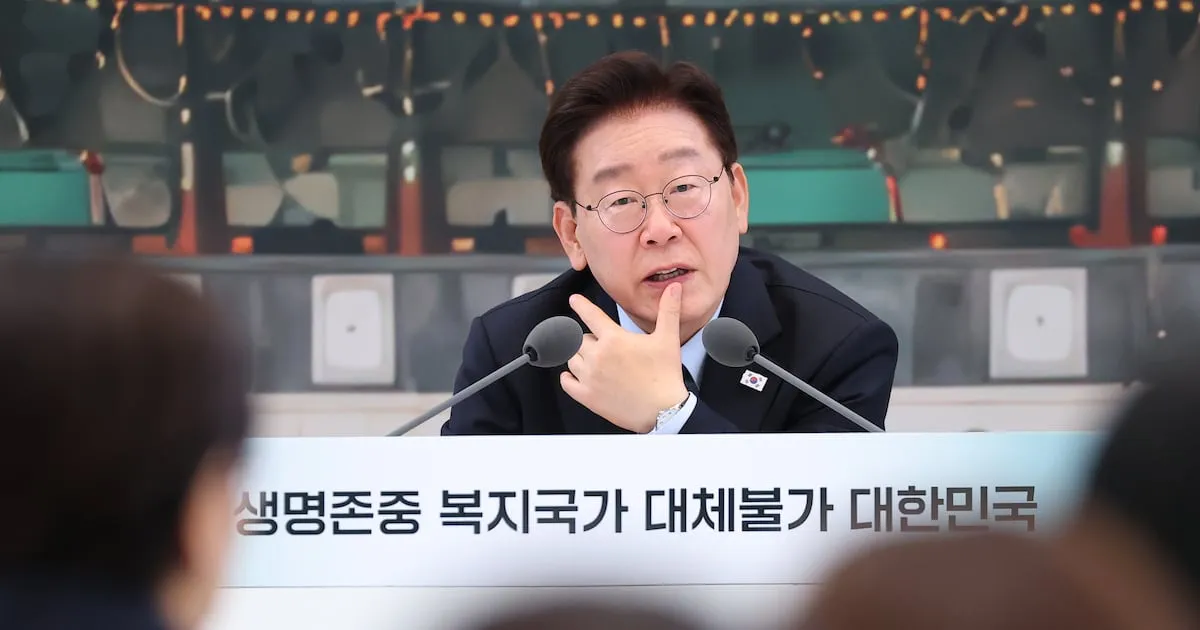
President Lee Jae-myung has emphasized the critical role of agriculture as a strategic industry for national security, advocating for a significant increase in farm subsidies. He articulated this position through a social media post, highlighting the necessity of bolstering support for the agricultural sector to ensure food self-sufficiency and sustain rural communities and farmers.
Agriculture as a Pillar of National Security
In his recent social media statement, President Lee declared agriculture a vital strategic industry essential for national security. He argued that maintaining a minimum level of agricultural production is imperative for national survival, even if it proves less economically efficient in certain scenarios. This perspective underscores the belief that a robust domestic agricultural capacity is fundamental to weathering potential crises and ensuring the nation’s resilience.
The President pointed out that while many countries provide substantial agricultural subsidies, South Korea’s support levels lag considerably behind those of other developed nations. This disparity, he suggested, warrants a re-evaluation of current policies and a commitment to increased financial assistance for the sector.
Comparative Analysis of Agricultural Subsidies
To illustrate the gap in support, President Lee shared a post from Song Mi-ryeong, the Minister of Agriculture, Food and Rural Affairs. Minister Song’s post provided a comparative analysis of per-farm household subsidies, revealing a stark difference between South Korea and other leading agricultural economies.
According to the data shared by Minister Song, as of last year, the average annual agricultural subsidy per farm household in South Korea stood at approximately 5.19 million won. This figure is significantly lower when compared to the European Union, which provided 25.8 million won per farm household in 2023, and Japan, which offered 9.67 million won per farm household in 2024. This comparison serves as a key piece of evidence supporting the call for increased subsidies.
Details of the Subsidy Discrepancy
- South Korea: 5.19 million won per farm household (latest available year).
- European Union: 25.8 million won per farm household (2023).
- Japan: 9.67 million won per farm household (2024).
Minister Song’s detailed explanation, presented during a working-level briefing on the 16th, aimed to provide a clear picture of the current state of agricultural subsidies. The data highlights a substantial difference in the level of government support, prompting discussions about the adequacy of South Korea’s current agricultural policy framework.
Addressing Market Opening and Farmer Livelihoods
President Lee further emphasized the importance of supporting sectors that may face disadvantages due to market liberalization. As a nation that has opened its markets, he acknowledged the inevitability of trade agreements and the subsequent need to provide support to domestic industries, including agriculture, that are exposed to increased competition. This support, he stressed, is crucial to mitigate actual losses and ensure the viability of these sectors.
The President also touched upon the positive effects of rural development initiatives. He noted that basic income support in rural areas, coupled with increased agricultural subsidies, is beginning to yield positive results. Furthermore, he mentioned that the revitalization of rural areas has led to a surge in special rural taxes, contributing to increased financial resources for rural development.
The Economic Rationale for Subsidies
The argument for increased agricultural subsidies is rooted in the concept of strategic industry support. Unlike industries driven purely by market efficiency, agriculture is seen as a foundational sector with implications far beyond immediate economic returns. Ensuring a stable domestic food supply is a matter of national sovereignty and security, requiring government intervention to maintain production capacity.
The President’s remarks suggest a policy direction that prioritizes long-term national stability and resilience over short-term economic optimization. By advocating for higher subsidies, the administration aims to strengthen the agricultural sector’s ability to withstand external shocks, contribute to food security, and support the livelihoods of those working in the field. This approach aligns with global trends where governments recognize the strategic importance of agriculture in an increasingly unpredictable world.
Future Outlook and Policy Implications
The call for increased farm subsidies signifies a potential shift in South Korea’s agricultural policy. It indicates a growing recognition of the sector’s strategic importance and the need for more robust government support to ensure its sustainability and contribution to national security. The comparative data presented by Minister Song provides a strong basis for policy discussions and potential legislative action.
As the government considers these proposals, the focus will likely be on how to effectively implement increased subsidies to achieve the desired outcomes: bolstering food security, supporting farmers, and strengthening the rural economy. The success of these initiatives will depend on careful planning, targeted allocation of resources, and a sustained commitment to the long-term health of the agricultural sector.
In conclusion, President Lee Jae-myung’s strong advocacy for increased agricultural subsidies positions this issue as a key priority for his administration. By framing agriculture as a strategic national security industry, he aims to garner support for policies that will ensure a more resilient and self-sufficient food supply for the nation.
