

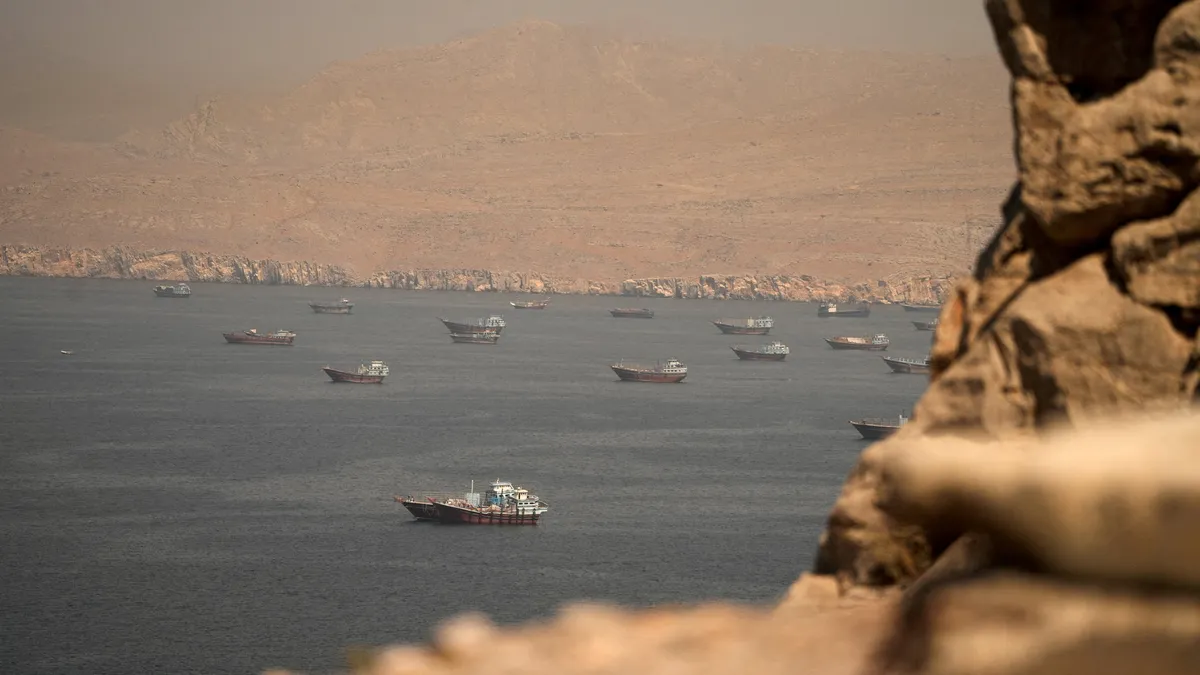
Tensions in the vital Strait of Hormuz have reached a critical point, with a commercial vessel sustaining damage from an unidentified projectile. The incident occurred on the evening of June 16th (local time) in waters approximately 19 nautical miles (35.2 km) east of Qesab, Oman. The United Kingdom Maritime Trade Operations (UKMTO) reported that the ship, while underway, was struck by the projectile, resulting in minor damage. Fortunately, there were no reported injuries.
The vessel is reportedly continuing its journey to its next destination. This latest attack marks the second reported incident of a ship being targeted in the vicinity of the Strait of Hormuz within a short span, with the UKMTO having alerted to a previous piracy-related situation just four days prior, on June 14th. The current event underscores the escalating military confrontation between the United States and Iran, which is vying for control over the strategic waterway.
Escalating Military Confrontation in the Strait of Hormuz
The Strait of Hormuz, a critical chokepoint for global oil supplies, has become the epicenter of heightened military tensions. The recent attack on a civilian vessel, occurring amidst direct military exchanges between the U.S. and Iran, suggests that the conflict is spilling over into the maritime domain, directly impacting commercial shipping. This situation has raised significant concerns about the safety of navigation and the potential disruption of international trade routes.
The United States has been conducting military operations against Iran for over a week, initiating actions on June 11th. In response, Iran has signaled its intent to retaliate against U.S. military bases in the Middle East. This tit-for-tat exchange has created a volatile environment, increasing the risk of miscalculation and further escalation.
Background of the Strait of Hormuz Tensions
The Strait of Hormuz, a narrow waterway connecting the Persian Gulf to the Gulf of Oman, is of immense strategic and economic importance. Approximately 20-30% of the world’s oil, including crude oil and refined products, passes through this strait daily. Its strategic significance has made it a focal point for geopolitical rivalries and military posturing in the region for decades.
Recent escalations can be traced to a series of events and policy decisions by both the U.S. and Iran. The U.S. has been increasing its military presence in the region, citing concerns over Iranian threats to maritime security and freedom of navigation. Iran, in turn, has accused the U.S. and its allies of provocative actions and has vowed to defend its interests and territorial waters.
The U.S. military actions, which began on June 11th, are part of a broader strategy to deter perceived Iranian aggression. These actions have included increased naval patrols, military exercises, and the deployment of advanced weaponry. The U.S. has stated its commitment to ensuring the unimpeded flow of commerce through the Strait of Hormuz and has called on international partners to join in safeguarding this vital shipping lane.
Iran’s response has been characterized by strong rhetoric and retaliatory measures. The Iranian government has condemned the U.S. military actions as acts of aggression and has warned of severe consequences should its interests be threatened. The targeting of U.S. military assets and bases in the region has been a stated objective of Iran’s retaliatory strategy. This has led to a dangerous cycle of actions and reactions, increasing the likelihood of direct confrontation.
Impact on Global Oil Markets and Shipping
The instability in the Strait of Hormuz has immediate and far-reaching implications for global energy markets. Any disruption to the flow of oil through the strait can lead to significant price volatility and supply shortages worldwide. International oil prices often react sharply to news of heightened tensions or incidents in this region.
Commercial shipping companies and maritime insurers are closely monitoring the situation. The increased risk associated with transiting the Strait of Hormuz can lead to higher insurance premiums, rerouting of vessels, and potential delays in shipments. This adds to the overall cost of oil transportation and can impact the global economy.
The UKMTO plays a crucial role in disseminating information and issuing warnings to mariners operating in the region. Its reports help ships take necessary precautions and avoid potential threats. The agency’s alerts serve as an early warning system, enabling vessels to adjust their routes or take defensive measures when necessary.
International Reactions and Diplomatic Efforts
The international community has expressed deep concern over the escalating tensions in the Strait of Hormuz. Several nations have called for restraint and de-escalation from both the U.S. and Iran. Diplomatic channels are reportedly active, with various countries attempting to mediate and prevent a full-blown conflict.
The United Nations has also weighed in, urging all parties to exercise maximum restraint and adhere to international law. The potential for a wider regional conflict stemming from the Strait of Hormuz is a significant worry for global stability. International efforts are focused on de-escalating the current military standoff and finding a diplomatic resolution to the underlying issues.
The current situation highlights the delicate balance of power in the Middle East and the critical importance of maintaining freedom of navigation in international waters. The safety of commercial shipping and the stability of global energy supplies remain paramount concerns for the international community.
Conclusion
The recent attack on a commercial vessel in the Strait of Hormuz underscores the severe risks posed by the ongoing military standoff between the United States and Iran. As tensions continue to simmer, the potential for further incidents and broader conflict remains high. The international community faces the urgent task of promoting de-escalation and seeking diplomatic solutions to ensure the safety of this vital global shipping lane and prevent wider instability in the region.
