

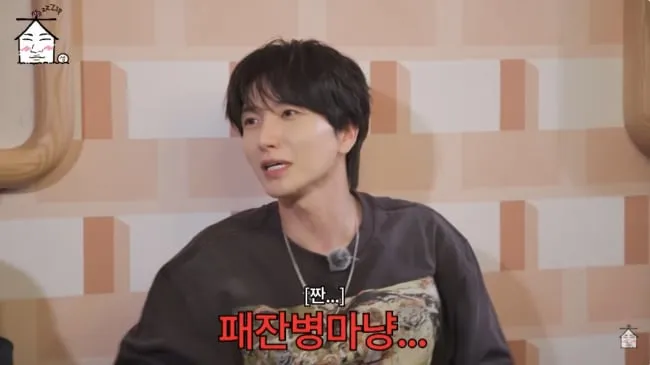
Leeteuk, the leader of the iconic K-pop group Super Junior, recently reminisced about the intense and disciplined training period the members endured before their debut. Appearing on the YouTube channel ‘Jipdaeseong’ (meaning ‘collection of greatness’), Leeteuk shared anecdotes that painted a vivid picture of their early days, highlighting the unique dynamics and strict environment that shaped the group.
Super Junior’s Internal Dynamics and Leadership
During the episode, titled ‘Super Junior’s Ultimate Compilation | Jipdaeseong ep.116 Leeteuk X Heechul’, Leeteuk discussed the group’s internal harmony, drawing a contrast with other idol groups. He humorously suggested that BIGBANG, known for their strong individual presence, likely avoided internal conflicts because their youngest member, Daesung, was exceptionally well-behaved. In contrast, Leeteuk explained that Super Junior members often had to be mindful of Kyuhyun, the group’s maknae (youngest member).
Leeteuk elaborated on this, recalling instances where members would check Kyuhyun’s reactions before attending performances. “We would check on Kyuhyun. If he wasn’t watching a performance, or if he was engrossed in something like ‘Death Note’, we’d see posts on social media,” Leeteuk recounted. “As soon as I saw that, I’d text Kyuhyun, apologizing, saying, ‘I’m sorry, your part wasn’t quite right.'” This lighthearted exchange, met with laughter, underscored the unique position Kyuhyun held within the group’s hierarchy.
Kim Heechul, another prominent member, chimed in, adding to the humor by suggesting they should apologize to the youngest member. He further revealed that Kyuhyun himself wasn’t always the picture of perfection in his early days, mentioning that Yesung had once hit Kyuhyun due to his difficult behavior.
Member Conflicts and a ‘Military’ Approach
The conversation then delved deeper into the group’s past conflicts. When Daesung asked if Yesung had a ‘fighter’s spirit’, Leeteuk confirmed it, and Heechul boldly stated, “We all fought.” Leeteuk acknowledged the frequent disagreements, explaining that the group’s environment differed significantly from the typical idol training at SM Entertainment.
“Our Super Junior was different from SM’s ‘Gyeol’ (a term often referring to a group’s formation or concept),” Leeteuk explained. “We were quite rough.” He attributed this to the prolonged trainee period, which led to exhaustion and a sense of defeatism among the members. “Because our trainee period was so long, we were tired and felt a bit defeated,” he said.
Leeteuk recalled his first meeting with their manager, who asked, “Do you want to succeed?” Driven by a strong desire to debut, Leeteuk insisted on being debuted immediately. The manager then proposed a ‘military-style’ approach: “If that’s the case, listen to me and let’s go our ‘military way’.”
The Leader’s Burden: Shared Responsibility
This ‘military-style’ training meant the members faced unprecedented scolding. Leeteuk, as the leader, bore a significant portion of this burden. He explained the principle of shared responsibility: “If another member made a mistake, and I’m the leader, then the leader gets scolded too. That’s why I got scolded a lot.” This philosophy ensured that the entire team was accountable, fostering a sense of unity even amidst the harsh discipline.
Kim Heechul offered a contrasting perspective on his own trainee experience. “Mine was different,” he stated. “I joined SM through ‘Rookies’ and debuted with ‘Don’t Don’, a very successful song. I trained together with Super Junior members.” Heechul admitted to struggling with the concept of shared punishment due to his individualistic nature. “I was too individualistic. If someone else made a mistake, I’d think, ‘Why do I have to get scolded too?’ I couldn’t understand it then.”
Despite the rigorous training and occasional conflicts, Super Junior went on to become one of K-pop’s most enduring and successful groups. Leeteuk’s reflections offer a rare glimpse into the demanding realities of idol training and the leadership principles that helped forge a strong bond among the members, ultimately contributing to their long-lasting career.
