

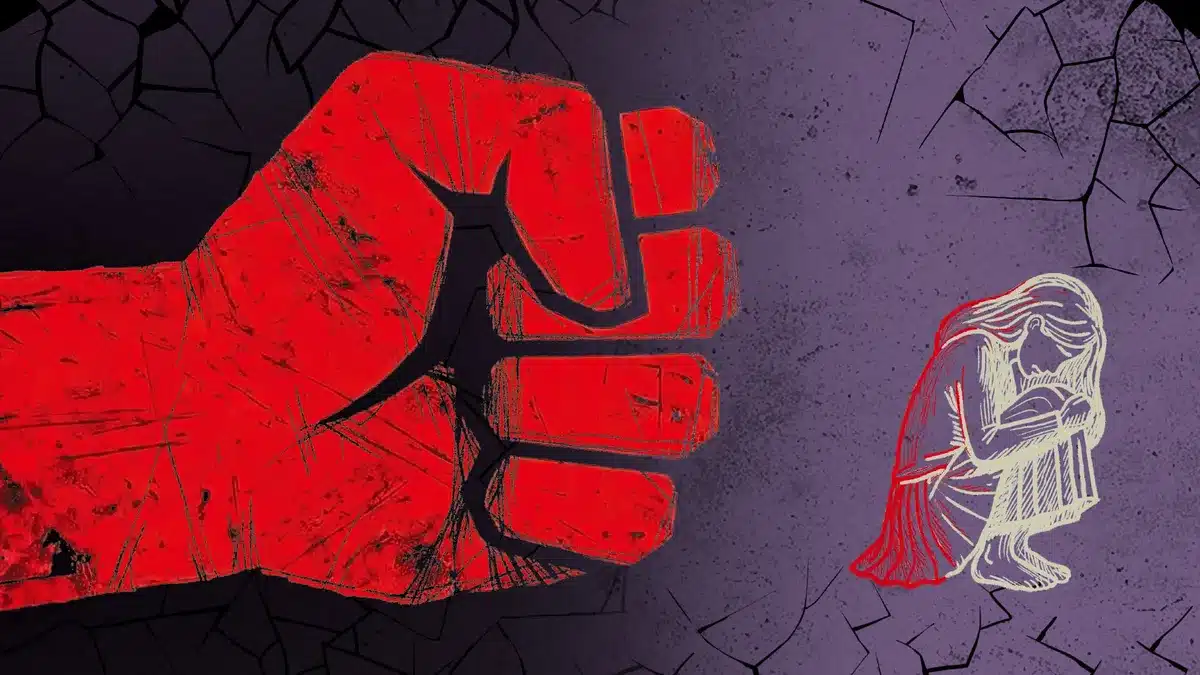
A significant majority of domestic violence victims, approximately 90%, find themselves unprotected by the legal system, according to recent data. While reports of domestic violence have surged, the rate at which perpetrators are prosecuted has plummeted, leaving victims vulnerable and often without recourse.
Rising Domestic Violence, Falling Prosecution Rates
In recent years, there has been a concerning increase in reported incidents of domestic violence and other forms of relationship-based crime. Official statistics reveal that domestic violence reports climbed by 32.3% over a four-year period, reaching 289,368 cases last year. However, during the same timeframe, the number of arrests or detentions of perpetrators saw a sharp decline of 26.9%, falling to 33,635 cases last year.
This stark contrast means that the prosecution rate, measured against the number of reported incidents, has been more than halved. In 2021, the rate stood at 21.1%, but by last year, it had dropped to a mere 11.6%. This dramatic decrease indicates that for every ten victims who report domestic violence, only one can expect legal action to be taken against the abuser.
Why Victims Are Left Unprotected
Several factors contribute to this alarming trend:
- Fear of Retaliation: Many victims initially report abuse but later withdraw their complaints or agree to drop charges during the investigation process due to fear of reprisal from the abuser.
- Non-Prosecution Policies: Relationship-based crimes, including domestic violence, often fall under laws where prosecution is contingent on the victim’s explicit desire for legal action. This “dual prosecution” aspect means that if the victim does not wish to pursue charges, the case cannot proceed.
- Delayed Protective Orders: Obtaining a restraining order or protection order can take days or even weeks. During this period, perpetrators may continue to harass or threaten victims.
- Ineffective Enforcement: Even when protective orders are issued, immediate and decisive action against violators is often lacking. This can lead to a cycle of harassment, including constant messaging and stalking around the victim’s residence.
One police official noted, “Even when we respond to a scene, victims frequently ask us to leave, citing their fear of retaliation.” This highlights the pervasive fear that prevents many from seeking justice.
Escalation to Severe Crimes
The failure to adequately address relationship-based crimes can have devastating consequences, sometimes escalating to violent offenses like homicide. In one instance last March, a woman in Gyeonggi Province was murdered by her live-in partner. She had reported repeated incidents of domestic violence and stalking, but authorities did not intervene decisively, leading to the tragic outcome.
In another case, a daughter who was defending her mother from domestic abuse ended up committing a violent act, resulting in the death of her father-in-law. The victim in this case had endured months of abuse and stalking but had not reported it to the police due to fear of retaliation.
The Cycle of Abuse and Fear
The legal process itself can be a source of further distress for victims. The time it takes to obtain restraining orders and the perceived lack of immediate protection can prolong the suffering. Perpetrators often exploit these delays, continuing their harassment through calls, texts, and even physical presence near the victim’s home.
Experts emphasize that the current system needs significant reform to better protect victims of relationship-based crimes. The complexity and length of legal procedures, coupled with the fear of retribution, create a challenging environment for those seeking safety and justice.
Statistics on Relationship-Based Crimes
The number of reported cases for the three main types of relationship-based crimes – domestic violence, dating violence, and stalking – has steadily increased:
- 2021: 290,094 cases
- 2022: 325,964 cases
- 2023: 339,804 cases
- 2024: 356,988 cases
- 2025: 439,456 cases
The figures show a 51.3% increase over the past four years, underscoring the growing scale of the problem and the urgent need for more effective intervention and prosecution strategies.
A Victim’s Perspective
One victim, who wished to remain anonymous, recounted her harrowing experience: “I reported multiple incidents and sought legal protection, but the process was incredibly complex and daunting. It’s hard enough to endure the abuse, but then to navigate such a difficult system felt overwhelming.” She added, “I question whether the investigations and legal proceedings truly grasp the suffering victims endure.”
She has been receiving counseling and psychological support, but the trauma lingers. The fear of the abuser’s retaliation remains a constant concern, highlighting the long-term impact of domestic violence and the challenges in achieving true safety and recovery.
