

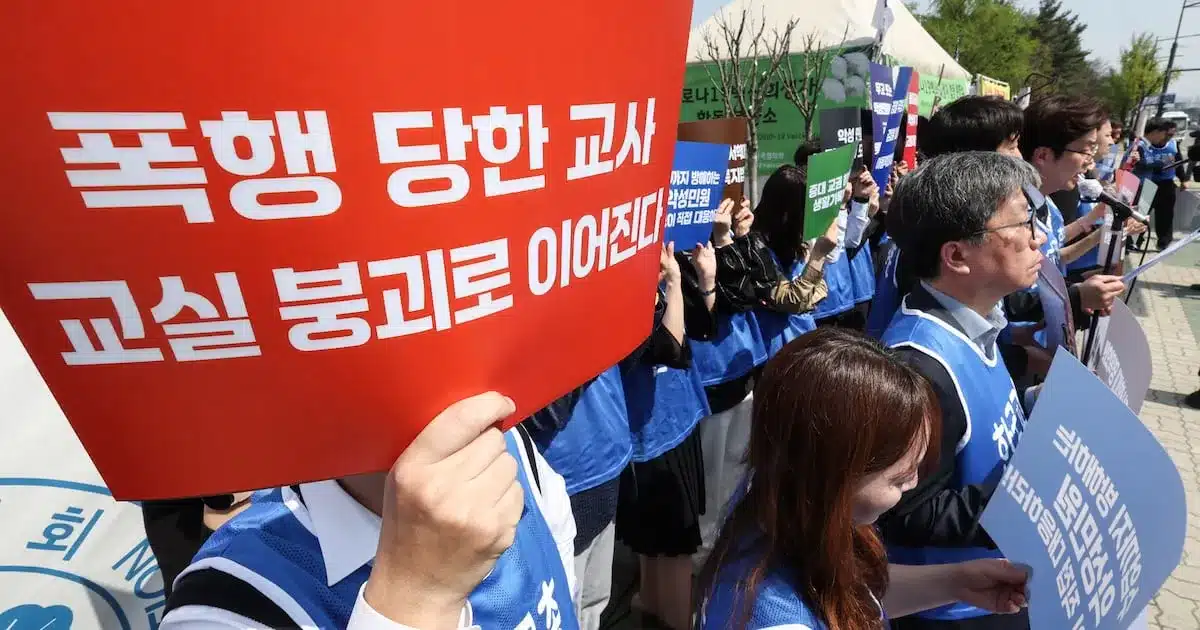
Amidst growing societal attention on teacher rights, spurred by the Netflix drama ‘The School Nurse Files,’ South Korea’s Ministry of Education and newly appointed superintendents are accelerating efforts to establish dedicated centers for protecting educators. Teacher organizations are emphasizing the need for a “one-stop support system” directly empowering teachers and superintendents, rather than mere “showcase organizations.”
Ministry Collaborates on Establishing Centralized Protection Unit
The Ministry of Education is currently in discussions with relevant government bodies, including the Ministry of Public Administration and Security and the Ministry of Economy and Finance, to set up a central organization that will oversee and manage all matters related to the protection of teachers’ rights. A ministry official indicated that the process of establishing such an organization is expected to take at least three months. The Minister of Education, Choi Eun-jin, has previously expressed strong support for this initiative, stating that “the establishment of central organizations for teacher rights protection by metropolitan and provincial offices of education, based on regional conditions and demand, is a highly desirable direction,” and has encouraged superintendents to pursue this goal.
New Superintendents Prioritize Teacher Protection Initiatives
Newly inaugurated superintendents have also made the establishment of teacher rights protection centers a key pledge. Lee Byeong-do, the Superintendent of Chungnam Office of Education, has designated the creation of a “Teacher Rights Protection Task Force” as his first official act. Kang Sam-young, the Superintendent of Gangwon Office of Education, has prioritized the establishment of a “Special Education Support Center” and a “Teacher Rights Protection Support Team” within the superintendent’s office to provide immediate assistance to teachers facing difficulties. Kwon Soon-ki, the Superintendent of Gyeongnam Office of Education, has pledged to establish a “Teacher Rights Protection 118 System” to provide immediate response to infringements on teachers’ rights and offer legal and psychological support. Ahn Min-seok, the Superintendent of Gyeonggi Office of Education, has also announced plans to establish an “Educational Activities Protection Center” directly under the superintendent’s office, vowing to “respond swiftly and firmly to any acts that infringe upon educational activities.”
Teacher Organizations Advocate for Effective, Integrated Support
Teacher organizations are stressing the importance of creating organizations that are genuinely effective. Jang Seung-hyuk, a spokesperson for the Korean Teachers’ and Educational Workers’ Union (KTU), argued that “to fulfill a control tower role, an organization at the national level, a ‘nation-level’ organization, must be established.” He added that “simply increasing the number of personnel will not be enough to resolve the crisis in public education.” Song Soo-yeon, chairperson of the Teachers’ Solidarity, highlighted that “currently, the teacher rights protection functions of the education authorities are fragmented across various departments, causing difficulties for teachers.” She emphasized the need to “create a one-stop organization directly under the superintendent’s authority.”
Background: Rising Concerns Over Teacher Welfare
The push for these new organizations comes after a period of heightened public discourse surrounding the challenges faced by teachers. The Netflix series ‘The School Nurse Files,’ which touched upon issues of teacher rights, brought the matter to the forefront of social discussion. This increased awareness has prompted the Ministry of Education and local education authorities to expedite the creation of robust support systems. The demand from teacher groups for a more integrated and effective approach underscores a desire for tangible solutions rather than symbolic gestures.
Future Outlook: A Comprehensive System for Teacher Support
The establishment of these new centers and systems aims to provide a more comprehensive and accessible framework for addressing the complex issues surrounding teachers’ rights and welfare. By consolidating resources and expertise, the goal is to ensure that educators receive timely and effective support, thereby fostering a healthier and more productive educational environment for all.
