

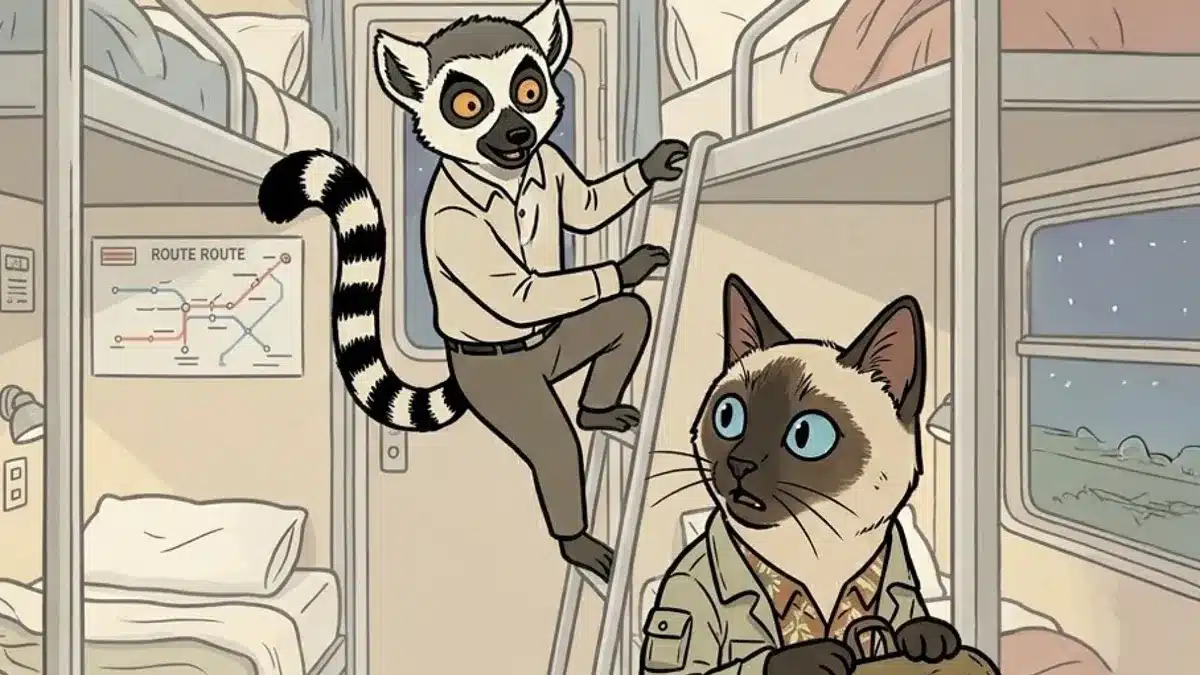
Navigating travel, especially by overnight train or ferry, often involves encountering specific vocabulary that can lead to humorous misunderstandings. One common point of confusion arises between the words ‘bed’ and ‘berth,’ which sound remarkably similar but have distinct meanings crucial for polite communication.
Understanding ‘Berth’ in Travel
Imagine being on an overnight train and a fellow passenger politely asks, “Do you mind if I take the upper berth?” If you’re unfamiliar with the term, you might mistakenly hear ‘birth’ and respond with confusion, perhaps thinking they’re asking about your birthday or birthplace. This is precisely what happened to one traveler who, upon hearing the question, replied, “No birth here! I was born in Seoul!”
The attendant, however, was inquiring about the sleeping space. A berth refers to a designated sleeping space, typically a bunk or compartment, found on trains, ships, or other forms of long-distance transport. It is distinct from a general ‘bed.’ The correct response in such a situation would be affirmative, such as “Of course, go ahead!” or “Not at all, go ahead!” When asked “Do you mind…?”, a ‘No’ or ‘Not at all’ signifies agreement.
Polite Requests and Interactions
When you need to request a lower berth due to luggage or physical discomfort, it’s essential to ask politely. Here are a few ways to phrase this:
- Basic: “Can I use the bottom bed?”
- Polite: “Would it be alright if I take the bottom bunk?”
- Considerate: “Do you mind if I take the lower berth?”
Beyond sleeping arrangements, travel often requires making small requests from fellow passengers or staff. Mastering these interactions can significantly enhance your journey:
Compartment Etiquette
- “Would you mind swapping berths?” (To request a change of sleeping space)
- “Could we dim the lights in this compartment?” (To adjust lighting)
- “Is it okay if I turn off the overhead light?” (To manage personal light use)
- “Is it okay if I charge my phone here?” (To find a charging spot)
- “Do you mind if I close the window blinds?” (To adjust privacy or light)
If you find these direct interactions awkward, consider inquiring about advance berth selection when booking tickets: “Is it possible to select my berth in advance?”
Requests to Crew
Train or ship staff can assist with various needs. Here are some polite ways to ask:
- “Is there a charging outlet near the berth?”
- “Could you store my large bag somewhere safe?”
- “Can I get an extra clean blanket, please?”
- “Could you wake me up thirty minutes before we arrive?”
- “Where can I find the attendant for this carriage?”
Seeking Accommodation and Services
The phrase “Is it okay if I ~?” is a versatile and polite way to seek permission for actions, especially from strangers. It translates to “Would it be alright if I…?” and is useful for requesting consent for behavior.
- “Is it okay if I put my luggage here?”
- “Is it okay if I recline my seat a little bit?”
- “Is it okay if I open the window for some fresh air?”
- “Is it okay if I take this seat?”
- “Is it okay if I turn on the reading light?”
- “Is it okay if I pass through?”
In hotels, understanding terms like ‘vacant’ is crucial. If a hotel front desk states, “I’m sorry, but your room is not vacant yet,” it means the room is not ready for check-in, as opposed to being a ‘vacation’ spot. This distinction is vital for clear communication.
Hotel Check-in Etiquette
- “What time is standard check-in?”
- “Is early check-in available today?”
- “Is there an extra charge for early check-in?”
- “Around what time do you think the room will be ready?”
- “Could you call my cell when the room is ready?”
If your room isn’t ready, a polite response like “No problem, I can wait” or “Oh, I see — no problem” can lead to better service, such as a complimentary drink coupon or a room upgrade.
Luggage Storage and Waiting
- “Can we leave our bags here until the room is ready?”
- “Could you store my luggage while I wait?”
- “Is there somewhere I can freshen up in the meantime?”
- “We will just hang out in the lobby — please let us know when it’s ready.”
The phrase “I was wondering if ~” is a highly polite and indirect way to make requests, softening the ask and making it harder to refuse. For example:
- “I was wondering if there’s a room with a better view available.”
- “I was wondering if we could get a late checkout.”
- “I was wondering if breakfast is included in the rate.”
- “I was wondering if you could recommend a good restaurant nearby.”
Understanding ‘Party’ in Service Contexts
Misunderstandings can also arise from common words used in different contexts. At a museum or restaurant, if an attendant asks, “Are you a party of two?” they are not inquiring about a social gathering but rather the number of people in your group. The word ‘party’ in this context means a group of people.
Correctly understanding and using these terms ensures smoother interactions during your travels. Whether it’s clarifying sleeping arrangements, making polite requests, or understanding service inquiries, mastering this travel English can make all the difference.
Group Inquiries
- Basic: “How many people are with you?”
- Polite: “Do you have company?”
- Considerate: “How many are in your party?”
When responding to such inquiries, simple answers like “Party of five” or “There are five of us” suffice. If waiting for others, you can clarify with “We’re waiting for two more people” or “Actually, we’re a party of five — two are on their way.”
Checking Wait Times and Tour Information
- “Is there a wait for the guided tour?”
- “Is there a wait for a table of four?”
- “How long is the wait to buy tickets?”
- “Is there a wait if we don’t have a reservation?”
- “How long does the guided tour take?”
- “What time does the next tour start?”
- “Is the tour offered in Korean?”
- “Is an audio guide included?”
General Inquiries During Sightseeing
- “Is photography allowed here?”
- “Could you repeat that? I didn’t quite catch it.”
- “Could you slow down a little? We’re having trouble keeping up.”
- “Is it okay if we step out early?”
By familiarizing yourself with these common phrases and their appropriate contexts, you can navigate travel situations with greater confidence and ease, ensuring a more enjoyable and less confusing experience.
