

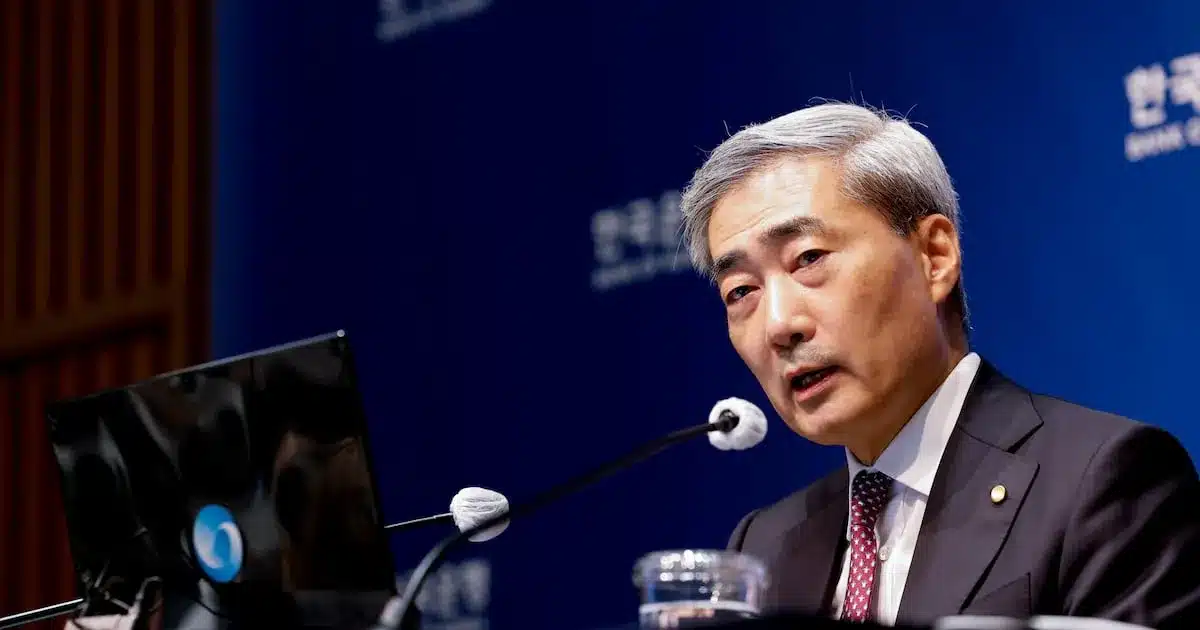
The Bank of Korea’s Monetary Policy Board is scheduled to convene on August 27th to decide on the benchmark interest rate. Following a quarter-point increase in July, which brought the rate to 2.75% for the first time in three and a half years, financial markets are closely watching whether the central bank will opt for another hike to combat persistent inflation.
Interest Rate Decision Looms for Bank of Korea
A survey of ten domestic securities firm experts conducted by a financial news outlet revealed a divided outlook. Five experts anticipate the Bank of Korea will raise the base interest rate by another 0.25 percentage points to 3% during the August meeting. Conversely, the other five experts predict that the central bank will maintain the current rate and defer any increase until October.
If the Bank of Korea implements a rate hike in August, it would mark the first time since October-November 2022 that the bank has raised interest rates for two consecutive months. This move would signal a continued commitment to taming inflation, a primary objective for the central bank.
Inflationary Pressures Driving Rate Hike Speculation
Experts who foresee an August rate increase point to the still-elevated level of inflation as the primary driver. While the consumer price index saw a slight moderation to 2.8% in July, down from over 3% in May and June, it remains above the Bank of Korea’s target of 2%. The Middle East conflict has contributed to global commodity price volatility, impacting domestic price levels.
Furthermore, the core inflation rate, which excludes volatile prices of oil and agricultural products, reached 2.6% in July. This figure represents the highest level since December 2023, indicating underlying inflationary pressures that the central bank is keen to address.
The Bank of Korea had previously raised the benchmark interest rate in October 2022, from 2.5% to 3%, to curb rising inflation. This was followed by another increase to 3.25% the subsequent month. The current economic climate, while showing some positive signs, presents a complex backdrop for monetary policy decisions.
Economic Indicators Offer Mixed Signals
Despite inflationary concerns, recent economic data has provided some positive signals that could influence the Monetary Policy Board’s decision. The preliminary estimate for South Korea’s gross domestic product (GDP) growth in the second quarter came in at 0.6%, exceeding the Bank of Korea’s May forecast of 0.2%. This stronger-than-expected growth was largely attributed to a rebound in the semiconductor industry.
In June, the country’s trade surplus reached a record high of $49.73 billion, marking an increase of over 20% from the previous month. This robust export performance, particularly in key sectors like semiconductors, suggests a degree of resilience in the South Korean economy.
However, some analysts argue that the current economic conditions may not fully warrant consecutive interest rate hikes. They suggest that with inflation showing signs of cooling and future price and growth figures yet to be released, a rate increase could potentially be deferred to October without significant repercussions.
Currency Stability as a Factor
Another factor potentially influencing the decision is the recent trend in the Korean Won-to-US Dollar exchange rate. The average exchange rate, which stood at 1,497.4 Won per Dollar in July, has since fallen to the 1,390 Won range. A stronger Won can help mitigate imported inflation, potentially reducing the immediate need for a rate hike.
The Bank of Korea’s decision will be closely scrutinized for its implications on economic growth, inflation control, and financial market stability. The board’s assessment of these competing factors will ultimately shape the future trajectory of monetary policy.
Historical Context of Rate Hikes
The Bank of Korea’s monetary policy actions are often guided by the need to maintain price stability while supporting sustainable economic growth. In the past, particularly during periods of high inflation, the central bank has not hesitated to adjust interest rates to achieve its objectives.
The period of October-November 2022 saw a similar pattern of consecutive rate increases, reflecting the bank’s proactive stance against inflationary pressures. The current situation, though influenced by different global and domestic factors, echoes the challenges faced by policymakers in balancing economic growth with inflation management.
The upcoming meeting on August 27th is therefore a critical juncture, with the Bank of Korea’s decision likely to provide significant insights into its economic outlook and its strategy for navigating the complex landscape of inflation and growth in the coming months.
