

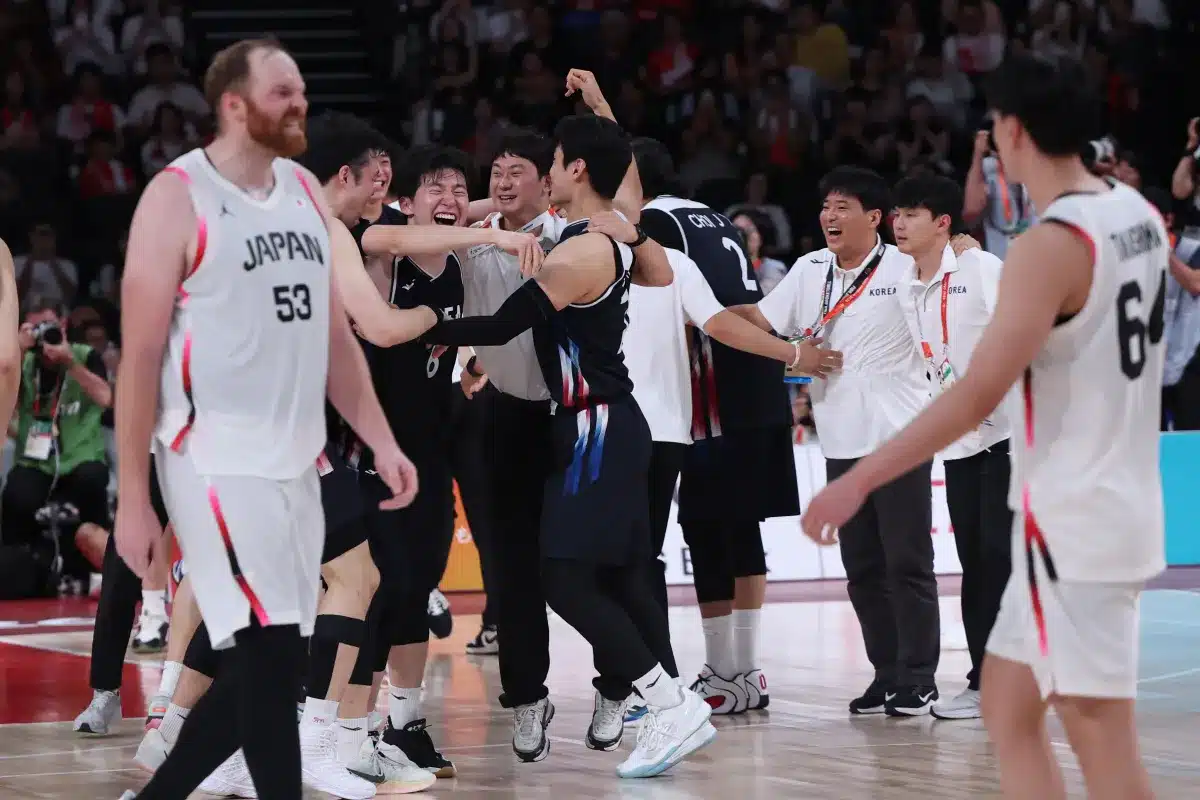
Discontent is brewing within Japan regarding the broadcast coverage of the 2026 Aichi-Nagoya Asian Games, specifically concerning the men’s basketball team. Following their silver medal win, a decision by a Japanese broadcaster to immediately switch to a pre-recorded football match has sparked significant backlash from fans and media alike.
Basketball Team Secures Silver Medal Despite Loss to South Korea
The Japanese men’s basketball team competed in the final of the 2026 Aichi-Nagoya Asian Games held at the Aichi International Arena. Despite a valiant effort, the team fell to South Korea with a score of 57-67. The Japanese squad, notably missing key players from their professional league, managed to reach the final, showcasing resilience. However, they were ultimately outplayed by a determined South Korean team, led by star player Lee Hyun-jung, and fell short of the gold medal.
Throughout the game, Japan struggled to contain the offensive prowess of the South Korean team. While Japan showed flashes of competitiveness, particularly in the first and second quarters, the gap in performance widened significantly in the latter half. South Korea’s Lee Hyun-jung was a standout performer, recording a double-double with 27 points and 18 rebounds, including five three-pointers. Japan’s defense struggled to effectively counter his impact, a recurring theme throughout the match.
Despite the loss in the final, securing a silver medal marked a significant achievement for the Japanese men’s basketball team. This accomplishment came after a challenging journey through the tournament, including an earlier defeat to South Korea in the group stage. The team demonstrated remarkable perseverance by overcoming that initial setback, defeating China in the semifinals to advance to the medal match.
Broadcaster’s Decision Sparks Outrage
The controversy arose immediately after the basketball final concluded. While the team celebrated their silver medal achievement, the broadcasting station TBS, which held exclusive rights to the event, controversially switched its live feed to a pre-recorded broadcast of a men’s football match between Japan and Kyrgyzstan. This decision was widely reported and criticized, with many questioning the timing and the perceived lack of respect for the basketball team’s accomplishment.
Higa Sports Web, a Japanese sports publication, reported on the incident, highlighting the public’s dissatisfaction. The outlet noted that while the basketball team had achieved a silver medal, a significant accomplishment after a 64-year wait for a final appearance, the broadcast immediately shifted focus. The report suggested that the broadcaster prioritized a recorded football match over post-game interviews with the basketball players.
Fans expressed their frustration on social media platforms. Many felt that the decision to cut away from the basketball team, especially after such a hard-fought silver medal win, was disrespectful. Comments included:
- “It’s a silver medal, even if they lost the game. To completely cut off the interviews is unbelievable.”
- “Did they think basketball is no longer important? They just switched to football.”
The criticism centered on the fact that the football match was a recorded broadcast, meaning it had already concluded. Critics argued that the broadcaster could have easily accommodated post-game interviews and reactions from the basketball team before transitioning to the football coverage, especially given the significant achievement of reaching the final after decades.
Broader Implications and Fan Sentiment
The incident has brought into focus broader discussions about the prioritization of sports within Japanese media coverage and the perceived value placed on different athletic disciplines. While basketball achieved a notable success at the Asian Games, the immediate shift to another sport, particularly a pre-recorded event, has led some to question the commitment of broadcasters to fully supporting and showcasing all medal-winning teams.
The Japanese men’s basketball team’s journey to the final, overcoming previous defeats and reaching a medal match for the first time in 64 years, was a narrative of resilience and dedication. The silver medal represented a significant step forward for the program. However, the subsequent broadcast decision overshadowed this achievement for many fans, leading to a sense of disappointment and a feeling that their efforts were not adequately recognized in the immediate aftermath.
Moving forward, the incident serves as a point of discussion regarding broadcast rights, media coverage strategies, and the importance of honoring athletic achievements in real-time. The strong negative reaction from fans underscores the deep connection they feel with their national teams and their expectations for comprehensive and respectful coverage of all sporting events, regardless of the specific sport.
The debate highlights the delicate balance broadcasters must strike between covering multiple events and providing adequate attention to significant achievements. For many, the immediate switch from a historic silver medal basketball final to a recorded football match represented a missed opportunity to fully celebrate and engage with the success of the Japanese athletes.
Conclusion
The controversy surrounding the broadcast of the men’s basketball final at the 2026 Aichi-Nagoya Asian Games underscores a significant disconnect between the athletes’ achievements and the media’s immediate response. While the Japanese team earned a commendable silver medal, the decision by TBS to abruptly switch to a pre-recorded football match ignited widespread fan criticism. This incident has prompted discussions about media priorities and the adequate recognition of sporting successes, leaving many fans questioning the broadcaster’s choices and the perceived value placed on the basketball team’s hard-won accomplishment.
