

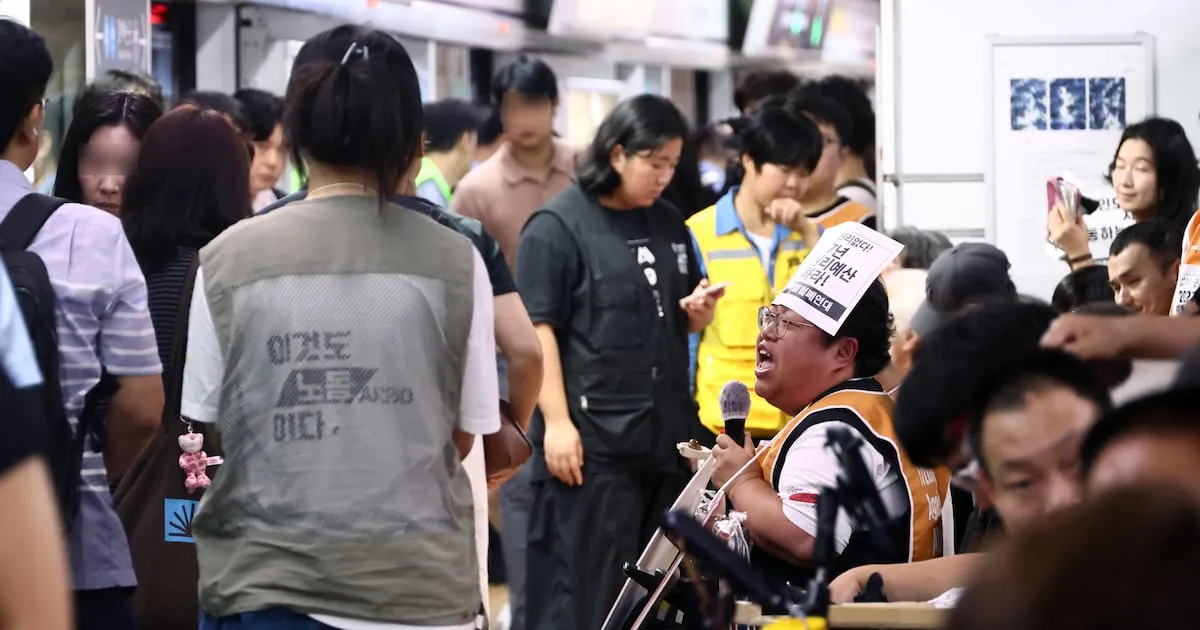
Two prominent youth labor organizations have strongly condemned the Seoul Metropolitan Council’s decision to completely eliminate the budget for the ‘Youth AI Utilization Project.’ The council also reinstated a controversial policy that recognizes participation in protests as paid work, a move that has drawn sharp criticism from these groups. The Seoul Transportation Corporation Youth Union and the Youth Action for Labor Reform issued a joint statement on November 14th, expressing their vehement opposition to what they termed the council’s “act of supporting violent protest groups while trampling on the future of youth.”
Seoul Council’s Budgetary Decisions Under Fire
The Seoul Metropolitan Council, dominated by the Democratic Party which holds 80 out of 118 seats, made significant budgetary decisions that have sparked outrage among youth advocacy groups. The ‘Youth AI Utilization Project’ budget, amounting to 5.625 billion won (approximately $4.1 million USD), was entirely scrapped. This project was designed to enhance the AI utilization capabilities of 500,000 young Seoul residents, aiming to support their education, employment, and entrepreneurial endeavors. The unions argue that this budget served as a crucial bridge for young people to develop essential skills for the future.
In addition to cutting the AI initiative, the council revived the ‘Rights-Centered Public Work’ policy. This policy, previously a subject of considerable debate and eventually abolished, allows for compensation for activities related to advocating for the rights of individuals with disabilities, including participation in rallies and campaigns. An investigation into the implementation of this policy in 2023 revealed that out of 17,228 recorded activities, over half (8,691) were related to assemblies, protests, and campaigns. Furthermore, approximately 95% of participants had experience in such activities.
Youth Unions’ Strong Condemnation
The Seoul Transportation Corporation Youth Union and the Youth Action for Labor Reform articulated their grievances in a joint statement, asserting that the council’s actions are a direct assault on the aspirations of young people. “Scrapping the budget intended for youth AI education and instead allocating funds to groups that engage in prolonged, illegal protests is an act of political violence that crushes the hopes of our youth,” the statement read. They characterized the council’s decision as a “political gamble” that prioritizes disruptive tactics over constructive development for the younger generation.
Song Si-young, the chairman of the Fair Labor Union, voiced particular concern over the reinstatement of the ‘Rights-Centered Public Work’ policy. He stated, “Company employees have suffered extreme damage due to the violent protests of the Disabled Persons’ Welfare Federation over the years. The Federation has ruthlessly trampled on public spaces despite repeated warnings.” Song added, “If the council reallocates funds to projects used for illegal protests, it is a betrayal of the public trust and a continuation of a harmful precedent.”
Contradictory Council Actions Highlighted
The youth organizations also pointed to the timing of the council’s decisions, noting that the budget cuts for the AI project occurred on the same day, November 11th, that a public hearing on ‘Seoul Youth Digital Rights Protection and AI Policy Support’ was being held. This juxtaposition was seen as a blatant contradiction and a sign of disrespect towards the youth.
“In the morning, they severed the budget for youth AI access, and in the afternoon, they discussed youth digital rights,” the unions stated. “This self-contradictory behavior could only arise from treating young people as mere political pawns.” They argued that such actions demonstrate a fundamental lack of understanding or regard for the genuine needs and potential of the youth demographic.
Demands for Reconsideration and Transparency
The protesting unions have put forth clear demands to the Seoul Metropolitan Council. Firstly, they are calling for the council to publicly disclose the specific reasons behind the complete elimination of the Youth AI budget. Secondly, they insist that the council fully reinstate the necessary funding in the 2027 budget. This would ensure that the AI utilization project can proceed as planned and fulfill its objectives.
Furthermore, regarding the controversial ‘Rights-Centered Public Work’ policy, the organizations demanded that any future proposals for its revival must include mechanisms to prevent bias in the implementing organizations. They also called for a system to verify the appropriateness and legitimacy of the duties performed under this policy. This aims to ensure that public funds are used responsibly and for genuine advocacy, rather than being exploited for political activism or protest.
Conclusion: A Call for Youth Investment
The dispute highlights a significant disconnect between the Seoul Metropolitan Council’s budgetary priorities and the expressed needs of its younger population. While the council has opted to cut funding for future-oriented AI education and reinstate a contentious policy related to protest compensation, youth labor groups are advocating for increased investment in programs that foster skills, employment, and innovation. The outcome of these demands will significantly impact the future development and opportunities available to the youth of Seoul.
