

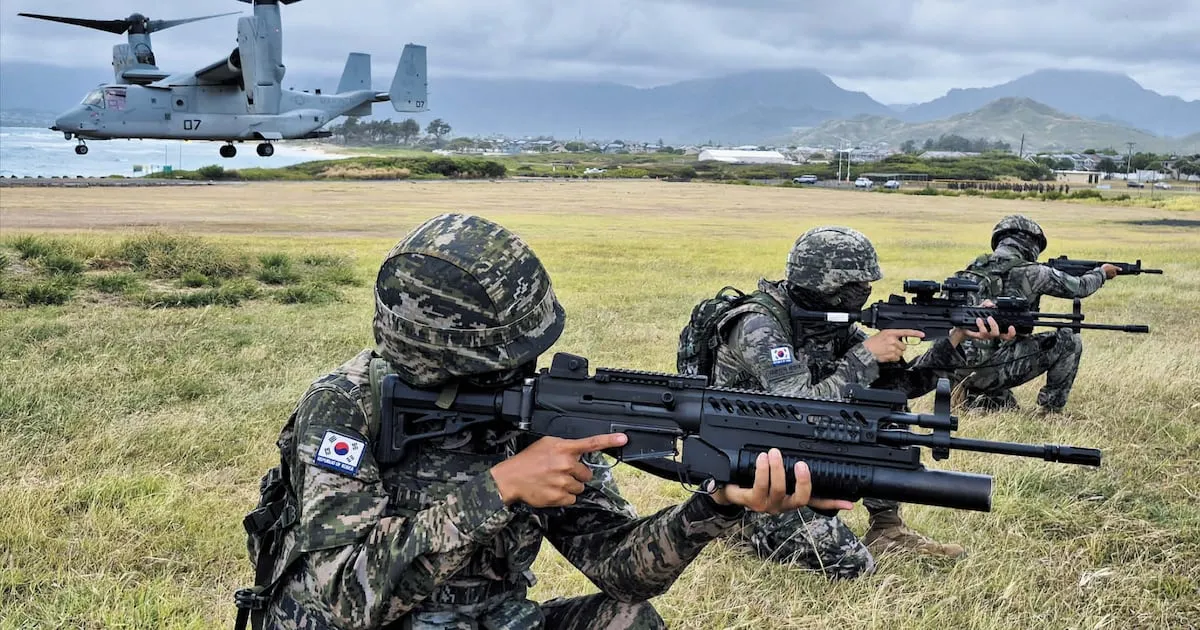
North Korea has issued a strong condemnation of the upcoming multinational maritime exercise ‘2026 Rim of the Pacific’ (RIMPAC), labeling it an act of “unscrupulous provocations” by international participants. Pyongyang asserts that such actions will inevitably lead to the “creation of non-military countermeasures” by regional nations seeking to manage and deter these activities.
North Korea’s Stance on RIMPAC 2026
In a commentary published on May 17th, titled ‘RIMPAC, a War Game Stirring Up Geopolitical Turbulence in the Pacific,’ North Korea argued that the strengthening of military deterrence by participating countries to safeguard their sovereignty, security interests, and regional peace is an “inalienable right.” However, the commentary sharply criticized the exercise, stating, “It is absolutely unacceptable for the residents to witness such large-scale acts of hooliganism being committed, with the world’s most rampant gangsters as the main organizers, drawing in not only the region’s subordinates but also undesirable elements from across the ocean.” This statement was a direct attack on nations participating in the drill, including South Korea and Japan.
The commentary highlighted that RIMPAC 2026 is set to be the largest iteration to date, with 30 nations participating. It specifically pointed out the significant involvement of “foreign countries” in the exercise. South Korea, a regular participant in RIMPAC since 1990, is notably taking on the role of Combined Maritime Component Commander for the first time, overseeing the practical execution of multinational naval strategies.
Context of North Korea’s Criticism
This strong rhetoric from North Korean media against the current South Korean government, using terms like ‘foreign South Korea’ or ‘South Korean puppets,’ comes approximately one year and three months after the incident involving the dismantling of a military aircraft’s components by the South Korean Air Force in April of the previous year. The commentary linked the RIMPAC exercise to broader geopolitical shifts, stating, “This act of hooliganism is occurring at a time when the military collusion between South Korea and Japan is strengthening, and the military alliance between the ‘anti-communist South Korea’ and the ‘militarist Japan,’ which is heading towards militarization, is becoming increasingly blatant.” It also noted the growing military cooperation between South Korea, Japan, and NATO (the North Atlantic Treaty Organization).
Allegations of Offensive Drills
North Korea further alleged that offensive military drills, such as the ‘Ulchi Freedom Shield’ and ‘Freedom Edge’ exercises conducted by the United States and South Korea, have been escalated into continuous offensive operations, including live-fire and amphibious landing drills, within the RIMPAC framework. The commentary specifically criticized the joint naval exercise between the South Korean and U.S. navies, particularly the U.S. Navy’s carrier strike group’s simulated “enemy rear intrusion” attack on the USS Essex, a U.S. amphibious assault ship, during the exercise. This was described as a “crazy” act, implying a significant escalation in provocative actions.
The presence of the U.S. Navy’s Nimitz-class aircraft carrier (a 100,000-ton class vessel) in the exercise was also a point of focus. North Korea suggested that the U.S. is “fostering war fervor” by conducting joint operations with “war subordinates.” The commentary concluded this section by stating, “The Pacific, regardless of its name, has turned into a battlefield of war rather than a place of peace.”
Technological Advancements and Future Concerns
The commentary also touched upon the integration of artificial intelligence (AI) technologies and the combined use of unmanned and manned military assets as key aspects of the RIMPAC exercise. North Korea suggested that these developments serve as a stark reminder of the forces undermining global peace and security. It warned that such a situation could lead to “unforeseen situations” on the Korean Peninsula and in the region, implying a potential for conflict that is not desired by the Korean people.
The RIMPAC exercise, held biennially, is the world’s largest international maritime warfare exercise. It aims to enhance the interoperability of participating navies and coast guards, fostering cooperation and readiness for various maritime contingencies. The exercise typically involves a range of training scenarios, including anti-submarine warfare, anti-air warfare, maritime security operations, and amphibious assaults.
Conclusion
North Korea’s strong denunciation of RIMPAC 2026 underscores its ongoing concerns regarding regional military exercises and perceived threats to its security. The country views these drills as escalatory and provocative, contributing to heightened tensions in the Indo-Pacific region. Pyongyang’s rhetoric suggests a readiness to respond with countermeasures, signaling a continued stance of opposition to U.S.-led military alliances and exercises in the area.
