

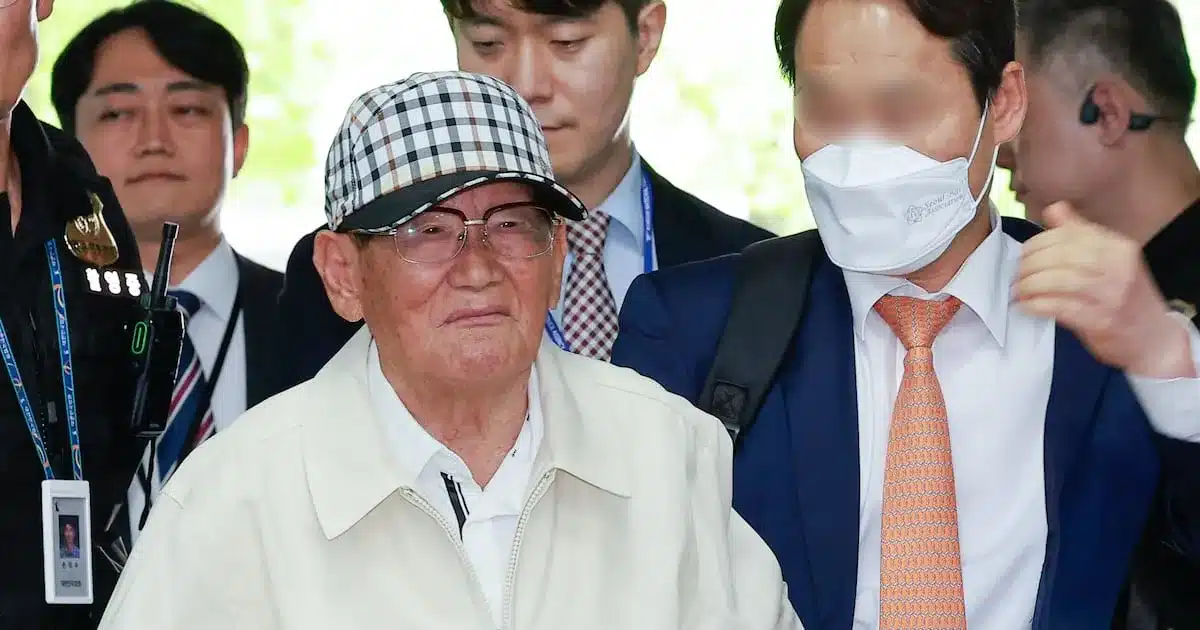
The South Korean Ministry of Justice has announced it will conduct a thorough investigation into allegations that Shincheonji cult leaders provided special treatment to its founder, Lee Man-hee, during his detention in 2020. Justice Minister Park Sung-ho stated on his Facebook page that the ministry will meticulously examine the detention facility and conduct an urgent inspection to uncover the truth behind these claims.
Allegations of Undue Influence and Collusion
The controversy centers on reports that Shincheonji pastors, who are followers of the cult, allegedly leaked internal facility information and even orchestrated a staged “fall accident” to facilitate Lee Man-hee’s release while he was held in a correctional facility in Suwon in 2020. Minister Park expressed strong disapproval, stating that if these allegations are true, it signifies a grave misuse of public resources and a betrayal of the public’s trust.
“If these claims are true, it means that pastors, who should be upholding strict discipline within the correctional system, instead sought to become mere aides to a specific religious leader,” Park wrote. “Furthermore, it suggests the manipulation of state correctional processes, funded by taxpayer money, for the private benefit of a particular religious group.”
The Justice Minister emphasized that these allegations cannot be taken lightly, especially as Lee Man-hee is currently facing re-arrest and detention in connection with a separate case involving the “forced induction of believers” into Shincheonji. To ascertain the facts, the ministry will undertake a rigorous investigation and urgent inspection of the detention facility. Any confirmed violations will be met with appropriate legal and administrative accountability.
Details of the 2020 Incident
Previous reports, notably from JTBC, detailed how Shincheonji followers serving as pastors allegedly compiled minute-by-minute records of Lee Man-hee’s daily activities during his detention. These records, reportedly documenting his sleeping, waking, meal times, and restroom usage, were allegedly transmitted to Shincheonji’s leadership.
The allegations further suggest that Shincheonji pastors were involved in planning and executing a “fall accident” within the detention center as a ploy to secure Lee’s release. Such actions, if proven, would represent a significant breach of protocol and an attempt to subvert the justice system.
Preventing Future Misconduct
Minister Park also indicated that the ministry plans to develop systemic measures to prevent similar incidents from occurring in the future. The goal is to establish a robust framework that would prohibit individuals with significant social influence, or those acting in collusion with external parties, from exerting undue influence within correctional facilities.
“To prevent the recurrence of similar incidents, we will also devise systematic measures to block individuals who hold substantial social influence from exerting undue influence within correctional facilities or colluding with external parties,” Park stated. This suggests a review of protocols regarding the management of high-profile inmates and the prevention of external interference in correctional operations.
Background on Shincheonji and Lee Man-hee
Shincheonji Church of Jesus, the Temple of the Tabernacle of the Testimony, is a religious group founded in 1984 by Lee Man-hee. It has faced intense scrutiny and criticism for its controversial recruitment methods, alleged cult-like practices, and its role in the rapid spread of COVID-19 in South Korea in early 2020. The group has often been accused of deceptive practices, including encouraging members to hide their affiliation and engage in aggressive proselytizing.
Lee Man-hee himself has been a central figure in numerous legal battles and investigations. In addition to the current allegations regarding his detention, he has faced charges related to fraud and the obstruction of infectious disease control efforts. The group’s leadership structure and Lee’s absolute authority within it have been key points of concern for authorities and the public.
The Ministry of Justice’s investigation aims to bring clarity to these serious allegations, ensuring that the principles of justice and the integrity of the correctional system are upheld. The outcome of this probe is expected to have significant implications for Shincheonji and its leadership, potentially leading to further legal action and reinforcing stricter oversight of religious groups with a history of controversial activities.
