

Bank of Korea Signals Imminent Rate Hike
The Governor of the Bank of Korea indicated on June 12th that a monetary policy adjustment, specifically an interest rate increase, is likely necessary to stabilize prices. This statement has led to market speculation that the central bank is preparing to raise its benchmark interest rate at the upcoming Monetary Policy Committee meeting in July. The prevailing expectation is a potential increase of 0.25 percentage points, bringing the rate from the current 2.5% to 2.75%.
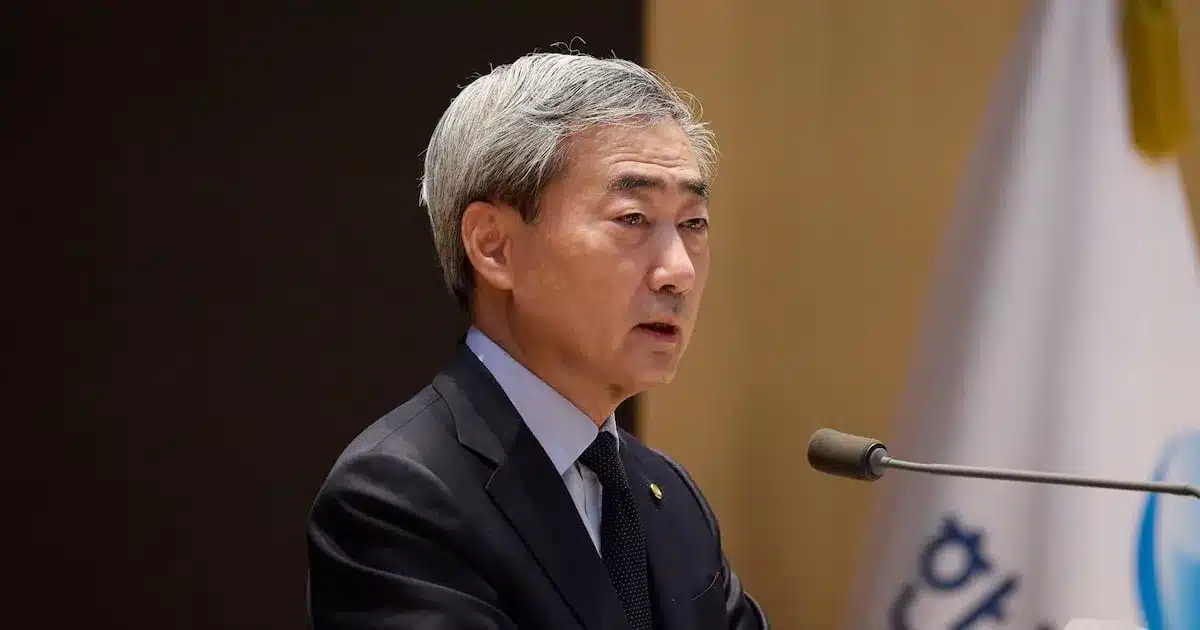
Speaking at a ceremony commemorating the 72nd anniversary of the bank’s establishment in Seoul, the Governor emphasized the need to address inflation. He stated, “Monetary policy inherently involves trade-offs, but at present, these trade-offs are not substantial. There is a need to raise interest rates without delay.” This marks a shift in phrasing from a previous statement two weeks prior, which suggested the need to raise rates at an “appropriate time.” The market is interpreting this change as a heightened probability of a rate hike in the near future.
Inflationary Pressures Mount Amid Geopolitical Tensions
The Governor’s call for a prompt interest rate increase is primarily driven by concerns over escalating inflation. He noted that the prolonged conflict in the Middle East, now in its fourth month, has significantly amplified concerns about rising prices. There is a growing apprehension that elevated household inflation expectations and the potential for businesses to pass on increased costs to consumers could further fuel price surges.
Official data reveals that the consumer price index rose by 3.1% year-on-year in May. This represents the largest monthly increase since March 2024, when it also stood at 3.1%. The core inflation rate, which excludes volatile food and energy prices, increased by 2.5%.
Despite potential concerns about increased borrowing costs for consumers and vulnerable groups, the Governor asserted that such issues can be managed through fiscal policy. He also highlighted the importance of stabilizing the won-dollar exchange rate, which has been influenced by the interest rate differential between South Korea and the United States.
The Governor presented a positive outlook for the domestic economy, anticipating robust growth fueled by a rebound in semiconductor exports and a recovery in domestic demand, including increased tax revenue, improved household income, and expanded investment. He concluded that the current economic landscape, characterized by growth, inflation, and financial stability, clearly indicates a direction for monetary policy.
First-quarter real Gross Domestic Product (GDP) saw a significant increase of 1.8% from the previous quarter. Nominal GDP, excluding inflation, surged by 10.5%, marking the highest growth rate since the first quarter of 1976.
Global Central Banks Also Tighten Policy
Major global economies are also implementing interest rate hikes to combat inflation. The European Central Bank (ECB) raised its deposit facility rate by 0.25 percentage points to 2.25% on June 11th. This marks the first rate hike in nine months and is the first among the Group of Seven (G7) nations since the conflict in the Middle East began. The ECB cited the inflationary pressures stemming from the Middle East conflict as the primary reason for its decision.
Japan is also considering a rate hike on June 16th, driven not only by rising inflation but also by the weakening yen. Bank of Japan Governor Kazuo Ueda stated on June 3rd that a rate hike would be considered if inflation risks were deemed substantial. A potential increase could see Japan’s interest rate move from 0.75% to 1%, a level not seen since approximately 31 years ago in 1995.
While the U.S. Federal Reserve is widely expected to hold interest rates steady at its Federal Open Market Committee (FOMC) meeting on June 18th, market participants anticipate signals of a future rate hike. The recent uptick in U.S. inflation, with the May consumer price index rising 4.2% year-on-year—the highest in 31 months—suggests that maintaining current rates may become unsustainable. Some within the FOMC have previously indicated that a rate hike would be appropriate if inflation consistently exceeds the 2% target.
If the Bank of Korea implements a rate hike in July, further increases could follow. Analysts have been forecasting two to three hikes within the year, with some now suggesting up to four. The current yield on the 3-year government bond stands at 3.8%, indicating a 1.3 percentage point gap with the benchmark rate. Projections from the Monetary Policy Committee’s May dot plot suggest a median expectation of two rate hikes within six months, with some members anticipating three or even more. This indicates a growing consensus for at least one to three additional rate hikes.
