

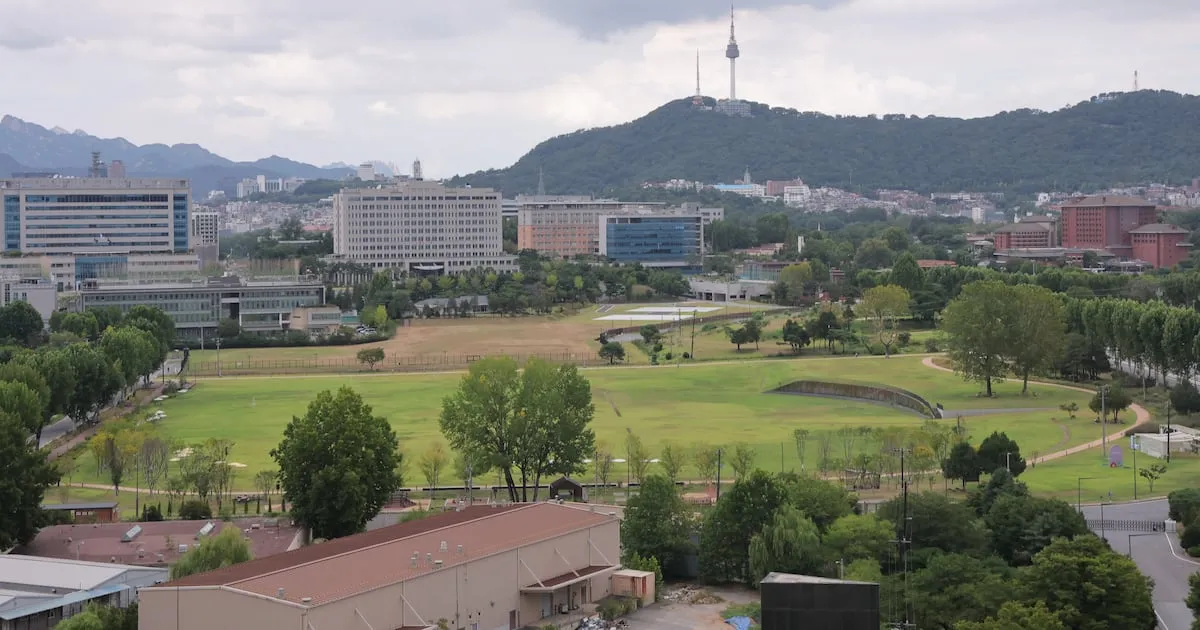
Seoul Metropolitan Government and the Yongsan District Office have voiced strong opposition to the central government’s consideration of Yongsan Park as a potential site for public housing. The district’s stance follows a similar declaration from the Seoul city government, highlighting a unified front against repurposing the significant urban green space for residential development.
Yongsan District’s Strong Rejection of Housing Plans
In a formal statement released on the 15th, the Yongsan District Office expressed deep regret and firm opposition to the Ministry of Land, Infrastructure and Transport’s contemplation of utilizing the entirety of Yongsan Park, extending beyond the children’s garden area, as a candidate site for housing supply. The district emphasized the park’s unique status and historical significance.
Yongsan District stated, “Yongsan Park is the last large-scale national park in the heart of Seoul, returning to the embrace of its citizens after 120 years. It is destined to become a symbolic space for the nation, embodying the history and future of the Republic of Korea.” The district office argued that viewing the park through the narrow lens of ‘whether there is land available for housing supply’ is fundamentally misguided.
Prioritizing Urban Redevelopment for Housing Solutions
The district office further proposed alternative strategies for addressing housing needs, suggesting that if housing supply is indeed necessary, the focus should first be on revitalizing existing urban redevelopment and reconstruction projects. They advocated for expanding new housing supply through ” 정비 사업 ” (urban renewal projects) as a means to balance urban functionality with public interest.
“If housing supply is needed, we must first seek solutions that can coexist with the city’s functionality and public nature, such as revitalizing existing urban redevelopment and reconstruction, and expanding new housing supply through urban renewal projects,” the statement urged.
Background: Government’s Initial Proposal
The controversy was ignited the previous day, the 14th, when Minister of Land, Infrastructure and Transport Kim Hyun-mee, during a press briefing marking her first year in office, mentioned that the ministry was considering the entire Yongsan Park area as part of its housing supply plans.
This statement immediately drew a sharp response from the Seoul Metropolitan Government. Following Minister Kim’s press conference, the city government issued its own statement, asserting that Yongsan Park is not merely a recreational area but a crucial national asset that must be preserved and passed on to future generations, especially in the context of climate crisis.
Seoul City’s Position on Park Preservation
The Seoul city government declared its opposition, stating, “Yongsan Park is not just a simple leisure space, but a precious national asset that must be preserved for the lives of citizens in an era of climate crisis and passed on intact to future generations.” This declaration underscored the city’s commitment to safeguarding the park’s ecological and historical value.
The Significance of Yongsan Park
Yongsan Park holds immense symbolic importance for Seoul and South Korea. Its transformation from a former U.S. military base into a public park represents a significant reclamation of urban space for the people. The park is envisioned as a central ecological hub and a place for national commemoration and recreation, intended to serve as a green lung for the densely populated city.
The park’s development has been a long-standing national project, aiming to create a vast, accessible green space that connects various parts of the city and offers a respite from urban life. Its future use is a matter of considerable public interest, involving considerations of environmental sustainability, historical preservation, and public access.
Broader Implications for Urban Planning
The debate over Yongsan Park highlights a common tension in urban planning: the demand for housing versus the preservation of green spaces and public amenities. While the government seeks to address housing shortages, local authorities and environmental advocates argue for alternative solutions that do not compromise valuable natural and historical sites.
The Yongsan District’s proposal to prioritize urban redevelopment and renewal projects suggests a pathway for increasing housing stock without sacrificing major public parks. This approach aims to leverage existing urban infrastructure and opportunities for densification, potentially offering a more sustainable and less controversial method of housing development.
As discussions continue, the focus remains on finding a balance that meets the pressing need for housing while respecting the long-term vision for Yongsan Park as a vital national asset for recreation, ecological preservation, and cultural significance.
