

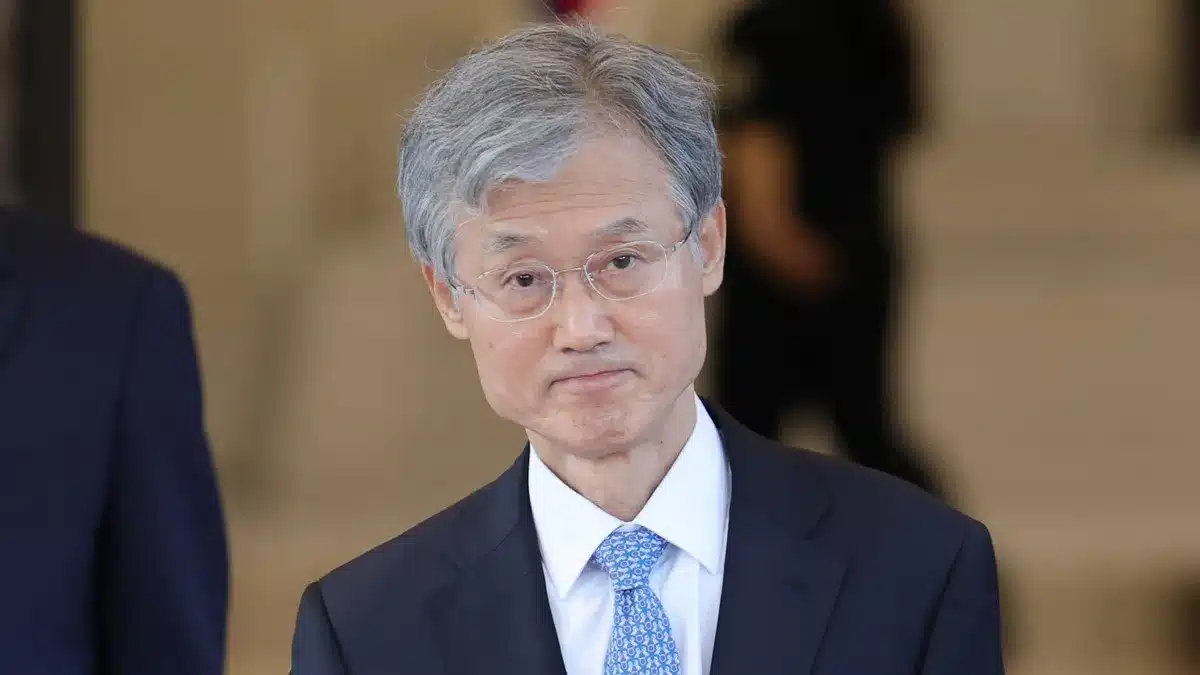
South Korean Chief Justice Cho Hee-dae has stated he will not comply with a request from the presidential office to re-nominate a candidate for the Supreme Court. This decision comes 25 days after President Lee Jae-myung asked for a re-nomination of Son Bong-gi, a nominee for deputy chief justice of the Supreme Court, on August 28. The presidential office had argued that the initial rejection of the nomination by the Chief Justice undermined the President’s appointment powers.
Chief Justice Cites Lack of Legal Basis for Re-nomination
In a statement released on September 22, Chief Justice Cho explained his refusal, asserting that the presidential office’s request lacked specific reasons and a proper legal foundation. He noted that the only communication from the presidential office regarding a re-nomination request was dated August 28, and it did not contain detailed justifications or constitutional grounds for such a demand.
“I cannot comply because I cannot find specific constitutional grounds and reasons to justify the re-nomination request,” Chief Justice Cho stated. The Constitution stipulates that Supreme Court justices are appointed by the President upon the recommendation of the Chief Justice and with the consent of the National Assembly. However, the constitution does not specify procedures or methods for re-nominating candidates.
The Chief Justice’s firm stance indicates he has no intention of nominating another candidate if the current nominee, Son, is not approved. This development occurred shortly after Chief Justice Cho attended the inauguration ceremony for the new Supreme Court Justice Kim Sun-soo, where he had a brief exchange with President Lee.
Legal Community Weighs In on Judicial Independence
Observers within the legal community suggest that Chief Justice Cho’s refusal stems from a concern that acceding to the President’s request could set a precedent for the executive branch to influence judicial appointments. A legal official commented that Chief Justice Cho appears to be signaling his commitment to adhering to constitutional principles and laws, rather than yielding to presidential authority.
The presidential office responded to the Chief Justice’s statement by calling his interpretation “a recognition that the Chief Justice’s nomination authority is superior to the President’s appointment authority, which is contrary to the Constitution.”
Kim Min-seok, a leader of the Democratic Party, criticized the Chief Justice, calling the situation a “ridiculous power struggle” and questioning if it was a dispute over presidential authority. The Democratic Party has indicated plans to summon Chief Justice Cho to the National Assembly for questioning during the upcoming parliamentary audit of state affairs next month.
Chief Justice’s Concerns Over Executive Influence
Chief Justice Cho’s rejection of President Lee’s request to re-nominate Son Bong-gi is widely interpreted as a defense of the judiciary’s nomination authority against potential encroachment by the executive branch. The concern is that if the Chief Justice were to nominate another candidate after the National Assembly had not yet deliberated on Son’s confirmation, it could lead to a situation where the Chief Justice’s nomination power becomes subservient to the President’s prior approval.
The Chief Justice’s statement referenced Article 82 of the Constitution, which states that the President’s official acts are conducted through written documents, typically prepared by the relevant ministry or agency. Chief Justice Cho argued that the President’s request for re-nomination did not provide specific reasons or constitutional grounds for rejecting Son Bong-gi.
In response, the presidential office countered that the initial document from the presidential office did indeed cite a “breach of administrative principles,” and accused the Chief Justice of distorting facts by implying a constitutional flaw in the President’s request. The presidential office maintained that the August 28 document only stated that the nomination of Son Bong-gi would not be submitted to the National Assembly for confirmation, as per Article 104, Clause 2 of the Constitution, and requested a new nomination.
A source from the Supreme Court clarified that the Chief Justice’s statement was not meant to imply that the presidential office’s document was free of any administrative errors, but rather that the request for re-nomination itself lacked sufficient justification.
The Path Forward: Options for the Presidential Office
The core of the dispute lies in the balance of power between the President’s appointment authority and the Chief Justice’s nomination authority. Legal scholars generally agree that neither power is inherently superior or subordinate to the other. The Chief Justice is not obligated to nominate whomever the President desires, nor is the President bound to appoint every nominated candidate. However, the specific circumstances under which a President can refuse an appointment or request a re-nomination are not clearly defined in the Constitution or relevant laws.
Professor Cha Jin-ah of Korea University commented that, considering respect for the head of the judiciary and the nature of the nomination power, the President should provide compelling reasons to the public when refusing a nominee without exceptional disqualifying factors.
Chief Justice Cho’s position is that requesting a re-nomination without clearly stated reasons for Son’s rejection is unreasonable. With the Chief Justice’s refusal, the ball is now in the presidential office’s court. They have two primary options:
- Submit Son Bong-gi’s nomination to the National Assembly for confirmation. If the Assembly rejects the nomination, the Chief Justice would then be compelled to nominate someone else. While it’s theoretically possible for the President to refuse to appoint Son even if confirmed by the Assembly, this is considered unlikely given the Democratic Party’s majority in the legislature.
- Issue a new official document to Chief Justice Cho, providing clear constitutional grounds and specific reasons for the re-nomination request. However, it is anticipated that Chief Justice Cho might still refuse, making the likelihood of the President issuing a new document slim.
It is also reported that the presidential office is considering seeking a ruling from the Constitutional Court regarding the dispute. Even if Chief Justice Cho were to agree to a re-nomination, it is widely believed he would not select another candidate from the existing pool of four nominees. Instead, the prevailing view is that a new nomination committee would be formed to restart the entire selection process.
Potential for Prolonged Vacancy at the Supreme Court
The Supreme Court nomination committee previously recommended four candidates in January for the successor to former Chief Justice Noh Tae-ak: Son Bong-gi, Yoon Sung-sik (Deputy Chief Justice of the Seoul Central District Court), Kim Min-ki, and Park Soon-young (both judges at the Seoul Central District Court).
The presidential office reportedly wants the Chief Justice to select one of the three remaining candidates, excluding Son. However, legal circles interpret this as a directive to nominate Kim Min-gi, as Yoon Sung-sik is handling the preliminary investigation for the National Election Commission’s special counsel, and Park Soon-young is overseeing the central investigation committee for the Seoul Central District Prosecutors’ Office. This interpretation suggests the presidential office is indirectly pushing for Kim Min-gi’s nomination.
A complicating factor for Kim Min-gi’s potential nomination is that his spouse, Oh Young-jun, is a judge at the Constitutional Court. This could lead to a conflict of interest, and Chief Justice Cho is reportedly disinclined to nominate Kim Min-gi due to this issue.
While the dispute over the Supreme Court justice appointment could lead to a prolonged vacancy, it does not immediately paralyze the court. The Supreme Court can function with at least three justices, and the current quorum for the en banc session can still be met. However, if the vacancy persists, the workload on the remaining justices will increase, potentially delaying case processing. Some predict that if the presidential office does not change its stance, the vacancy could last until Chief Justice Cho’s term ends in June of the following year.
