

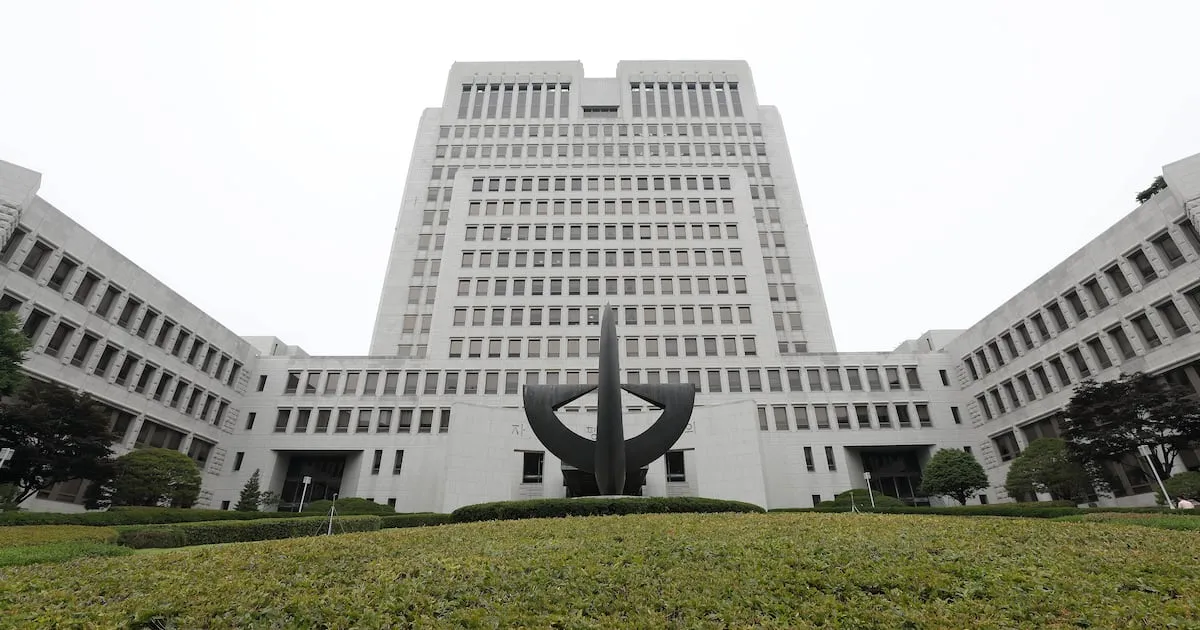
The Supreme Court of South Korea is scheduled to hear the cases of former Prime Minister Han Duck-soo and former Minister of the Interior and Safety Lee Sang-min on July 29. Both individuals face charges related to alleged misconduct during their tenures. The court will also convene on the same day to review the case of former National Assembly member Kim Geon-hee, specifically concerning allegations of receiving public opinion poll results without proper payment.
Supreme Court to Review Key Corruption Allegations
The Supreme Court’s decision to hear the cases of Han Duck-soo and Lee Sang-min marks a significant step in the judicial process for these high-profile individuals. The court had previously decided in the previous month to transfer both cases from a lower division to the full Supreme Court bench, recognizing their substantial public interest and historical significance. This move ensures that a comprehensive review, involving all justices rather than a smaller panel, will be conducted.
Han Duck-soo’s Allegations
Former Prime Minister Han Duck-soo is accused of engaging in alleged acts of corruption, including the falsification of important official documents. These allegations stem from his time as Prime Minister, where it is claimed that he manipulated parliamentary deliberation procedures to legitimize the process of his appointment. Furthermore, it is alleged that after the announcement of the appointment, Han discussed measures with Lee Sang-min and a specific media outlet concerning the handling of articles and the imposition of sanctions or restrictions on certain media content. The initial ruling sentenced Han to 23 years in prison, which was later reduced to 15 years on appeal.
Lee Sang-min’s Allegations
Lee Sang-min, formerly the Minister of the Interior and Safety, faces accusations of receiving directives from former President Yoon Suk-yeol regarding the handling of media content. It is alleged that Lee subsequently passed these directives to Hur Suk-gon, the former head of the National Fire Agency. These alleged actions also involve the falsification of important official documents. Lee was initially sentenced to seven years in prison in the first trial, with the sentence reduced to nine years on appeal.
Review of Kim Geon-hee’s Case
In addition to the cases involving Han and Lee, the Supreme Court will also hear the case of former National Assembly member Kim Geon-hee on July 29. Kim is accused of several offenses, including the illicit receipt of public opinion poll results. It is alleged that while working with former President Yoon Suk-yeol, Kim received 58 sets of commissioned public opinion poll results from a figure described as a ‘political broker,’ named Myung Tae-kyun, without proper compensation, in violation of the Political Funds Act.
Additional Allegations Against Kim Geon-hee
Further allegations against Kim Geon-hee include receiving luxury goods, such as handbags and necklaces, from Tongil Church, alongside a favorable article in the German car manufacturer’s owner magazine. These actions are under scrutiny for potential violations of the Capital Markets Act and bribery laws. Kim was initially sentenced to one year and eight months in prison, with a fine of 50 million won, in the first trial. However, the charges related to the illicit receipt of public opinion poll results from Myung Tae-kyun were found to be not guilty in both the first and second trials.
Judicial Process and Future Implications
The Supreme Court’s comprehensive review of these cases underscores the gravity of the allegations and the public’s demand for accountability. The court’s final rulings will have significant implications for the individuals involved and may set important precedents regarding political conduct and corruption in South Korea. The decisions made on July 29 will be closely watched by the public and legal experts alike.
The Supreme Court had previously consolidated these cases for review in July, signaling the court’s intention to address them collectively due to their interconnectedness and public significance. The upcoming hearings represent a critical juncture in the South Korean judicial system’s handling of high-level corruption allegations.
