

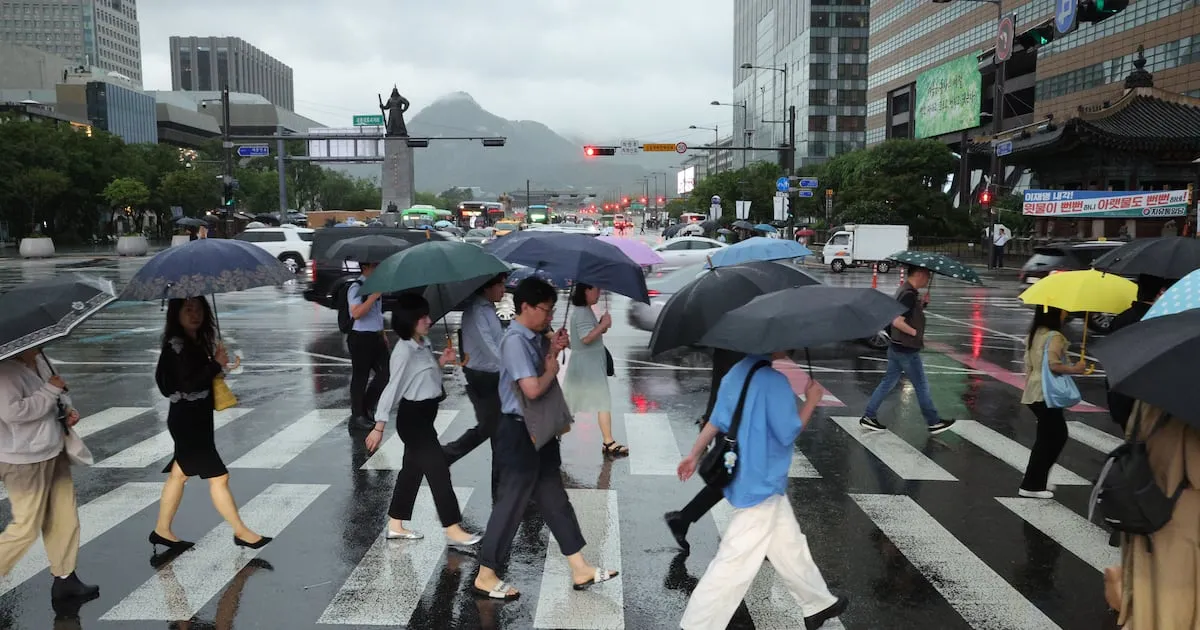
A lively debate is unfolding online regarding the boundaries of acceptable attire for commuting to work, with discussions ranging from casual shorts and sandals to more revealing or unconventional outfits. As workplaces increasingly adopt more relaxed dress codes, employees are questioning where the line should be drawn, particularly concerning items like Crocs, off-the-shoulder tops, and even hot pants.
The Evolving Landscape of Workplace Attire
The conversation gained traction following a post by an individual identified as ‘A’ who recently returned to commuting in Seoul. ‘A’ noted a noticeable shift in workplace fashion compared to previous years, observing outfits that once seemed surprising now appearing more commonplace. “I’m curious about how far things are accepted these days,” ‘A’ wrote, suggesting that denim skirts above the knee or shorts that aren’t excessively short might be considered acceptable in many environments.
However, ‘A’ also recounted witnessing more extreme examples firsthand within office buildings. These included mini-skirts with bold patterns, off-the-shoulder tops, slippers, Crocs, hot pants, and even hats. The poster questioned whether such attire is appropriate for a typical office setting, contrasting it with the more liberal fashion norms found in areas like Hongdae or within the fashion industry itself. “Isn’t there a TPO (Time, Place, Occasion) for clothing? I wonder what others think,” ‘A’ mused, highlighting the perceived disconnect between casual fashion and professional environments.
Divergent Opinions on Professional Dress
The online discussion revealed a spectrum of opinions, with many participants emphasizing the need for certain standards in workplace dress. One commenter argued that while industry and company culture play a role, items like hot pants, exposed shoulders, or hats are generally unsuitable for standard office environments. “Even Crocs or slippers are best reserved for indoor use or changing into,” this individual suggested.
Another user pointed to the attire of employees in public institutions or large corporations as a benchmark. “Looking at the commuting outfits of people in public offices or major companies gives you a general idea,” they stated. “Anything that looks excessive to most people just doesn’t fit the office environment.” This perspective underscores a belief that professional settings require a certain level of decorum in dress.
Arguments for Personal Freedom in Dress
Conversely, a significant number of individuals argued against scrutinizing colleagues’ clothing choices, provided they are not representing the company in an official capacity. “If you’re not representing the company, it’s best not to worry about it,” one person commented. Another added, “If a company doesn’t have specific dress code regulations, individual choices should be respected.” This viewpoint champions personal autonomy and suggests that in the absence of clear guidelines, employees should have the freedom to choose their attire.
Anecdotal Evidence and Extreme Cases
Personal experiences shared in the thread further illustrate the wide range of what people encounter. One individual reported seeing male colleagues commute in baggy training pants and plain t-shirts, while another observed female colleagues wearing athletic leggings to the office. These anecdotes highlight instances where attire considered highly casual or even sporty has made its way into professional settings.
Clarification and Context
Responding to the ongoing discussion, ‘A’ clarified their initial post. They emphasized that their intention was not to criticize specific clothing items or advocate for strict company-level regulations. Instead, ‘A’ expressed surprise at the rapid pace of change in workplace culture and the associated shifts in dress norms. “I was just surprised that the speed at which workplace culture is changing was faster than I expected,” they explained, framing their comment as an observation on evolving societal expectations rather than a judgment on individual fashion choices.
Navigating the New Normal
The debate reflects a broader societal shift towards more casual lifestyles, which inevitably spills into the professional realm. As companies continue to reassess their policies on workplace attire, striking a balance between fostering a comfortable environment and maintaining a professional image remains a key challenge. The varying opinions suggest that there is no one-size-fits-all answer, and what is deemed appropriate often depends on a complex interplay of industry, company culture, and individual perception.
Ultimately, the conversation serves as a barometer for the changing dynamics of the modern workplace. While some advocate for clear guidelines to ensure professionalism, others champion individual expression and trust in employees’ judgment. As remote and hybrid work models continue to influence traditional office environments, the definition of “appropriate work attire” is likely to remain a topic of ongoing discussion and redefinition.
