

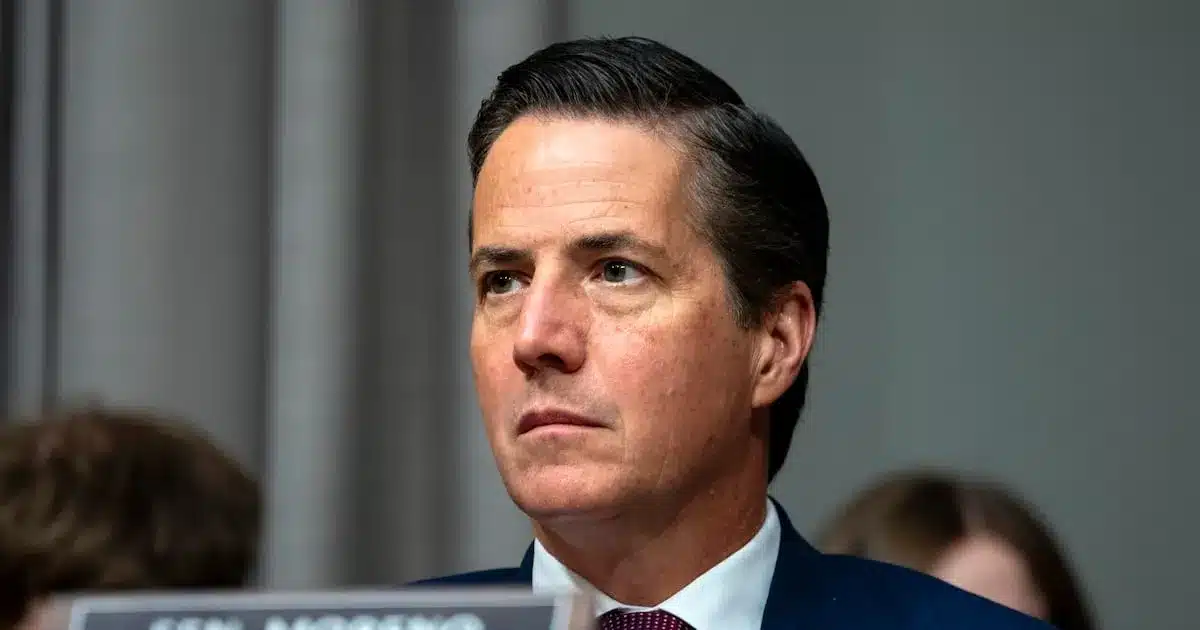
A U.S. lawmaker has formally requested an investigation into South Korea’s trade practices concerning the e-commerce giant Coupang, citing concerns over alleged discriminatory treatment of American businesses. Representative Bernie Moreno, a Republican from Ohio, has urged the Office of the U.S. Trade Representative (USTR) to initiate a Section 301 investigation, a powerful trade tool that allows the U.S. to take retaliatory measures, such as imposing tariffs, against countries engaging in unfair or discriminatory trade practices.
Allegations of Unfair Treatment and Regulatory Overreach
In a communication to U.S. Trade Representative Katherine Tai, Moreno expressed strong dissatisfaction with what he described as South Korea’s persistent targeting of U.S. companies. He called for immediate action to resolve these issues, stating that such “procedural irregularities and systemic unfairness” are no longer acceptable. The USTR has previously considered investigating digital trade barriers in South Korea under Section 301.
Moreno, whose district is in Ohio, detailed his grievances, asserting that South Korea is employing a range of tactics that constitute aggressive, protectionist behavior. These tactics reportedly include excessive fines, the criminal prosecution of corporate executives, and biased enforcement of regulations. He argued that these actions create an uneven playing field for American businesses, undermining the spirit and letter of trade agreements between the two allied nations.
The lawmaker drew a historical parallel, reminding his audience of the United States’ significant sacrifice during the Korean War. He noted that approximately 37,000 American lives were lost in the 1950s to defend South Korea from communist aggression and prevent the suppression of freedom on the Korean Peninsula. He emphasized that the U.S. continues to support the security of South Korea and the broader region through its military presence.
Focus on Coupang’s Regulatory Challenges
A central point of contention highlighted by Moreno is the situation surrounding Coupang, which he described as a significant impediment to the bilateral relationship and a source of ongoing friction. He pointed out that Coupang has faced extensive investigations from ten South Korean government agencies, with threats of business suspension and characterizations as an “organized crime group.”
Moreno specifically referenced a substantial fine, reportedly in the hundreds of millions of U.S. dollars, levied against Coupang by the Personal Information Protection Commission (PIPC). He contended that such actions exploit minor incidents to unfairly target a U.S. company, violating the principles of fair trade agreements.
“We cannot stand idly by while the South Korean government weaponizes its regulatory power against innovators who are engines of economic growth for both our nations,” Moreno stated, advocating for the USTR to launch a Section 301 investigation to protect U.S. interests.
Understanding Section 301 Investigations
Section 301 of the U.S. Trade Act of 1974 grants the U.S. President the authority to take action against foreign governments that engage in unfair or discriminatory trade practices. Such actions can include imposing tariffs, trade restrictions, or other retaliatory measures. The U.S. has previously initiated Section 301 investigations against South Korea in two areas: structural tax issues and alleged forced labor.
Broader Concerns within the Republican Party
The concerns raised by Representative Moreno appear to resonate within certain factions of the Republican party, particularly those aligned with the “Make America Great Again” (MAGA) movement. Bryan Mast, Chairman of the House Foreign Affairs Committee and a Republican, has also recently commented on the Coupang situation. Mast echoed Moreno’s sentiments, stating that the South Korean government is harming U.S. businesses and failing to uphold its commitments to support the United States, particularly in areas like semiconductor and advanced manufacturing supply chains.
These calls for a Section 301 investigation underscore a growing sentiment among some U.S. lawmakers to address perceived trade imbalances and unfair practices by international partners, aiming to protect and promote American economic interests on the global stage.
