

The U.S. Eighth Army has announced that the upcoming Ulchi Freedom Shield (UFS) joint military exercise, scheduled from August 17-27, will prioritize the modernization of the ROK-U.S. alliance and the establishment of a stable security environment in Northeast Asia. The drills aim to demonstrate the combined forces’ capabilities in rapid deployment and territorial defense.
Key Objectives of Ulchi Freedom Shield
In a press briefing related to this year’s UFS exercises, the Eighth Army outlined its primary focus areas. “The Eighth Army is concentrating on strengthening our continuous combat readiness posture, known as ‘Fight Tonight,’ modernizing the ROK-U.S. alliance, and fostering a secure environment in Northeast Asia,” a representative stated. This emphasis on alliance modernization reflects a broader strategy, partly influenced by the Trump administration’s focus on burden-sharing among allies. For South Korea, this translates to enhancing its independent defense capabilities.
The concept of alliance modernization extends beyond immediate bilateral cooperation. It also encompasses the strategic flexibility of the U.S. Forces Korea (USFK) to address potential contingencies, including scenarios involving North Korea. This forward-thinking approach acknowledges the dynamic geopolitical landscape of the region.
Reinforcing Deterrence Along the First Island Chain
A significant objective highlighted by the Eighth Army is the validation of the alliance’s ability to project combat power swiftly within the First Island Chain. This strategic concept, which includes areas like Japan’s Okinawa, Taiwan, and the Philippines, is central to the U.S. Indo-Pacific strategy. The goal is to create a deterrent effect that complicates or prevents China from achieving its military objectives within this critical maritime zone.
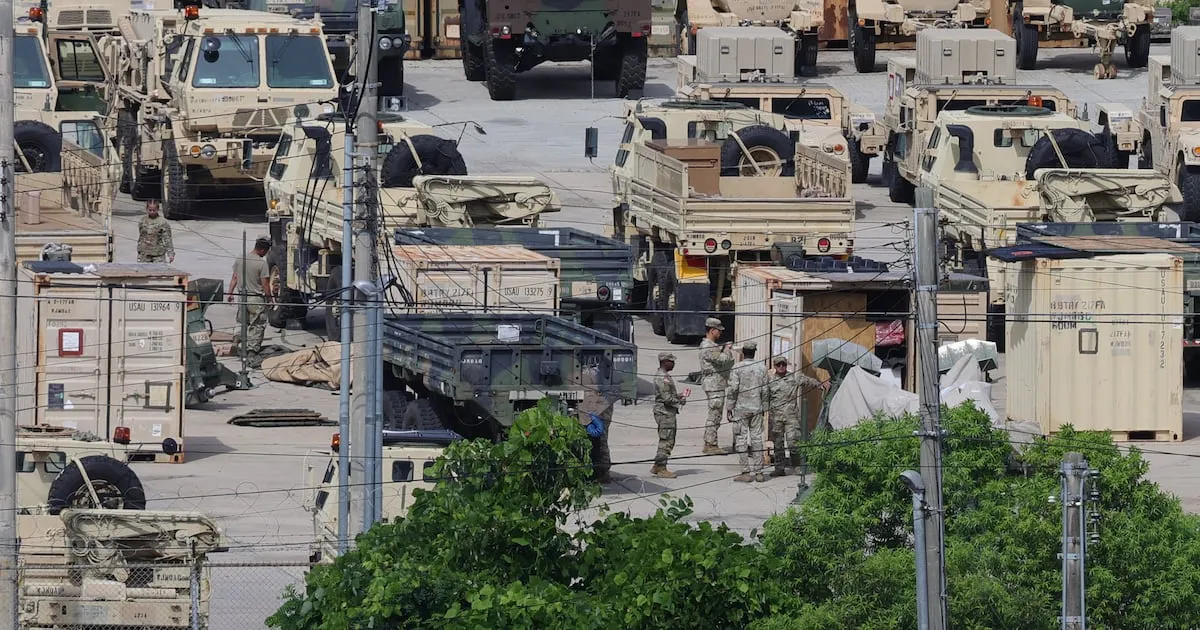
The U.S. military’s strategy of pre-positioning assets is crucial to this objective. These are supplies and equipment, including tanks, armored vehicles, artillery, trucks, ammunition, and medical supplies, strategically placed in key potential conflict zones. This logistical readiness significantly reduces the time needed for troop deployment and enhances response speed. In South Korea, Camp Carroll in Gyeongbuk Province serves as a primary pre-positioning site (APS-4) for USFK.
Connecting the rapid deployment and readiness of pre-positioned assets to the projection of combat power along the First Island Chain underscores not only the defense of the Korean Peninsula but also South Korea’s vital role within the broader regional security framework. This interpretation suggests an elevated expectation of Seoul’s contribution to regional stability.
Comprehensive Training Scenarios
The UFS exercises will incorporate a wide array of realistic training scenarios designed to test and improve combined operational capabilities. Key training events include:
- Combined logistical support drills to ensure seamless supply chains during operations.
- Combined amphibious assault training to practice coordinated landings in contested areas.
- Counter-insurgency operations conducted by combined military police units.
In addition to these core UFS activities, the Air Component Command will conduct its own readiness exercise, ‘Dragon Flag,’ at the Kunsan Air Base. This drill focuses on enhancing aerial combat capabilities and interoperability.
Strengthening Combined Defense Posture
The Eighth Army emphasized that maintaining a robust military presence and a sustainable support infrastructure throughout the Korean Peninsula remains a top priority. The inclusion of rapid deployment and preparation procedures for APS-4 assets in this year’s UFS is designed to demonstrate the alliance’s capability to quickly deploy combat power and secure critical objectives within the First Island Chain.
This strategic focus on rapid power projection and logistical readiness is a core component of the U.S. military’s approach to maintaining stability and deterring aggression in the Indo-Pacific. By integrating advanced pre-positioning strategies with comprehensive joint exercises, the U.S. and South Korea aim to ensure they are prepared to respond effectively to any security challenges in the region.
Conclusion
The Ulchi Freedom Shield exercises represent a critical opportunity for the U.S. Eighth Army and its South Korean counterparts to enhance their combined defense capabilities. By focusing on alliance modernization, rapid power projection, and realistic training scenarios, the drills are designed to strengthen deterrence and ensure peace and stability in Northeast Asia. The emphasis on pre-positioning assets and strategic flexibility highlights the evolving nature of military readiness in response to complex regional security dynamics.
