

A Journey Through Art History at Ueno Park
A recent visit to Tokyo offered a chance to explore the National Museum of Western Art, a treasure trove of European art nestled within Ueno Park. The museum’s striking architecture, designed by Le Corbusier, itself is a UNESCO World Heritage site.
The museum’s collection is particularly rich in Impressionist works, boasting pieces by Monet, Manet, Renoir, Degas, and Cézanne. This extensive holding is largely thanks to the visionary efforts of Matsukata Kojiro, a prominent Japanese industrialist.
Matsukata Kojiro’s Vision: A Legacy of Art
Kojiro Matsukata, son of a former Prime Minister, played a pivotal role in shaping Japan’s Western art collection. After studying in the United States, he became the first president of Kawasaki Dockyard. From 1916, he spent a decade acquiring a significant number of Western artworks, with a focus on Impressionist paintings, intending to establish a museum for public enjoyment.
He even named this planned institution ‘Kyōraku Bijutsukan’ (Hall of Shared Enjoyment). However, the global economic depression of 1927 led to the company’s financial difficulties, halting the museum’s construction. Matsukata’s collection was dispersed through auctions.
A significant portion of Matsukata’s collection, held in Paris during World War II, was confiscated as enemy assets. Following the war, Japan campaigned for the return of these works. France agreed to return 370 items on the condition that they be housed in a museum designed by a French architect. This led to the establishment of the National Museum of Western Art in Ueno Park, designed by Le Corbusier and opened in 1959.
A Rich Collection, Accessible to All
The museum’s permanent collection, initially comprising 370 pieces, now exceeds 6,000 works across various disciplines including paintings, sculptures, drawings, prints, and crafts. A remarkable aspect of the museum is that admission to the permanent exhibition is free for students up to high school age. This policy ensures that younger generations can freely experience and draw inspiration from masterpieces by artists like Monet, Manet, Renoir, Cézanne, and Van Gogh.
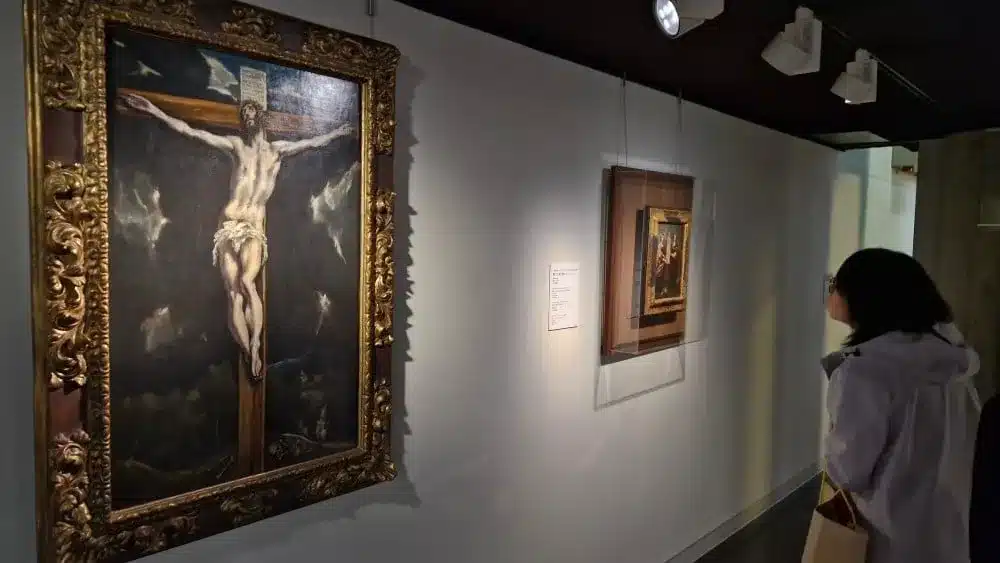
Among the notable works are Monet’s ‘Water Lilies’ series, a testament to his lifelong fascination with the subject. The collection also features significant pieces by other masters such as El Greco, whose ‘The Crucifixion’ was acquired by the museum in 1974, and Titian, represented by ‘Salome with the Head of John the Baptist’.
Gifts from Individuals and Corporations Enrich the Collection
Beyond the Matsukata collection, the museum has benefited from numerous donations from individuals and corporations. These include works by Picasso, such as ‘Woman Sitting with a Hat’ (1942), and Giacometti’s ‘Caroline’ (1962), both acquired through private donations in recent years. Gustav Klimt’s ‘Island of the Dead’ is another recent acquisition, gifted last year.
The museum’s commitment to fostering creativity and cultural appreciation is evident in its free admission policy for young students. This initiative aims to bridge potential cultural and creative gaps by allowing individuals to grow up surrounded by original works of art, from classical to Impressionist masterpieces.
Celebrating Monet’s Legacy on His Centennial
This year marks the 100th anniversary of Claude Monet’s passing, a milestone celebrated with special exhibitions worldwide. Tokyo is no exception, with the Artizon Museum (formerly the Bridgestone Museum of Art) hosting a special exhibition featuring 40 of Monet’s works, alongside 90 pieces by his contemporaries. This exhibition, which closes soon, highlights Monet’s profound connection to the French countryside and his iconic depictions of the sea.
The National Museum of Western Art continues to be a vital cultural institution, offering a window into the evolution of Western art and inspiring future generations of artists and art enthusiasts.
