

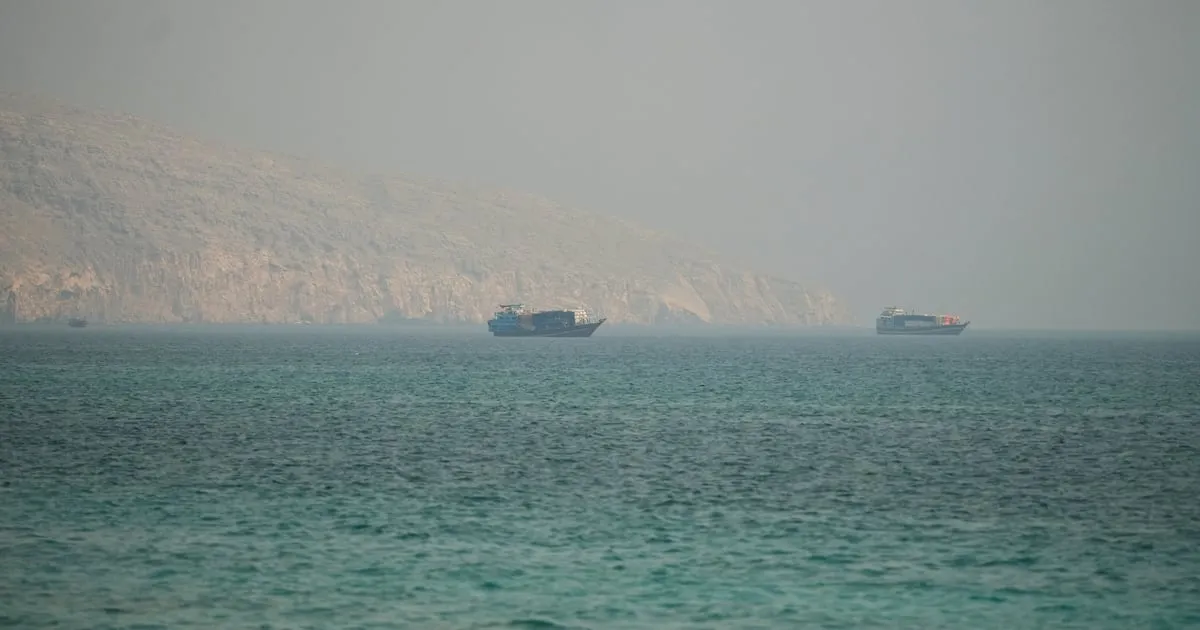
Two South Korean vessels remain in the Strait of Hormuz, with their departure uncertain following Iran’s announcement to re-impose maritime blockades. The situation has created a precarious environment for the South Korean crews and ships still within the strategic waterway.
Background: Strait of Hormuz Blockade and International Response
The Strait of Hormuz, a vital chokepoint for global oil trade, has been a focal point of geopolitical tension. In early May, the HMM Namu, a South Korean flagged vessel, entered the strait and docked in Dubai for repairs. While its repairs are nearing completion, Iran’s recent declaration to reinstate blockades has cast doubt on its ability to depart as scheduled. The ship was initially expected to leave the strait by mid-June.
Another South Korean vessel is also currently detained within the strait due to selection procedures, preventing its movement. These two ships account for seven South Korean nationals working aboard. When including foreign-flagged vessels with South Korean crew members, the total number of South Koreans present in the strait rises to 17. These foreign ships, with South Korean personnel onboard, are operating within the blockaded area and have no immediate plans to leave.
The renewed tensions stem from an escalating conflict between the United States and Iran. Following an incident involving attacks on vessels in the strait last month, the U.S. initiated military actions. In response, Iran declared its intention to re-establish blockades in the strait, escalating the risk for maritime traffic.
This development follows a period of relative calm after the U.S. and Iran signed a Memorandum of Understanding (MOU) on maritime security on May 14th. Prior to this agreement, 26 South Korean vessels were caught in the Strait of Hormuz during a period of heightened conflict. After the MOU was signed, 24 of these vessels were able to depart sequentially.
Government Response and Safety Measures
The South Korean government had previously advised domestic shipping companies against sending their vessels into the Strait of Hormuz, even after the maritime security agreement with Iran. This cautionary approach was based on the assessment that risks within the strait remained significant.
Currently, the government is maintaining communication with the two South Korean vessels remaining in the strait. Officials are closely monitoring the situation and providing real-time updates to the affected parties. A representative from the Ministry of Oceans and Fisheries stated, “As South Korean vessels remain in the Strait of Hormuz, we are maintaining a system to manage the situation. Information regarding the current circumstances is being shared in real-time.”
The Strategic Importance of the Strait of Hormuz
The Strait of Hormuz is one of the world’s most critical maritime passages. It connects the Persian Gulf with the Gulf of Oman and the open ocean, serving as the primary transit route for crude oil from the Middle East to global markets. Approximately 30% of the world’s seaborne oil trade passes through this narrow waterway daily.
Its strategic significance means that any disruption to shipping in the strait can have immediate and far-reaching consequences for global energy prices and supply chains. The ongoing tensions underscore the delicate balance of power and the potential for regional conflicts to impact international commerce.
Future Outlook and Potential Risks
The re-imposition of blockades by Iran poses a significant threat to international shipping. The presence of South Korean vessels within the strait highlights the risks faced by commercial shipping in volatile geopolitical regions. The situation requires careful diplomatic engagement and continued vigilance from maritime authorities and shipping companies.
The South Korean government’s proactive stance in advising against transit and maintaining close communication with its stranded vessels demonstrates a commitment to the safety of its citizens and maritime assets. However, the ultimate resolution of the situation will likely depend on the broader geopolitical developments between Iran and the United States, as well as regional diplomatic efforts to ensure freedom of navigation in this crucial international waterway.
The uncertainty surrounding the departure of the HMM Namu and the other detained vessel underscores the unpredictable nature of maritime security in the Persian Gulf. As the situation evolves, international stakeholders will be closely watching for any further escalation or de-escalation that could impact global trade and energy security.
