

The international soccer governing body, FIFA, is facing significant questions regarding its decision to suspend a key player for the U.S. men’s national soccer team. The controversy centers on the suspension of a player for alleged unsportsmanlike conduct, a decision that has been reportedly influenced by external pressure, including a direct call from then-U.S. President Donald Trump. FIFA has remained largely silent, refusing to provide clear explanations for its actions, which has fueled further speculation and criticism.
Background of the Suspension
The player in question, identified as a crucial attacking player for the U.S. team, received a two-game suspension for what was described as “serious unsportsmanlike conduct” during a match against Bosnia. This suspension was initially imposed by FIFA’s disciplinary committee. However, a subsequent decision was made to suspend the execution of this ban, allowing the player to participate in subsequent matches. This reprieve came after significant lobbying efforts, reportedly involving President Trump and his administration, urging FIFA to reconsider the severity of the penalty.
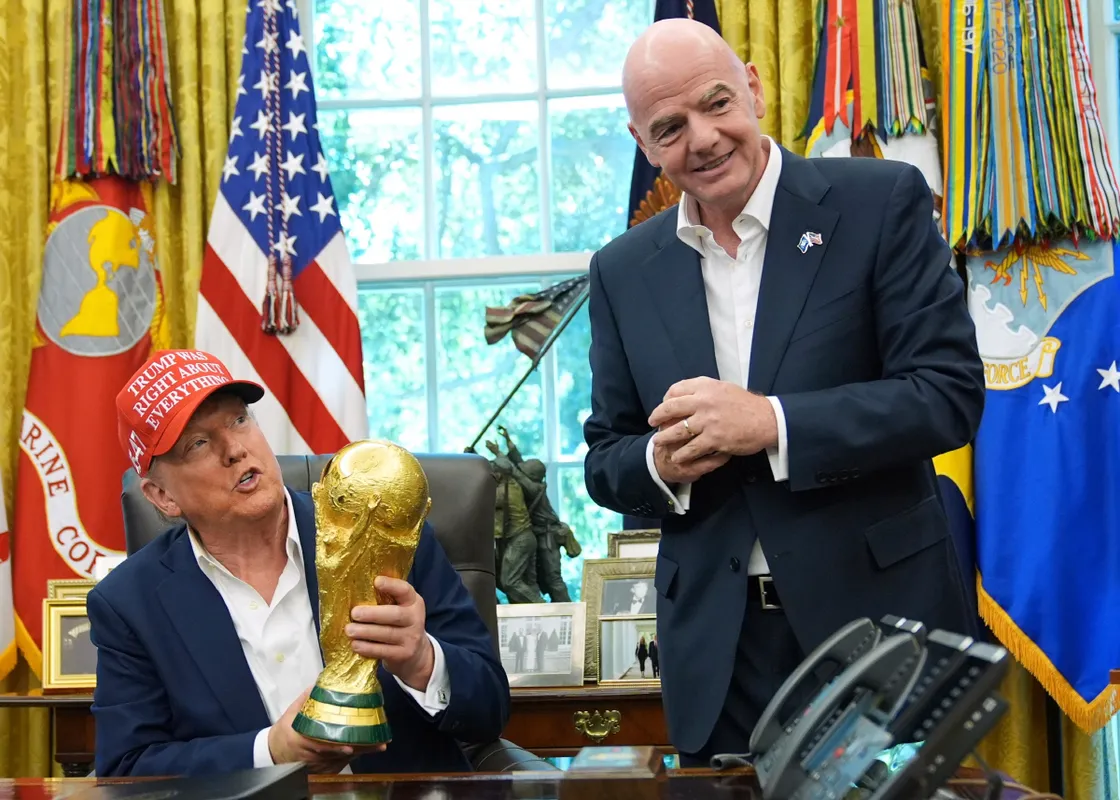
President Trump himself publicly acknowledged making a phone call to FIFA regarding the matter. This intervention has drawn widespread criticism, with many accusing the U.S. administration of attempting to unduly influence a sporting body’s disciplinary process. The decision to grant a suspended sentence, rather than upholding the initial ban, has been particularly contentious.
Lack of Transparency from FIFA
Despite the intense scrutiny, FIFA has offered little in the way of clarification. A member of FIFA’s Disciplinary Committee, speaking to the BBC on the sidelines of a 2026 World Cup quarter-final match between England and Norway, refused to answer any questions pertaining to the case. When pressed by BBC reporter Dan Roan about whether FIFA President Gianni Infantino had requested the suspension’s deferral, the reasons behind the player’s initial ban, and the committee’s thoughts on how the incident was reported and handled, the committee member remained silent.
FIFA did issue a statement following the decision to suspend the ban, which was reportedly 871 words long. The statement asserted that the decision was made after considering “all aspects and evidence” surrounding the incident. However, it failed to provide specific details about what factors were taken into account or why the initial suspension was deemed too severe. Reports suggest that the final decision to suspend the ban was made directly by President Infantino, bypassing the usual Disciplinary Committee review process, which is standard for World Cup disciplinary matters.
Contrasting Treatment of Players
Adding to the controversy is the seemingly disparate treatment of players facing similar offenses. Another player, a key defender for England, also received a two-game suspension for “serious unsportsmanlike conduct” during a match against Mexico. However, unlike the U.S. player, this suspension was not suspended, and the player was forced to miss a crucial match against Norway. This stark contrast has led to accusations of preferential treatment and has intensified calls for FIFA to explain the rationale behind its decisions.
The U.S. player, benefiting from the suspended ban, was able to start in the Round of 16 match against Belgium. Despite his participation, the U.S. team delivered one of its worst performances of the tournament, ultimately losing the match 4-1 and being eliminated from the competition. This outcome has led to further commentary, with some sarcastically suggesting that President Trump’s intervention ultimately proved detrimental to the U.S. team’s performance.
Broader Implications and Public Reaction
The incident raises broader questions about the integrity of FIFA’s disciplinary processes and the potential for political interference in sports. The lack of transparency and the perceived inconsistency in applying rules have damaged FIFA’s reputation among fans and media. The situation has sparked a range of reactions online, from disbelief to outright condemnation, with many questioning the fairness and impartiality of the governing body.
Commentators and fans alike are calling for FIFA to adopt a more transparent and consistent approach to disciplinary matters. The expectation is that such decisions should be based solely on the merits of the case and the established rules of the game, free from external political pressure. The ongoing fallout from this incident underscores the importance of maintaining the independence of sporting organizations to ensure fair competition and public trust.
Conclusion
The controversy surrounding the suspended ban of the U.S. player highlights a critical juncture for FIFA. The organization’s silence in the face of allegations of political interference and inconsistent application of rules has created a significant credibility gap. Moving forward, FIFA must address these concerns directly, providing clear explanations and demonstrating a commitment to impartial decision-making to restore confidence in its disciplinary procedures and uphold the spirit of fair play in international soccer.
