

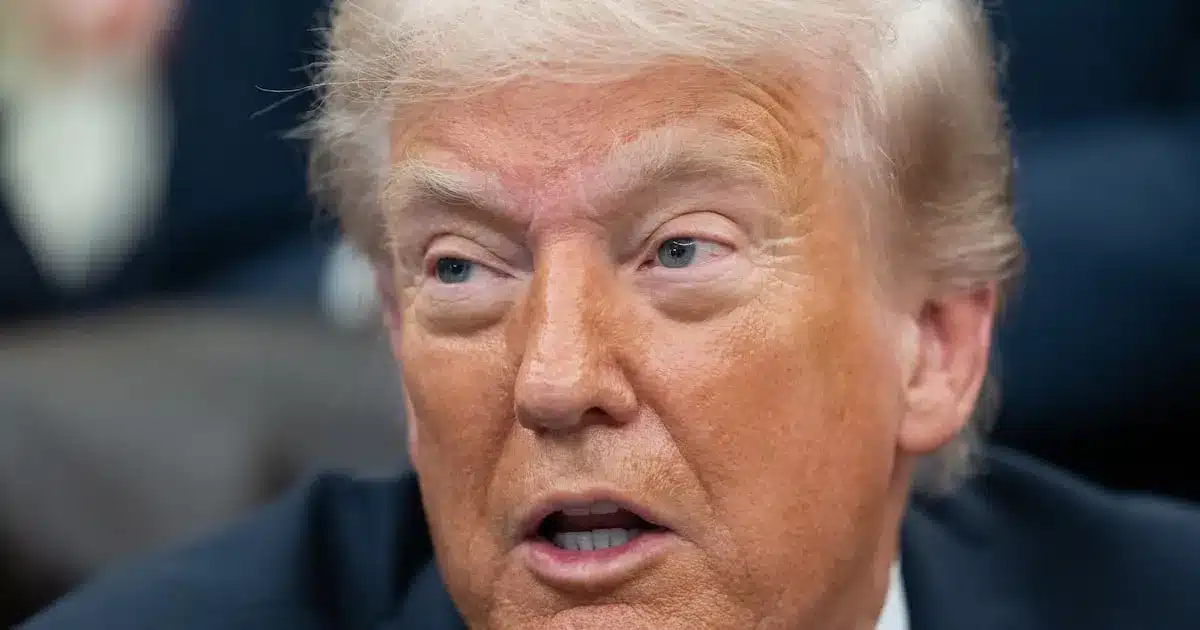
President Donald Trump announced on October 10th that while discussions with Iran could continue, any prospect of a ceasefire had ended. Trump stated via social media that Iran had repeatedly requested to engage in dialogue. He confirmed his agreement to these talks but emphatically declared that the ceasefire with Iran was over.
Background of Tensions
The United States and Iran had previously entered into a Memorandum of Understanding (MOU) last month, which had led to a period of de-escalation. However, this fragile peace was shattered following an attack on a commercial vessel in the Strait of Hormuz on October 7th. Iran was accused of orchestrating this assault, prompting the U.S. to retaliate with a series of strikes against Iranian targets. This escalation has reignited military tensions between the two nations, which had previously been simmering.
Escalation in the Gulf Region
In response to the U.S. strikes, Iran has also engaged in retaliatory actions. Iranian forces have targeted U.S. military facilities located in neighboring Gulf states. This tit-for-tat exchange has significantly heightened military readiness and increased the risk of direct confrontation in the strategically vital Gulf region. The situation remains volatile, with both sides demonstrating a willingness to use military force.
U.S. Stance on Dialogue and Sanctions
President Trump’s administration has consistently maintained a dual approach towards Iran, combining diplomatic overtures with stringent economic sanctions. The stated goal of this policy has been to compel Iran to cease its destabilizing activities in the region, including its ballistic missile program and support for proxy militant groups. While Trump has expressed openness to direct talks, he has also been clear that significant concessions, such as the lifting of sanctions, would only be considered if Iran fundamentally alters its behavior.
The U.S. has accused Iran of violating international norms and engaging in acts of aggression that threaten regional stability. Specific concerns include Iran’s alleged involvement in attacks on oil tankers, its development of advanced weaponry, and its influence over various armed factions across the Middle East. The administration has argued that the sanctions are necessary to curb Iran’s illicit activities and to prevent it from acquiring nuclear weapons, a claim that Iran denies.
Iran’s Perspective and Demands
Iranian officials, on the other hand, have consistently framed the U.S. actions as unwarranted aggression and interference in its internal affairs. They have asserted their right to self-defense and have accused the United States of escalating tensions through its military presence and sanctions. Iran has often called for the lifting of all sanctions, arguing that they inflict undue hardship on the Iranian people and hinder economic development.
Regarding the dialogue, Iran has expressed a willingness to engage in discussions but has also indicated that such talks must be based on mutual respect and the cessation of hostile actions. Some Iranian officials have suggested that the U.S. must first demonstrate a genuine commitment to de-escalation and a willingness to address Iran’s grievances before substantive progress can be made. The attack on the commercial vessel remains a point of contention, with Iran denying responsibility and accusing external actors of attempting to provoke conflict.
International Reactions and Diplomatic Efforts
The heightened tensions between the U.S. and Iran have drawn significant attention from the international community. Several European nations and international organizations have urged restraint from both sides and have offered to mediate discussions. These diplomatic efforts aim to prevent a full-blown conflict, which could have devastating consequences for the global economy and regional security.
The United Nations has also been involved in attempts to de-escalate the situation, with various officials calling for adherence to international law and the principles of peaceful dispute resolution. The U.S. has generally welcomed international support for dialogue but has maintained that any ultimate resolution must address its core security concerns. European allies have often found themselves navigating a difficult path, seeking to preserve the Iran nuclear deal while also acknowledging U.S. concerns about Iran’s broader behavior.
Future Outlook
The immediate future remains uncertain. President Trump’s declaration that the ceasefire is over signals a potential return to a more confrontational posture. However, his continued openness to dialogue suggests that diplomatic channels, however strained, are not entirely closed. The coming weeks will likely be critical in determining whether tensions continue to escalate or if a path toward de-escalation can be found. The actions of both the United States and Iran, as well as the responses of regional and international actors, will play a crucial role in shaping the trajectory of this complex geopolitical situation.
The U.S. administration’s strategy appears to be one of applying maximum pressure while leaving the door open for negotiation, a tactic that has yielded mixed results in the past. Whether this approach will lead to a breakthrough or further entrenchment remains to be seen. The economic impact of sanctions and the potential for military conflict continue to be major concerns for global markets and international stability.
