

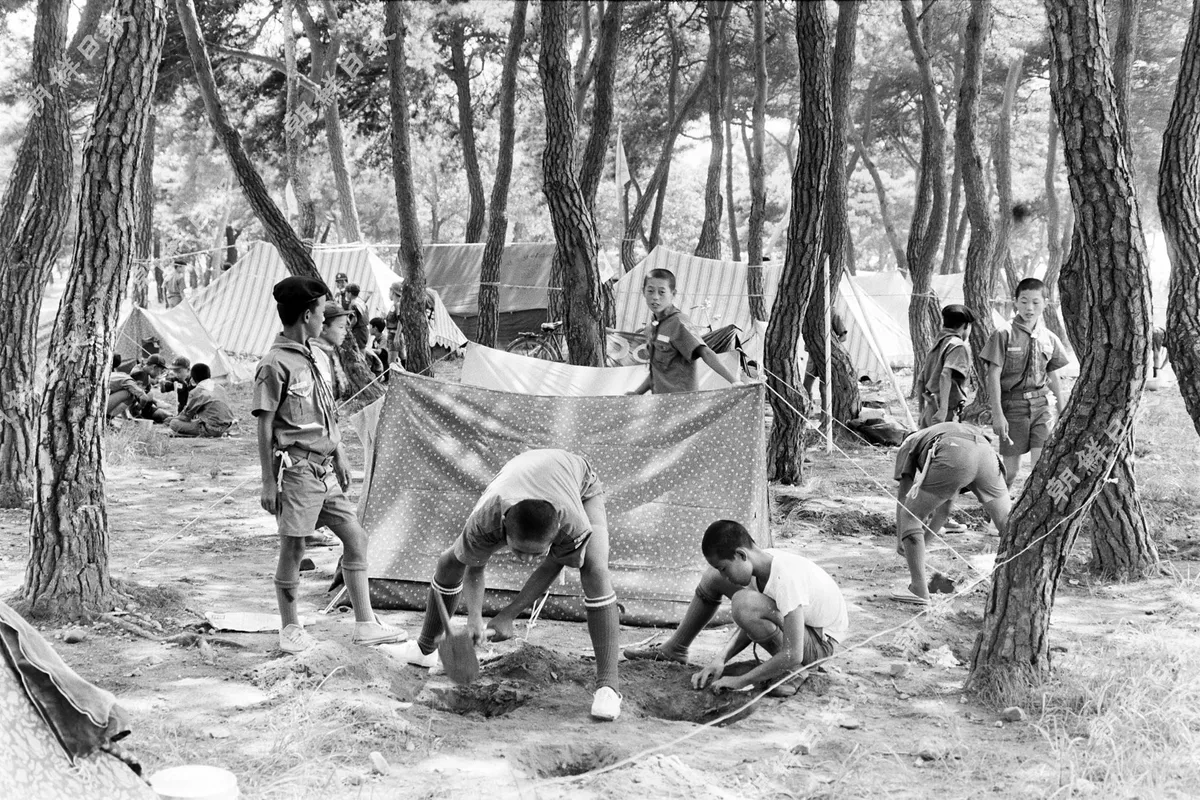
Camping, an activity cherished for its connection to nature and the spirit of adventure, has evolved significantly over the decades. Looking back at historical newspaper articles reveals how this pastime has transformed, adapting to new technologies and changing societal values. From the early days of simple tents and oil lamps to the modern era of sophisticated gear and portable electronics, the essence of camping—escape, exploration, and community—remains.
Early Camping: Simplicity and Self-Sufficiency
A glimpse into the past, specifically a June 1934 article, describes camping as an activity for the young, emphasizing the joy found in nature’s embrace. The text paints a picture of ‘white tents’ (백 포장) and ‘carrying camping gear on one’s back’ (등에 질머진 이동 별장). This suggests a more rugged form of camping, akin to backpacking, where individuals would carry their own equipment to establish temporary shelters. Unlike today’s car camping, where vehicles transport gear, early campers relied on their own strength and resourcefulness to set up camp anywhere.
The article provides practical advice for setting up tents, recommending locations with good drainage and ample water sources. It also lists essential items for a camping trip, including:
- Shelter: Tents and related camping equipment.
- Cooking Utensils: Mention of ‘copels’ (코펠), likely referring to portable cooking sets, and knives.
- Food Supplies: Emphasis on easily transportable and long-lasting items like flour and dried grains (‘응이 가루’), suggesting a need for survival-oriented provisions. Sugar was recommended for energy replenishment.
- First Aid: Basic medical supplies such as bandages, anti-diarrheal medication (‘설사 멈추는 약’), and vaseline.
- Navigation and Lighting: Watches, maps, candles, and ‘lanthans’ (란탄), which likely refers to lanterns.
- Rain Gear: Including items like vinyl ponchos (‘폰초’).
The mention of ‘salt-dried seaweed’ (미역) for soup and ‘flour’ (밀가루) for emergency meals highlights the practical, survivalist aspect of early camping. These items served as precursors to today’s freeze-dried meals and instant foods.
The Evolution of Camping Gear and Activities
By July 1962, camping guides were still being published, but the gear list had begun to show signs of modernization. An article from this period mentions items like ‘disposable cooking sets’ (3취사용구), ‘vinyl water bottles’ (비닐물통), ‘half-containers’ (반합), ‘copels’ (소판 – possibly a typo for 코펠), ‘burners’ (바아너어), and ‘cooking fuel’ (연료). The list also included ‘buskets’ (부삽), ‘knives’ (도끼 – likely a typo for 칼), and ‘tops’ (톱). The inclusion of DDT for insect repellent points to the era’s approach to pest control, a practice now largely discontinued due to environmental concerns.
The 1962 list also included:
- Medicine: Antiseptics (‘소독정’) and DDT.
- Food: Dried seaweed (‘미역’), flour (‘밀가루’), and dried grains (‘응이가루’).
- Tools: Shovels (‘부삽’), knives (‘칼’), saws (‘톱’).
- Lighting: Candles (‘초’), ‘lanthans’ (란탄), and high-alcohol content fuel (‘고형알콜’).
- Rain Gear: Vinyl ponchos (‘폰초’).
Notably, the list also includes ‘transistor radios’ (트랜지스터), indicating the growing presence of portable electronics in outdoor activities. While today’s smartphones consolidate numerous functions—flashlight, map, clock, camera, music player—in a single device, campers in the 1960s needed separate items for each purpose.
Camping as Education and Community Building
Beyond mere recreation, camping was recognized for its educational value. An article from the 1920s and 1930s discusses the importance of camping for youth development, particularly within the context of the Scout movement. Boy Scout troops, like the ‘Joseon Boys Corps’ (조선소년군) founded in 1922, used camping and outdoor activities to foster independence, cooperation, and a sense of national identity. These activities were seen as crucial for building character and preparing young people for the future.
The Scout movement emphasized not just physical training but also moral and social development. Events like the ‘Jamboree’ (잼버리), large gatherings of Scouts from various regions and countries, provided opportunities for cultural exchange and shared experiences. The description of a 1927 Jamboree in Ganghwa Island, evoking images of lush nature and hopeful youth, highlights the movement’s aspirational goals.
The article quotes a newspaper from 1930, referring to camping as ‘carrying a portable tent on one’s back.’ This contrasts with the more organized, large-scale camping events that emerged later. The text also mentions that in countries like Germany and the UK, camping was considered a national activity (‘국기’ – likely meaning ‘national skill’ or ‘national pastime’ rather than ‘national flag’), reflecting its deep integration into their cultures.
Modern Camping and Lasting Values
The core principles of camping—respect for nature, self-reliance, and community—continue to resonate today. While technology has advanced, providing campers with more comfort and convenience, the fundamental appeal of disconnecting from daily life and reconnecting with the natural world remains. The historical perspective shows that camping has always been more than just a hobby; it’s a tradition that fosters personal growth, strengthens bonds, and creates lasting memories.
The advice from older articles, such as choosing a well-drained campsite and preparing essential supplies like first-aid kits and non-perishable food, remains relevant. However, practices like gathering firewood from the surroundings are now heavily restricted in most areas due to fire safety and environmental protection concerns. This evolution underscores the ongoing adaptation of camping to modern environmental awareness and regulations.
