

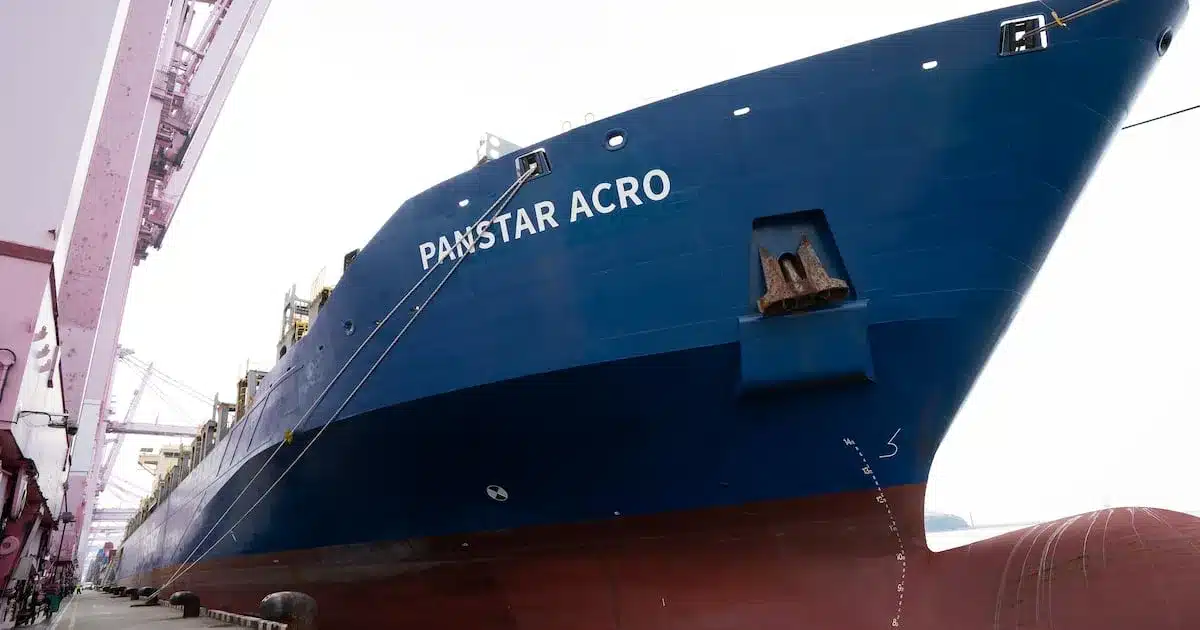
A South Korean container ship has commenced a groundbreaking trial voyage along the Northern Sea Route (NSR), marking a significant milestone for the nation’s maritime industry. This marks the first such navigation by a Korean vessel since 2016, aiming to explore a potentially shorter and more efficient shipping corridor between Asia and Europe.
Pioneering Voyage Through Arctic Waters
The vessel, identified as the ‘Pantos Acroho’ with a capacity of 2758 TEU (Twenty-foot Equivalent Unit), departed from Busan New Port on the evening of June 22nd. It is carrying a diverse cargo, including chemical products and automotive parts, destined for European markets. The ship is expected to enter the Northern Sea Route, which runs along Russia’s Siberian coast, around June 30th and traverse the Arctic passage by July 7th.
Following its Arctic transit, the Pantos Acroho is scheduled to make calls at Felixstowe, UK, on September 9th; Rotterdam, Netherlands, on September 11th; and Gdansk, Poland, on September 15th. The return journey, also via the Northern Sea Route, is planned to conclude back in Busan New Port around October 5th. The entire round trip is anticipated to take approximately 45 days, covering a distance of roughly 6,400 kilometers through the Arctic waters. However, the actual schedule is subject to change based on weather conditions and ice formations in the region.
Cargo and Vessel Capabilities
The Pantos Acroho is laden with a total of 837 TEU, comprising 737 TEU of export cargo and 100 TEU of empty containers. The primary goods being transported include chemical products, used vehicles, automotive components, and metal products. The ship itself is equipped with ice-class capabilities, enabling it to navigate through icy waters.
To ensure the success and safety of this pioneering voyage, the captain and crew have undergone specialized training for Arctic navigation. Additionally, a chief navigator with prior experience on ice-class research vessels like the Araon has joined the voyage. The Ministry of Oceans and Fisheries is maintaining 24-hour communication with the vessel throughout the trial run.
The Strategic Advantage of the Northern Sea Route
The Northern Sea Route has garnered significant attention due to its potential to drastically reduce shipping distances and transit times between Asia and Europe. According to maritime data, utilizing the NSR for the Busan to Rotterdam route cuts the distance to approximately 13,000 kilometers, compared to roughly 20,000 kilometers via the traditional Suez Canal route. This shorter distance is projected to reduce transit time by about 10 days.
However, the NSR presents unique challenges. Navigation conditions can be highly variable due to ice and weather. The successful operation of the Pantos Acroho relies on its advanced ice-breaking capabilities and the expertise of its crew.
Data Collection and Future Prospects
This trial voyage is crucial for collecting vital data on actual navigation distances, fuel consumption, oil and lubricant usage, and overall operational costs. This information will be instrumental in assessing the economic viability and safety of regular commercial operations on the Northern Sea Route.
The South Korean government has set a long-term goal of establishing commercial operations on the NSR by 2030, following the successful completion of these trial voyages. The route’s development is intrinsically linked with Russia, as a significant portion of the NSR lies within Russian territorial waters. Therefore, future expansion will necessitate close cooperation with Russia, alongside navigating international sanctions and other geopolitical considerations.
Navigating Challenges and Opportunities
The successful transit of the Pantos Acroho through the Arctic waters is a testament to the growing potential of the Northern Sea Route. It offers a compelling alternative to established shipping lanes, promising reduced transit times and potentially lower costs. The data gathered from this voyage will be critical in determining the feasibility of integrating the NSR into global supply chains.
While the environmental and operational challenges of the Arctic remain significant, advancements in vessel technology and navigation expertise are paving the way for increased maritime activity. The South Korean government’s strategic vision underscores a commitment to exploring new logistical frontiers and enhancing its position in international trade. The journey of the Pantos Acroho is not just a trial run; it’s a step towards redefining global maritime trade routes.
The insights gained from this expedition will inform future investments and policy decisions, potentially unlocking new economic opportunities for South Korea and other nations looking to optimize their shipping operations. The long-term success of the NSR will depend on continued technological innovation, robust international collaboration, and careful management of the unique environmental conditions of the Arctic.
