

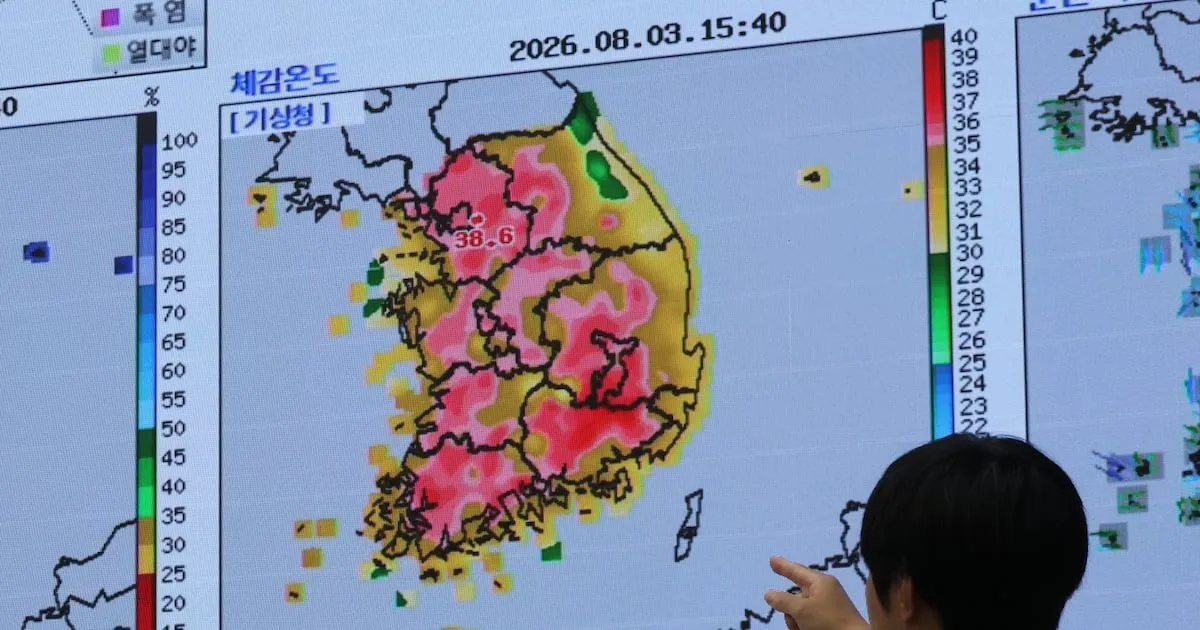
South Korea is bracing for another day of intense heat, with daytime high temperatures expected to reach up to 38 degrees Celsius (100.4 degrees Fahrenheit) on Tuesday, August 4th. The heatwave shows no signs of abating, and the national weather agency is urging citizens to take precautions against the extreme conditions. In addition to the oppressive heat, scattered showers are forecast for various regions across the country during the afternoon and evening hours.
Record-Breaking Temperatures Persist
The Korea Meteorological Administration (KMA) predicts that maximum temperatures on Tuesday will range from 30 to 38 degrees Celsius. Overnight low temperatures are anticipated to be between 23 and 27 degrees Celsius, significantly above the seasonal average. These temperatures are reportedly 2 to 5 degrees Celsius higher than normal for this time of year, exacerbating the effects of the prolonged heatwave.
Regional Temperature Forecasts
Specific high-temperature forecasts for major cities include:
- Seoul: 38°C (100.4°F)
- Incheon: 37°C (98.6°F)
- Suwon: 37°C (98.6°F)
- Chuncheon: 37°C (98.6°F)
- Gangneung: 31°C (87.8°F)
- Cheongju: 36°C (96.8°F)
- Daejeon: 37°C (98.6°F)
- Jeonju: 37°C (98.6°F)
- Gwangju: 38°C (100.4°F)
- Daegu: 36°C (96.8°F)
- Busan: 34°C (93.2°F)
- Jeju: 33°C (91.4°F)
Overnight low temperatures are also expected to remain high:
- Seoul: 27°C (80.6°F)
- Incheon: 27°C (80.6°F)
- Suwon: 26°C (78.8°F)
- Chuncheon: 25°C (77°F)
- Gangneung: 26°C (78.8°F)
- Cheongju: 26°C (78.8°F)
- Daejeon: 25°C (77°F)
- Jeonju: 26°C (78.8°F)
- Gwangju: 26°C (78.8°F)
- Daegu: 26°C (78.8°F)
- Busan: 26°C (78.8°F)
- Jeju: 27°C (80.6°F)
Heatwave Warnings and Safety Advisories
The KMA has issued a severe heatwave warning, particularly for the Seoul metropolitan area and the southern regions, where the perceived temperature is expected to exceed 38 degrees Celsius. This level of heat poses a significant risk to health, and authorities are strongly advising against all non-essential outdoor activities and outdoor work. The warning emphasizes the need to immediately suspend any activities that could be impacted by the extreme heat.
Across most of the country, a special heatwave advisory is in effect. There is a heightened risk of heatstroke due to the prolonged high temperatures. Citizens are strongly encouraged to drink plenty of water and to significantly limit strenuous outdoor activities. The advisory also includes recommendations to ensure adequate ventilation indoors and to avoid leaving flammable materials inside vehicles, as temperatures inside parked cars can become dangerously high. Precautions against potential power outages due to increased air conditioner usage are also advised.
Afternoon Showers and Lingering Heat
Beginning around noon, scattered showers are anticipated in the southern parts of Gyeonggi Province, the Chungcheong region, the Jeolla region, and inland areas of Gyeongsang Province, as well as the mountainous and inland areas of Jeju Island. The expected rainfall amounts are as follows:
- Southern Gyeonggi Province: 5-40mm
- Daejeon, Sejong, South Chungcheong, North Chungcheong: 5-40mm
- Gwangju, South Jeolla, North Jeolla: 5-60mm
- Inland areas of North Gyeongsang and South Gyeongsang: 5-40mm
- Mountainous and inland areas of Jeju Island: 5mm
While the rain may offer temporary relief and a slight drop in temperature in the affected areas, the humidity is expected to remain high. Once the rain subsides, temperatures are likely to rise again, leading to muggy and uncomfortable conditions. The KMA notes that even after the rain, the combination of high temperatures and humidity will continue to make it feel very hot.
Tropical Nights Expected
The persistent heat is also contributing to a phenomenon known as “tropical nights,” where nighttime temperatures fail to drop significantly. Minimum temperatures are expected to remain above 25 degrees Celsius (77 degrees Fahrenheit) in many areas, preventing adequate cooling and rest. This lack of overnight relief can exacerbate the health risks associated with the heatwave.
The KMA is advising residents to maintain cool indoor environments and to drink sufficient water before sleeping to mitigate the effects of these warm nights. The agency reiterates the importance of staying hydrated and seeking cool places to rest, especially for vulnerable populations such as the elderly and young children.
