

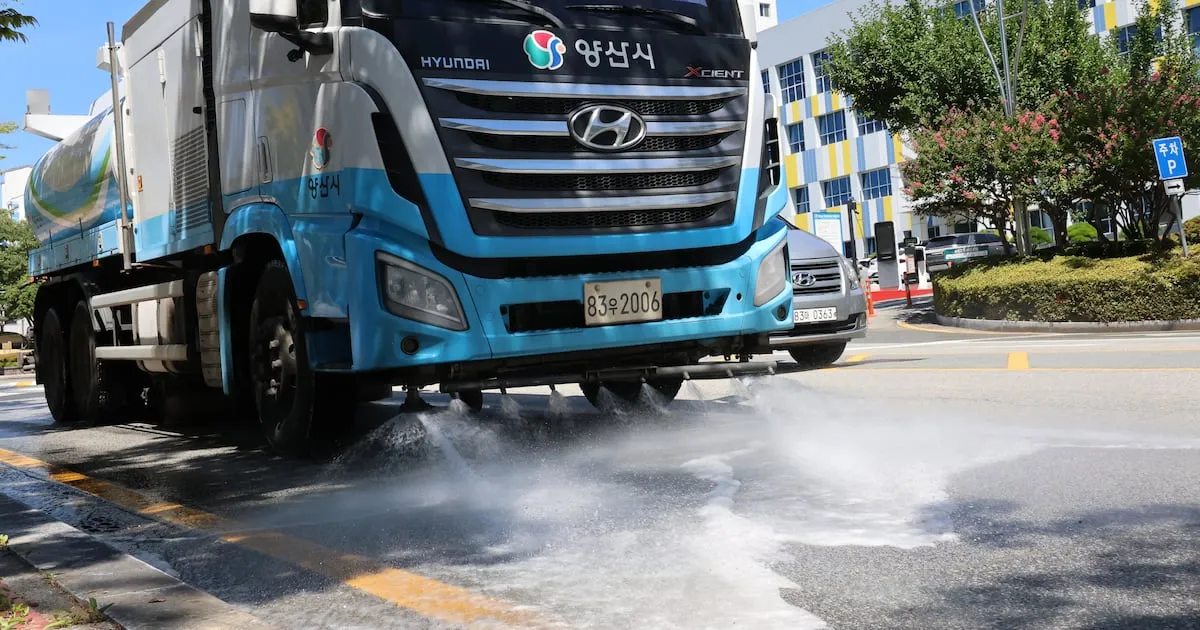
Yangsan City in South Gyeongsang Province has recorded a scorching 41.4°C, setting a new all-time high temperature for South Korea. This unprecedented heatwave has gripped the region for four consecutive days, with temperatures consistently exceeding 40°C. The mercury in Yangsan reached its peak at approximately 1:40 PM on July 31st, marking the hottest day since meteorological observations began in the area in late December 2008.
New National High Temperature Record Established
The 41.4°C recorded in Yangsan officially surpasses the previous national record of 41.0°C, which was set in Hongcheon, Gangwon Province, on August 1, 2018. That heat event was widely described as a “once-in-a-generation heatwave.” The new record, based on data from the 97 primary observation sites officially managed by the government for climate statistics, signifies a critical new benchmark in the nation’s meteorological history.
Even when considering data from automatic weather stations (AWS), which provide more granular readings, instances of temperatures exceeding Yangsan’s current record are exceptionally rare. A review of records since 1973 reveals only a handful of comparable heat events. These include Gwangju City (41.9°C) and Gangbuk-gu in Seoul (41.8°C) in early August 2018, and Yeoju City in Gyeonggi Province (41.6°C) in early August 2024. These instances are separated by mere days, highlighting the intensity and localized nature of extreme heat events.
Considering that the hottest part of the day typically occurs between 3 PM and 4 PM, there is a distinct possibility that the temperature in Yangsan could have climbed even higher on July 31st. The extreme heat in Yangsan has shown no signs of abating since July 29th, marking the fourth day of relentless high temperatures. The accumulation of heat in the ground and atmosphere over the preceding two days, with temperatures consecutively surpassing 40.3°C, contributed to the sharp rise recorded on the 31st.
Escalating Heat Peaks Each Day
A notable trend observed during this heatwave is the progressively earlier occurrence of temperatures exceeding 40°C each day. On the first day of the heatwave, July 29th, the 40°C mark was not reached until after 3:30 PM. By the following day, July 30th, the threshold was crossed much earlier, around 1:10 PM. On July 31st, the third day of intense heat, Yangsan had already surpassed 40°C by 12:36 PM, demonstrating an alarming acceleration of the day’s peak temperature.
This marks only the third time in South Korea’s recorded meteorological history that temperatures have consecutively exceeded 40°C for more than three days. Previous instances of prolonged high temperatures were recorded in August 2018, when Anseong City in Gyeonggi Province experienced four consecutive days above 40°C, and Yeongcheon City in North Gyeongsang Province recorded three consecutive days exceeding this threshold.
Broader Context of Extreme Heat in South Korea
The current heatwave in Yangsan is part of a larger pattern of extreme weather events affecting South Korea and other parts of the world. Scientists attribute such intensifying heatwaves to climate change, driven by human activities that increase greenhouse gas concentrations in the atmosphere. The Intergovernmental Panel on Climate Change (IPCC) has consistently warned about the increasing frequency and severity of heatwaves globally.
These extreme temperatures pose significant risks to public health, agriculture, and infrastructure. Heat-related illnesses, such as heatstroke and exhaustion, can become life-threatening, particularly for vulnerable populations like the elderly, young children, and individuals with pre-existing health conditions. Agricultural yields can be severely impacted by prolonged heat and drought, potentially leading to food shortages and economic losses.
Infrastructure, including power grids and transportation systems, can also be strained. High temperatures can lead to increased demand for electricity due to air conditioning use, potentially causing blackouts. Road surfaces and railway lines can buckle or warp under extreme heat, disrupting transportation.
Government and Public Response
In response to the record-breaking heat, authorities have issued heatwave advisories and warnings across affected regions. Emergency services are on high alert to respond to heat-related incidents. Public health campaigns are underway to educate citizens on how to stay safe during the extreme heat, emphasizing hydration, avoiding strenuous outdoor activities during peak hours, and checking on vulnerable neighbors.
The meteorological administration continues to monitor the situation closely, providing updated forecasts and advisories. Citizens are urged to stay informed and follow safety guidelines issued by local governments and health organizations. The prolonged and intense nature of this heat event underscores the growing challenges posed by climate change and the need for adaptation and mitigation strategies.
Looking Ahead
While the immediate focus is on managing the current crisis, the record-breaking temperatures serve as a stark reminder of the long-term implications of global warming. Experts emphasize the importance of transitioning to cleaner energy sources, improving energy efficiency, and implementing sustainable land-use practices to combat climate change and reduce the likelihood of such extreme weather events in the future. The resilience of communities and infrastructure will be increasingly tested as heatwaves become more common and severe.
