

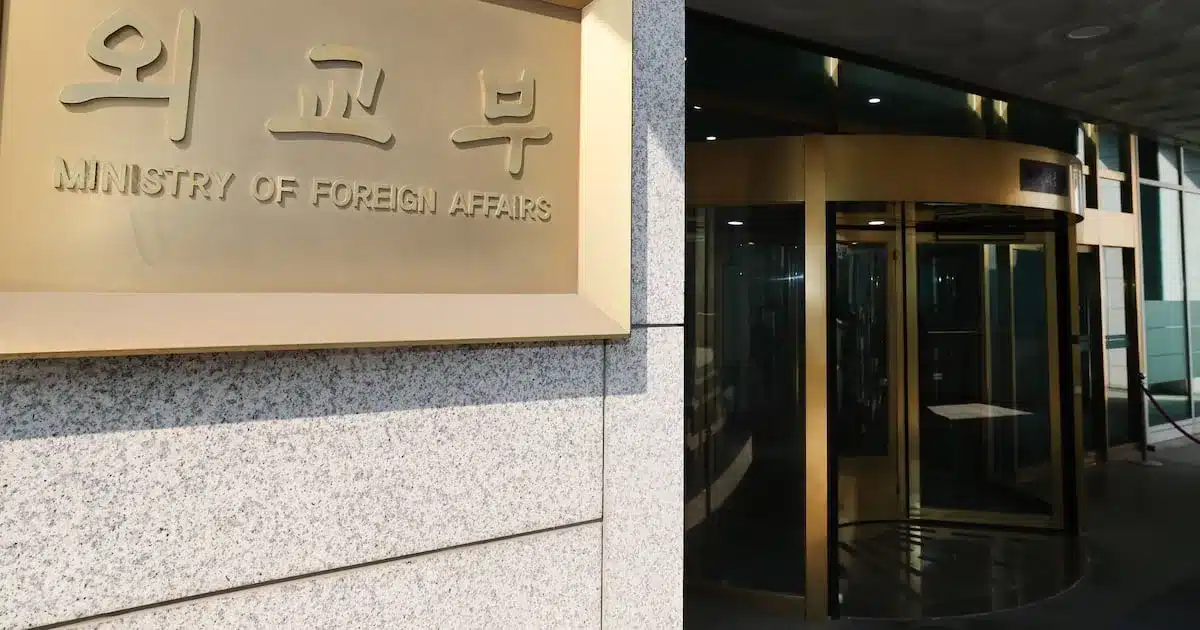
South Korean Foreign Minister Cho Tae-yul and his Greek counterpart, Giorgos Gerapetritis, met in Seoul on April 20th to discuss expanding practical cooperation, particularly in maritime affairs, and to exchange views on regional geopolitical dynamics. The discussions highlighted a shared commitment to international law and the freedom of navigation, building upon the strong ties between the two nations.
Strengthening Maritime Ties and Innovation
During the meeting, Minister Cho acknowledged the long-standing and complementary cooperation between South Korea and Greece in the maritime sector. He proposed broadening this collaboration into a wider array of fields. Minister Gerapetritis, in turn, lauded South Korea’s advanced shipbuilding technology and expressed keen interest in enhancing cooperation in maritime innovation. Specific areas of interest included advancements in the defense industry, unmanned vessels, and eco-friendly shipbuilding, signaling a mutual desire to leverage each country’s strengths for future growth.
Both ministers affirmed that South Korea and Greece share core values such as democracy and the rule of law. They recognized their common identity as maritime nations and pledged to continue working together to uphold international law and ensure the freedom of navigation on the high seas. This shared foundation is expected to foster deeper collaboration in addressing global maritime challenges.
Broader Diplomatic Engagement and Regional Security
Beyond maritime issues, the two foreign ministers also focused on increasing people-to-people exchanges between their countries. This initiative aims to foster greater understanding and strengthen the overall bilateral relationship.
The discussions extended to pressing international issues, with both ministers exchanging perspectives on the geopolitical situations in the Middle East and Ukraine. They agreed to maintain close communication and coordination on these critical global matters, underscoring their shared interest in regional stability and international peace.
Engagement with International Maritime Experts
On the same day, Minister Cho also met with distinguished scholars from the International Group of Experts on the Causes of Ship Accidents (IGCC). This meeting, held on the sidelines of the 34th Northeast Asia Cooperation Dialogue (NEACD), provided an opportunity to discuss the security environment in Northeast Asia and the specific dynamics surrounding the Korean Peninsula. The exchange with experts from the IGCC, including Professor Shuxian Jiao, Professor Tai Ming Cheung, and Professor Stefan Hagedorn, offered valuable insights into complex regional security issues.
Significance of the Bilateral Meeting
The meeting between the foreign ministers of South Korea and Greece represents a significant step in enhancing bilateral relations. By focusing on practical cooperation in the vital maritime sector, the two nations are building on their shared values and strategic interests. The agreement to expand collaboration into areas like maritime innovation and defense technology, coupled with a commitment to upholding international maritime law, positions both countries to navigate future challenges and opportunities effectively.
Furthermore, the dialogue on regional and international security, including the situations in the Middle East and Ukraine, demonstrates a shared commitment to global stability. The emphasis on increasing people-to-people exchanges also points towards a long-term vision of strengthening the cultural and societal bonds between South Korea and Greece.
Looking Ahead: A Continued Partnership
The outcomes of the Seoul meeting suggest a robust and forward-looking partnership between South Korea and Greece. The expansion of maritime cooperation, encompassing both traditional strengths and future-oriented innovations, is poised to yield substantial benefits. As maritime nations with a shared commitment to democratic values and international order, their continued collaboration is crucial for addressing global maritime governance and security concerns.
The ongoing diplomatic engagement on key geopolitical issues and the planned increase in cultural exchanges further solidify the foundation for a deeper and more comprehensive relationship. Both nations are set to leverage this strengthened partnership to promote mutual prosperity and contribute to a more stable international environment.
