

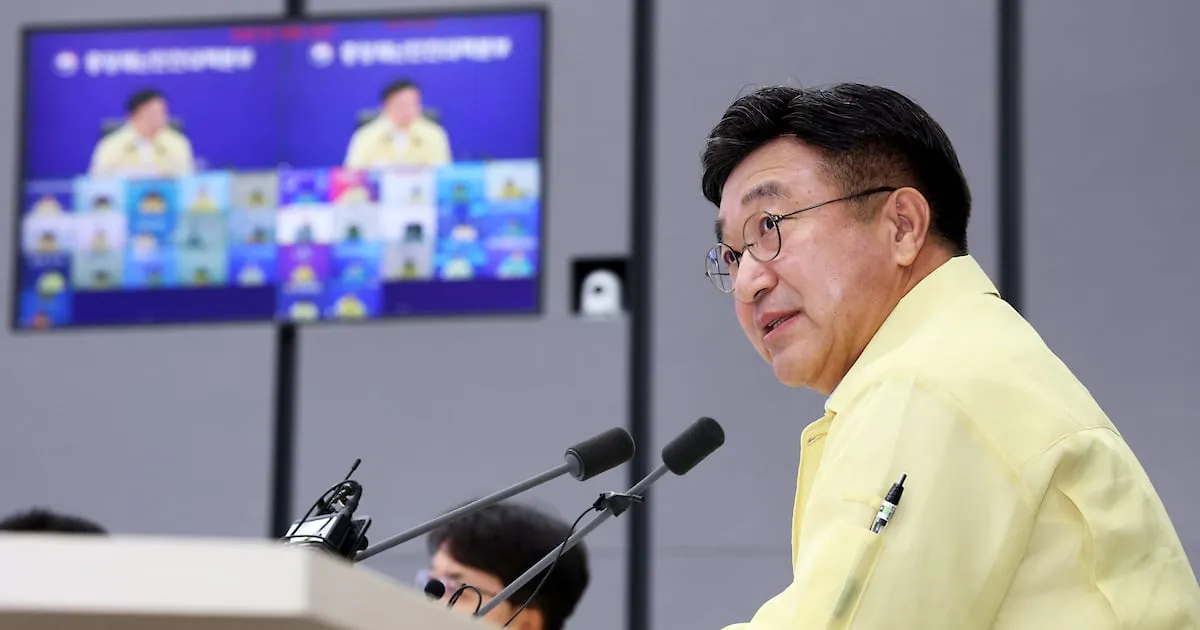
The South Korean government has elevated its emergency response level to the second tier in recognition of the escalating and prolonged national heatwave and severe drought conditions. This heightened alert signifies a more robust, nationwide effort to mitigate the impacts of extreme weather, focusing on direct on-site inspections and urgent financial aid for affected regions.
Emergency Response Level Raised to Tier 2
Effective from 1 PM on August 2nd, the Ministry of the Interior and Safety (MOIS) officially upgraded the national heatwave response to the second tier. This move activates a comprehensive, government-wide disaster management system. It follows a rapid escalation from the initial ‘serious’ alert issued for heatwave disaster risk on July 27th, marking a significant intensification of measures within just six days.
Minister of the Interior and Safety, Yun Ho-jung, has directed that central and local government officials conduct on-site inspections at least once a week. For areas under a severe heatwave warning, cabinet-level officials are mandated to visit daily to assess the situation firsthand. This directive emphasizes a ground-up approach, prioritizing immediate, on-the-scene management and support.
Enhanced On-Site Monitoring and Support
To bolster these efforts, MOIS is deploying national-level disaster management directors to key affected areas, including the Seoul metropolitan area and Gyeongsangnam-do province. Additionally, regional disaster situation managers will be dispatched across the country. Their primary role will be to assess local heatwave response capabilities and identify areas requiring supplementary support.
The government has allocated an additional 170 million won to the disaster relief fund to support regions experiencing both extreme heat and drought. Specific allocations include 80 million won for Jeollanam-do and the Gwangju metropolitan area, 20 million won each for Busan and Ulsan, and 50 million won for Gyeongsangnam-do.
Addressing Drought and Water Scarcity
The prolonged drought has created critical water shortages in several regions, prompting urgent government intervention. MOIS plans to provide an emergency special disaster relief grant of 5.75 billion won to drought-stricken areas, particularly in Gyeongsangnam-do and Gyeongsangbuk-do, which are facing severe difficulties in securing water supplies due to low reservoir levels and insufficient rainfall.
Minister Yun recently visited Miryang City in Gyeongsangnam-do, an area simultaneously grappling with heatwave and drought impacts. During his visit, he inspected the operations of temporary cooling centers for the elderly and listened to their concerns regarding the heat. He also reviewed measures being implemented to secure water supplies for the long term, including the operation of water treatment facilities, direct pumping from rivers, and the extension of water pipelines between reservoirs. The procurement of water trucks and the costs associated with water supply facilities were also discussed.
Ensuring Safety at Public Facilities
Minister Yun also assessed the safety management status at the Geumshidae Water Park in Miryang. He emphasized the importance of maintaining adequate safety personnel, ensuring the proper management of safety equipment such as life buoys and ropes, and strengthening on-site supervision to ensure visitors adhere to basic safety rules. This focus on public safety extends to all recreational areas during the extreme weather period.
Minister’s Statement and Public Advisory
Minister Yun stated, “The heatwave and drought are not just threats to the livelihoods of farmers, but direct dangers to the daily lives of vulnerable groups, including the elderly and outdoor workers.” He added, “Through the operation of the second-tier emergency response system, we will meticulously manage the response situation between the central and local governments. We will provide prompt administrative and financial support required on the ground to minimize the suffering of our citizens.””
MOIS is urging the public to exercise caution during the ongoing heatwave. Citizens are advised to refrain from outdoor activities during peak heat hours and to observe safety precautions to prevent heat-related illnesses and accidents. The ministry also requests adherence to safety guidelines during outdoor work and recreational activities.
Broader Implications and Future Preparedness
The current situation underscores the increasing frequency and intensity of extreme weather events, necessitating a sustained and adaptive approach to disaster management. The government’s decision to elevate the response level reflects a commitment to proactive measures and resource allocation in the face of these challenges.
The focus on direct intervention, including financial aid and on-site inspections, aims to provide immediate relief to affected communities. Furthermore, the emphasis on securing water resources and ensuring public safety at facilities like cooling centers and water parks highlights a comprehensive strategy to address both immediate needs and potential long-term consequences of the drought.
As the heatwave and drought persist, the government’s enhanced response mechanism is expected to play a crucial role in safeguarding public health and well-being, and in supporting the recovery of affected sectors, particularly agriculture.
