

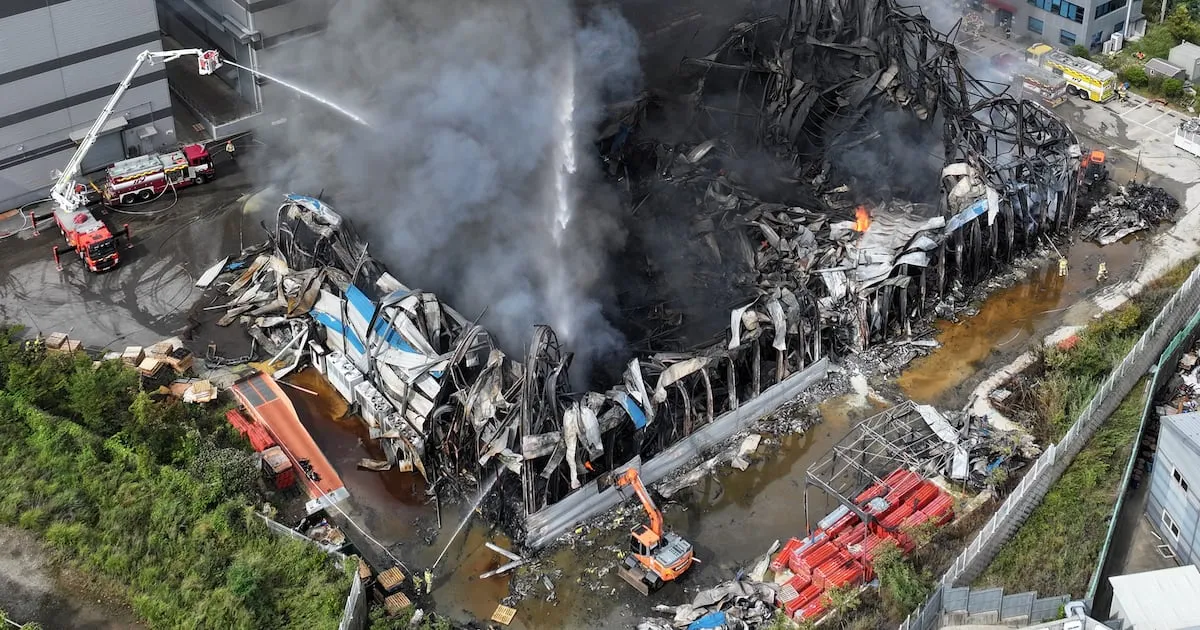
A significant fire that broke out at a hazardous material storage facility in Pyeongtaek, Gyeonggi Province, was successfully brought under control after approximately nine hours. Fortunately, no injuries were reported as a result of the incident.
Firefighters Respond to Pyeongtaek Hazardous Material Blaze
The Gyeonggi Provincial Fire and Disaster Headquarters announced the initial containment of the fire at the PJK Pyeongtaek 1 Center, located in Tojin-ri, Cheongbuk-eup, Pyeongtaek City, at 9:08 AM on the 11th. Initial containment signifies that the fire’s spread has been halted, and there is no immediate risk of further expansion.
The alarm was raised around 12:03 AM the same day, triggered by an automatic fire detection system. The affected structure was a warehouse storing approximately 1.91 million liters of chemical substances, including Class 4 hazardous materials. According to the Hazardous Materials Safety Management Act, Class 4 hazardous materials are defined as flammable liquids, encompassing specific flammable substances, petroleum-based products (Grades 1-4), and alcohols.
Rapid Fire Spread and National Response
Fire officials assessed that the fire could spread rapidly due to the presence of chemicals within the warehouse. Consequently, a National Firefighting Mobilization Order was issued at 3:39 AM. Such an order is granted by the Fire Chief when a disaster is too large for the firefighting capabilities of a specific city or requires national-level resource deployment.
The mobilization brought a substantial response to the scene. Firefighting efforts involved 102 pieces of equipment, including 28 support vehicles from other cities, and 255 personnel. These resources were deployed to combat the blaze and prevent its further escalation. The fire’s progression was halted, and no additional spread occurred.
Damage Assessment and Recovery Operations
Out of the seven buildings at the facility, only two sustained fire damage. The firefighting operation was scaled back, with the emergency response phase being lifted at 8:30 AM. A partial de-escalation of the National Firefighting Mobilization Order also took place at this time.
Currently, cleanup and mop-up operations are underway to extinguish any remaining embers and secure the site. Fire officials stated that a detailed investigation into the exact cause and circumstances of the fire will commence once all suppression activities are fully completed.
Understanding Hazardous Material Storage
The incident highlights the critical importance of stringent safety protocols in facilities that store hazardous materials. Class 4 flammable liquids, as identified in this case, pose a significant risk due to their low flash points and potential for rapid ignition. The classification system for hazardous materials is designed to inform emergency responders about the specific dangers they may face, allowing for tailored safety measures and response strategies.
The PJK Pyeongtaek 1 Center’s role as a storage facility for such materials underscores the need for robust infrastructure, regular safety inspections, and comprehensive emergency preparedness plans. The quick thinking and coordinated efforts of the firefighters, supported by resources from across the region and at a national level, were instrumental in preventing a potentially far more catastrophic outcome.
While the immediate threat has been neutralized, the investigation into the fire’s origin will be crucial in identifying any lapses in safety procedures or potential contributing factors. The findings are expected to inform future safety regulations and practices for hazardous material storage sites throughout South Korea, aiming to prevent similar incidents and ensure the safety of surrounding communities.
Conclusion: A Swift Resolution to a Dangerous Situation
The successful containment of the Pyeongtaek hazardous material fire within nine hours, without any loss of life or injury, represents a significant achievement for the emergency services involved. The deployment of national resources and the dedication of hundreds of personnel were key to mitigating the risks associated with the flammable chemicals. As recovery operations continue, the focus will shift to understanding the root cause and reinforcing safety measures to protect against future occurrences.
