

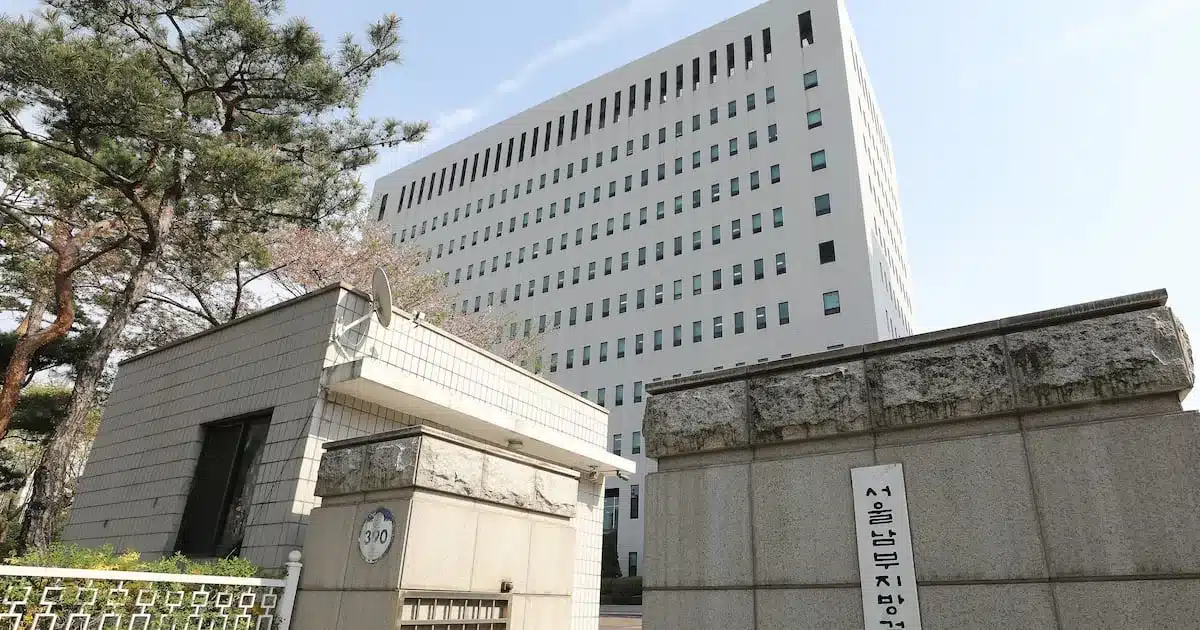
Prosecutors have appealed the first-instance ruling that handed down prison sentences to a couple accused of defrauding a wealthy couple out of approximately 8.7 billion won (about $7.8 million USD) by posing as a ‘ghost medium.’ The Seoul Southern District Prosecutors’ Office announced on November 22nd that they filed an appeal on November 20th against the initial verdict for Jang (50) and Sim (48), who were indicted on charges including fraud, embezzlement, and violations of the Act on Special Cases Concerning the Punishment of Specific Economic Crimes (coercion using filming materials).
Both the defendants, Jang and Sim, and the victims’ legal representatives reportedly filed appeals on the same day as the initial ruling, expressing dissatisfaction with the court’s decision.
Initial Sentencing and Prosecution’s Discontent
On November 14th, the Seoul Southern District Court, presided over by Judge Seo Bo-min, sentenced Jang to 20 years in prison and Sim to 17 years. The court also mandated that both individuals undergo 40 hours of sex offense treatment programs. Furthermore, the court ordered the couple to jointly pay the plaintiff 83.9405 billion won (approximately $75 million USD) in damages, along with delayed damages at an annual rate of 5%.
Jang, identified as the primary perpetrator, was also ordered to additionally pay the delayed damages on 459 million won (about $410,000 USD) that he embezzled independently.
During the initial sentencing, the court explained its reasoning by stating that the victims had lost most of their assets and suffered significant mental distress due to the incident, leading to the collapse of their family, including divorce. Despite these severe consequences, the court noted a lack of effort from the victims towards recovery and observed that the victims were criticizing the perpetrators harshly.
The prosecution’s appeal stems from the belief that the sentences imposed were insufficient, particularly when compared to the initial charges sought. In the preliminary trial held on October 9th, prosecutors had requested 25 years imprisonment and a fine of 83.9405 billion won, plus an additional forfeiture of 37.6512 billion won for Jang. For Sim, they had requested 22 years imprisonment and a fine of 83.1405 billion won, with an additional forfeiture of 36.8512 billion won.
The ‘Ghost Medium’ Deception
Jang and Sim are accused of fabricating a persona of a ‘ghost medium’ to deceive a couple, identified as the son of a founder of a famous household goods company, referred to here as Mr. A. They allegedly coerced Mr. A and his wife into filming explicit videos under the pretense of a spiritual ritual. Subsequently, they used these videos as leverage, threatening to distribute them to the man’s university and family, to extort approximately 77 billion won (about $69 million USD).
The scheme also involved extorting a significant portion of an apartment, valued at over 1 billion won (around $900,000 USD), under the guise of investment guarantees.
Additional Charges and Appeals
In addition to the fraud charges, the couple faces accusations of embezzling approximately 6.6 billion won (about $5.9 million USD) from Mr. A’s company. The court had previously sentenced both Jang and Sim to 8 years in prison for these embezzlement charges. Sim also filed an appeal against this specific ruling on November 8th.
The prosecution’s decision to appeal the initial ruling indicates a significant divergence in perceived justice between the prosecution and the court regarding the severity of the sentences for the elaborate fraud scheme. The appeals process will now determine if the sentences will be upheld, increased, or decreased.
Conclusion
The case involving the ‘ghost medium’ fraud has highlighted a sophisticated method of financial and emotional exploitation. The prosecution’s appeal underscores their stance that the initial sentences did not adequately reflect the gravity of the crimes committed and the extensive damage inflicted upon the victims. The upcoming legal proceedings will be closely watched to see how the appellate court addresses the complexities of this case and the demands for justice from both the prosecution and the victims’ side.
