

New property tax proposals targeting non-primary residents and owners of high-value homes are facing significant backlash, with concerns growing within the ruling party about public opinion. Homeowners in Seoul and the surrounding metropolitan area, burdened by what they perceive as a real estate policy focused heavily on taxes and regulations, are strongly opposing the government’s measures. Critics argue that the proposed tax increases disproportionately affect individuals who are not speculative investors, including long-term owners and those with only one property who may not be currently residing in it.
Rising Tax Burdens and Public Criticism
Public discourse suggests that the government is unfairly blaming property owners for policy failures, imposing a heavy tax burden in the process. Opposition parties are vocal in their criticism, asserting that the administration is relying solely on tax hikes and stricter regulations rather than implementing effective measures to increase housing supply. They contend that these policies will not stabilize housing prices but will instead inflate rental costs, disproportionately benefiting those with financial security while penalizing ordinary citizens.
The proposed tax increases are described by some as akin to a “Don Quixote policy” bordering on national recklessness. Concerns are mounting not only from the public but also from within the ruling party itself. There is a growing sentiment that tax and regulatory measures alone are insufficient to control housing prices and that the focus on these aspects might exacerbate the rental market crisis, potentially leading to electoral defeat.
Internal Party Dissent and Calls for Revision
Members of the ruling party, particularly those representing Seoul constituencies, have held meetings to discuss the real estate situation. They have voiced the need to closely monitor the impact on the rental market and non-primary homeowners. Despite official statements from the presidential office emphasizing that tax increases are not intended to curb housing prices but to ensure fair taxation, the proposed measures are widely seen as punitive. While taxes on primary residences might see a slight reduction, those owning multiple properties or high-value single residences face substantial increases.
This approach is interpreted by many as an attempt to force property owners to sell their homes by imposing unaffordable tax rates. The government maintains that the tax adjustments are not aimed at controlling prices, but critics question the urgency and intensity of these measures if price stabilization is not the primary objective. This disconnect fuels public sentiment that the government’s actions and words are misaligned.
Government’s Proposed Solutions and Their Reception
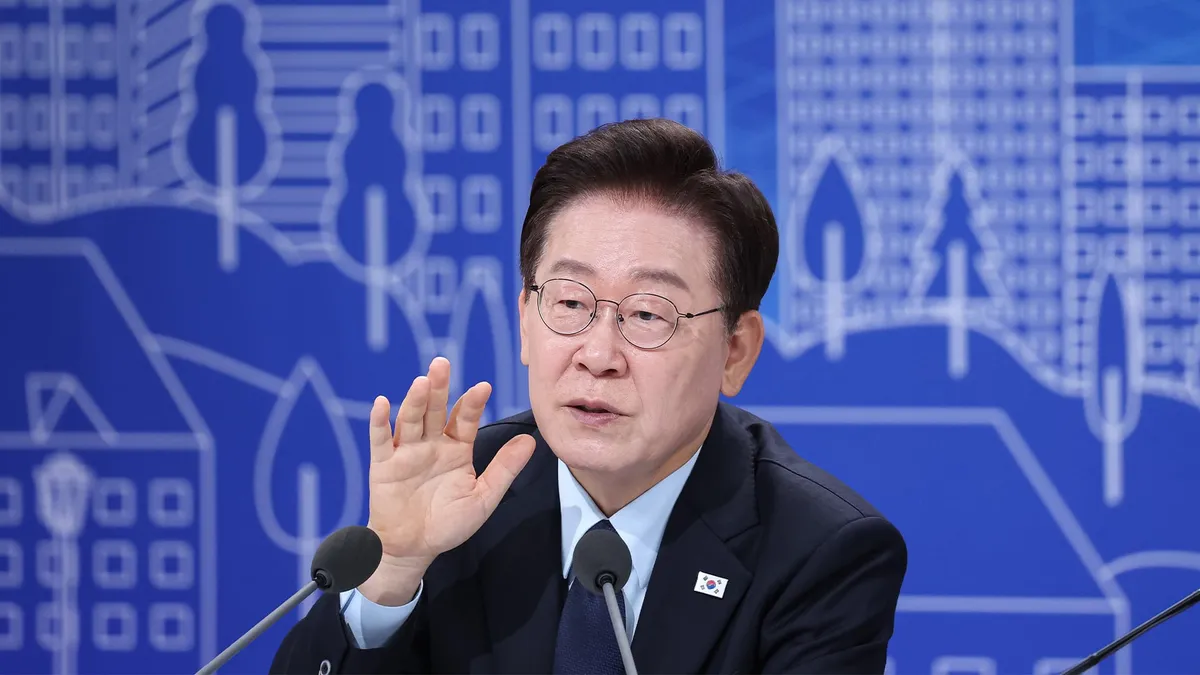
The administration has pledged to introduce housing supply measures swiftly. A meeting was held on July 7th, presided over by President Lee Jae-myung, to discuss measures for increasing housing supply. During this meeting, the President stressed the need for bold action to boost supply, urging a review of comprehensive measures to expand it. However, specific details and timelines for these plans remain unclear.
Reports suggest that the supply measures currently being prepared by the government are not significantly different from those previously considered or proposed during the Moon Jae-in administration. Many of these had faced hurdles due to public opposition and local government resistance. Opposition parties criticize these recycled plans as lacking substance, suggesting the government is merely going through the motions without offering concrete solutions.
President Lee’s remarks, stating that policies causing harm to citizens are worse than having no policy at all, have also drawn attention. Opposition figures argue that the most significant harm currently inflicted upon the public stems from the government’s real estate policies and the proposed abolition of the investigation and prosecution reform task force. They advocate for the suspension of these measures as a starting point.
Critiques of Policy Implementation and Focus
Some observers have characterized the government’s approach as “policy in name only” or a “fluid legislative approach.” Presidential spokesperson Sung Kee-ho stated on July 6th that the administration has no intention of using tax increases to control housing prices, reiterating that the tax reform is aimed at fair taxation. The Deputy Prime Minister for Economic Affairs also affirmed that tax increases are not for revenue generation.
However, the proposed real estate tax reforms are widely perceived as punitive. While owners of primary residences may see a marginal decrease in property taxes, non-primary residents and owners of high-value homes face a significant increase. This includes long-term owners and those who are temporarily not residing in their sole property, who are now subject to higher taxes, seemingly designed to compel them to sell.
Despite the government’s insistence that the measures are not for price control, the rationale behind implementing such aggressive tax policies at this particular time remains unclear to many. This ambiguity contributes to public skepticism and the perception of a disconnect between the government’s stated goals and its actions.
Challenges in Housing Supply Measures
The government has repeatedly promised to swiftly introduce supply-side measures. However, official announcements have been consistently delayed. For real estate policies to be effective, simultaneous actions on both supply and demand management are crucial. Currently, the focus appears to be heavily skewed towards tax and regulatory measures, with effective supply-side solutions seemingly absent.
Potential sites for public housing development are being considered, including areas like Yongsan Children’s Grand Park, a former vehicle testing ground, a racecourse in Gwacheon, green belt areas in Naegok-dong, and various university and public land sites. However, many of these locations were already considered during the previous administration and have seen little progress due to public opposition, local government resistance, and legal issues.
The supply measures announced by the current government in two separate instances have reportedly achieved only about 20% of their stated targets. This has led to market speculation that the proposed solutions are inadequate, with concerns that the new administration might simply rehash old plans without significant improvements. The phrase “just filling the numbers” is often heard in discussions about these plans.
Underlying Reasons for Policy Focus
The government’s emphasis on tax and regulation over supply-side measures is attributed to several factors. Firstly, implementing tax and regulatory policies is generally quicker and easier than increasing housing supply. Tax adjustments can be enacted relatively rapidly, whereas supply-side initiatives require long-term planning, typically spanning five to ten years, followed by consistent execution.
Progressive governments have historically resorted to tax and regulatory measures as a quick response to rising housing prices. Another significant factor is the current administration’s and the ruling party’s perceived overemphasis on public development. While the private sector and the market play a crucial role in housing supply, the government often advocates for direct public development, believing the private sector cannot be fully trusted.
President Lee has expressed skepticism about the effectiveness of redevelopment and reconstruction projects. However, in Seoul and its surrounding areas, there are limited large-scale public development sites remaining. The ruling party’s reluctance to approve redevelopment and reconstruction projects is also cited as a reason, stemming from concerns that such developments could lead to conservative voting patterns, thereby reducing the party’s electoral support.
This dynamic often results in an increase in long-term rental housing while delaying the supply of quality housing. Within the ruling party itself, there are growing concerns and dissatisfaction regarding the current real estate policies. Seoul-based lawmakers, in particular, are expressing significant apprehension, warning that relying solely on tax increases may not stabilize prices and that public backlash could lead to electoral failure.
Calls for Policy Revision and Reconsideration
Some within the party are advocating for a revision of the proposed measures, suggesting that the ruling party should develop alternative, more acceptable plans to persuade the government. The opposition parties continue to criticize the policies, arguing they will alienate even those without homes due to rising rental costs and likening them to a misguided effort against a non-existent threat.
President Lee’s directive on July 6th, emphasizing that policies causing harm to citizens are counterproductive, is seen by some as a direct call for re-evaluation. He stressed that policies failing to deliver tangible benefits and causing hardship should be corrected promptly and thoughtfully. The critical question, however, is whether this applies most urgently to the real estate policies and the proposed abolition of the investigation and prosecution reform task force.
The opposition is urging the government to reconsider these specific issues first. They argue that the significant burdens faced by citizens due to increased property taxes, soaring rents, and the hardships of those evading criminal charges warrant immediate review. There is a prevailing sentiment that the government and the ruling party need to reflect on their current approach.
The government’s approach, prioritizing tax and regulation over supply-side solutions, is seen by many as a pragmatic choice due to the ease and speed of implementation. However, the long-term effectiveness and public acceptance of such strategies remain subjects of intense debate.
