

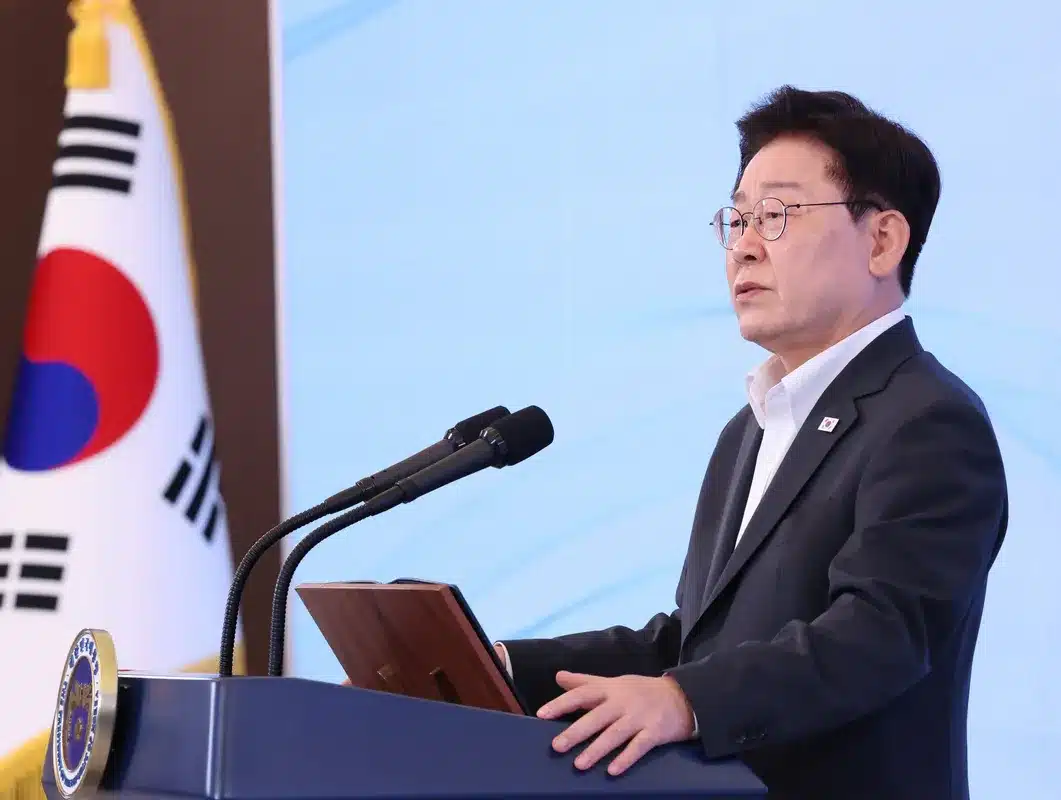
In a significant reshuffling of government positions, the President has announced a series of appointments aimed at forming the administration’s second-term lineup. The changes, revealed on the 30th, include key ministerial nominations and personnel changes within the presidential office, signaling a strategic pivot for the upcoming period.
Key Economic and Ministerial Appointments
Among the most notable appointments is Lee Hyong-il, currently the First Deputy Minister of Economy and Finance, who has been nominated for the position of Deputy Prime Minister and Minister of Economy and Finance. This move places a seasoned figure at the helm of the nation’s economic policy. Additionally, Kim Sung-won, a member of the Democratic Party of Korea, has been nominated to lead the Ministry of Government Legislation.
The Ministry of Land, Infrastructure, and Transport will see Hong Ji-seon, the current Second Deputy Minister, step up as the nominee for Minister. In the industrial sector, Lee So-young, a Democratic Party of Korea lawmaker, has been appointed as the nominee for the Minister of SMEs and Startups, reflecting a focus on supporting small and medium-sized enterprises and the burgeoning startup ecosystem.
Defense and Social Welfare Portfolios
The Ministry of National Defense will be headed by Kang Shin-chul, a former Rear Admiral in the Republic of Korea Navy, as the nominee. This appointment brings a background in military affairs to a critical security portfolio. For the Ministry of Gender Equality and Family, Yong Hye-in, a member of the Basic Income Party, has been nominated. Kang Hwan-sik, the Presidential Secretary for Political Affairs, praised Yong Hye-in’s nomination, highlighting her advocacy for marginalized groups, including efforts against digital sex crimes and the promotion of work-life balance for dual-income households. “She is a young lawmaker who has spoken out for the socially vulnerable,” Kang stated, adding, “With her keen insight and strong drive, she is the right person to move towards gender equality for all, transcending generational and gender divides.”
Restructuring of Presidential Office and Advisory Roles
The reshuffle also extends to the presidential office, with several key positions being filled. Lee Hae-min, a lawmaker from the Democratic Party of Korea, has been appointed as the new Senior Secretary for AI and Future Planning, a role previously vacant. This indicates a strengthened focus on technological advancement and future strategy development.
In a significant move for environmental policy, Lee Won-ju, Director of the Energy Transition and Climate Change Policy Division at the Ministry of Environment, has been appointed as the Vice Minister for Mega Projects. This suggests a commitment to large-scale environmental initiatives and energy transition efforts.
Furthermore, Ha Jeong-woo, former Senior Secretary for AI and Future Planning, has been appointed as the Vice Chairman of the National Intelligence Service’s Strategic Planning Committee. This appointment underscores the importance of intelligence gathering and strategic planning in national security.
The President’s Special Advisor role has been filled by Kim Gyeong-su, former Chairman of the Provincial Council. This appointment aims to bring diverse regional perspectives into the executive advisory structure.
Party Affiliations and Merit-Based Appointments
A notable aspect of this round of appointments is the inclusion of several figures associated with the People Power Party and other progressive political factions, such as the Democratic Party of Korea and the Basic Income Party. Notably, there were no appointments from the People Power Party who were part of the first-term cabinet, suggesting a potential shift in political alliances or a deliberate effort to broaden the base of appointed officials.
Addressing the composition of the new appointments, Presidential Secretary for Political Affairs Kang Hwan-sik emphasized the administration’s commitment to practical change. “These appointments were based on merit, with the goal of bringing about tangible changes that citizens can feel,” Kang explained. He further elaborated that the administration sought to include individuals with proven capabilities, even if they had previously worked with opposition parties. “If someone has the ability and can work together, we have included them,” he stated, underscoring a pragmatic approach to talent acquisition.
Conclusion: A New Chapter for Governance
The recent wave of appointments marks a critical juncture for the administration, signaling a clear direction for its second term. By bringing in a mix of experienced officials and new faces, with a particular emphasis on expertise and a forward-looking agenda, the President appears poised to tackle pressing national issues. The inclusion of individuals from various political backgrounds, coupled with a stated focus on merit and tangible results, suggests an administration aiming for broader consensus and effective governance in the period ahead.
