

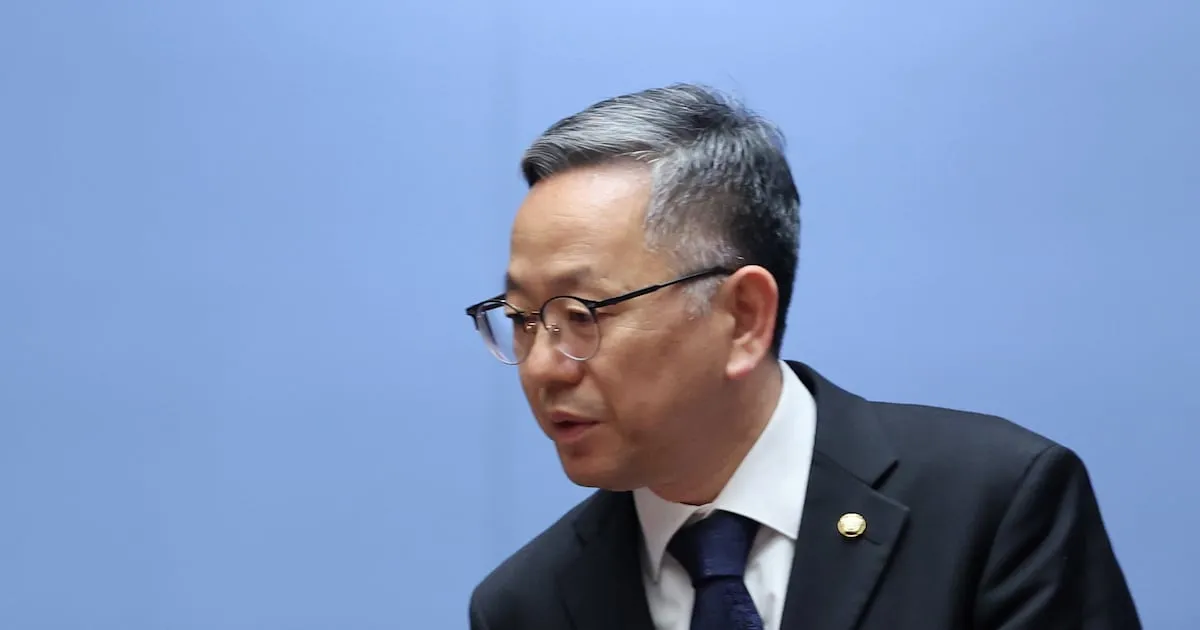
A member of the Democratic Party has called for a thorough investigation and strict penalties concerning alleged manipulation of public opinion polls conducted during the party’s national convention on August 17th. The lawmaker asserts that certain YouTube channels, purportedly supporting a specific candidate, may have influenced the poll results, leading to an inaccurate representation of public sentiment.
Allegations of Poll Tampering Surface
Kim Mun-su, a Democratic Party legislator, along with Kim Han-me, the senior representative for the Civil Action for Lawful Governance (SALG), held a press conference at the National Assembly on August 27th to voice their concerns. They highlighted a significant discrepancy in the poll results from the party’s convention, where Lee Seong-yun, who had previously ranked fifth or sixth in regional polls, suddenly surged to first place.
“The poll results showed a high score that was only favorable to ‘Team Jeong-rae’,” Kim Mun-su stated, implying a coordinated effort to boost a particular candidate’s standing. The term ‘Team Jeong-rae’ is understood to refer to supporters of candidate Song Young-gil, who was also a prominent figure in the party’s leadership race.
YouTube Channels Accused of Orchestrating Manipulations
According to the lawmaker and the SALG representative, specific YouTube channels with over 500,000 subscribers and concurrent viewership exceeding 10,000 were allegedly used to influence the polls. These channels reportedly broadcast instructions to viewers during the polling period, which spanned August 14th and 15th.
“Instructions such as ‘Seoul and Gyeonggi regions are full, so try Gangwon or Gyeongbuk’ and ‘You must do it with people in their 20s and 30s’ were disseminated,” the pair claimed. They asserted that these directives aimed to manipulate the survey by instructing participants to falsely report their region and age, thereby skewing the results in favor of a specific candidate.
The legislator expressed dismay that such potentially illegal activities could be broadcast live. “It is difficult for many citizens and rights holders to refrain from being shocked by the live broadcast of acts that could be considered criminal,” he remarked.
Calls for Immediate Action and Accountability
The press conference also revealed that immediately after the convention, the organizers had allegedly provided guidance to journalists, suggesting they block calls originating from specific prefixes like ‘080’ and ’02’. This, they claimed, indicated prior knowledge of the alleged manipulation tactics.
Kim Mun-su and Kim Han-me urged the Democratic Party leadership to take swift and decisive action. “Immediate fact-finding and strict sanctions against illegal activities and violations of regulations during the party convention’s public opinion polls are the only way to restore the integrity of the proud Democratic Party,” they emphasized.
They formally requested that the party initiate a swift disciplinary process and implement appropriate sanctions. The call for an investigation underscores the seriousness with which these allegations are being treated, aiming to ensure the fairness and credibility of internal party processes.
Broader Implications for Party Democracy
The incident raises important questions about the integrity of internal polling mechanisms within political parties. In a democratic system, public opinion polls, whether for internal selection or external perception, are crucial tools. When these tools are perceived to be manipulated, it can erode trust not only in the specific candidate or faction involved but also in the party’s overall democratic processes.
The Democratic Party faces the challenge of addressing these allegations transparently and effectively. A thorough investigation would need to examine the specific YouTube channels, the nature of the content broadcast, and the impact on the poll results. If manipulation is confirmed, the party must demonstrate its commitment to upholding democratic principles through decisive disciplinary action.
Furthermore, this event highlights the growing influence of online platforms, particularly YouTube, in shaping political discourse and potentially influencing electoral outcomes, even within party primaries. Political parties and election authorities may need to develop clearer guidelines and oversight mechanisms to address the challenges posed by digital manipulation in the future.
Conclusion
The allegations of poll manipulation at the Democratic Party’s national convention represent a significant concern for the party’s credibility and the broader political landscape. The lawmaker’s demand for a thorough investigation and accountability signals a commitment to uncovering the truth. The party’s response to these claims will be crucial in demonstrating its dedication to fair play and democratic integrity, ensuring that internal selection processes reflect genuine public sentiment rather than orchestrated influence.
