

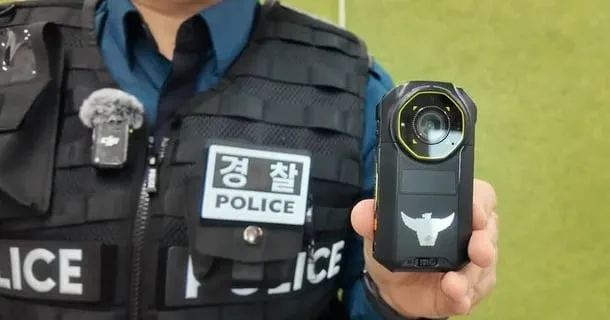
South Korean police are investigating allegations that Chinese-made equipment may have been supplied for a major body camera project, despite initial assurances that the products would be manufactured in Taiwan. The investigation centers on a significant contract worth approximately 19.5 billion won (roughly $15 million USD) aimed at enhancing security and transparency through the widespread deployment of body-worn cameras for officers.
Extensive Bodycam Rollout Under Scrutiny
The project, which began with the distribution of 14,000 body cameras last year, is part of a larger initiative to equip police officers nationwide with mobile recording devices. The total budget allocated for this program, extending until 2029, is nearly 19.5 billion won. These cameras are designed to be attached to officers’ uniforms, capturing real-time video footage from various situations. The recorded data is then transmitted wirelessly to the National Intelligence Service (NIS) for secure storage and management.
Given the sensitive nature of the data being transmitted directly to a government intelligence agency, security has been a paramount concern throughout the procurement process. During the bidding phase last year, the police reportedly advised participating companies to avoid using Chinese-made components for the body camera terminals. This directive was intended to mitigate potential security risks, such as hacking or the manipulation of video evidence, which could arise from the use of equipment with ties to China.
Contractors and Allegations
The contract for the body camera system was awarded to a consortium comprising terminal supplier Company A and telecommunications giant KT. Company A was selected to supply the body camera terminals, while KT was responsible for establishing the necessary communication network infrastructure. Both companies were chosen after a competitive bidding process.
The current investigation, led by the Gyeonggi Nambu Provincial Police Agency’s Counter-Terrorism Investigation Division, is examining potential charges against Company A and KT. These include fraud under the Act on Special Cases Concerning the Punishment, etc. of Specific Economic Crimes and obstruction of business by intimidation, among other offenses.
The suspicion arose when a company that had been eliminated from the bidding process lodged a complaint with the police. This competitor alleged that the body cameras supplied by Company A bore a strong resemblance in features and appearance to products manufactured by a Chinese company. This claim triggered the current inquiry into the origin and authenticity of the supplied equipment.
Company A’s Defense and Ongoing Investigation
In response to the allegations, Company A reportedly stated during the police investigation that the products supplied were manufactured in Taiwan through an Original Equipment Manufacturer (OEM) agreement. This means the products were designed and manufactured by a third-party factory, in this case, a Taiwanese facility, but branded and sold by Company A. The company has denied knowingly supplying Chinese-made products.
However, the police are taking these allegations seriously due to the critical security implications. The investigation involves several key steps:
- Search and Seizure: Police have already conducted searches of KT and Company A’s premises, seizing relevant documents and data as part of their evidence collection.
- Interviews: Investigators are interviewing company officials and other relevant personnel associated with both Company A and KT.
- Expert Analysis: The police have commissioned external expert agencies to conduct forensic examinations of the actual body cameras supplied. The goal is to definitively determine if the equipment is identical to Chinese-made models, as alleged.
The outcome of these investigations is anticipated to clarify the origin of the body camera equipment and address any potential security vulnerabilities that may have been introduced. The police are committed to ensuring the integrity and security of their communication and surveillance systems, especially those handling sensitive national intelligence.
Broader Implications for Public Procurement
This incident highlights the complex challenges faced in public procurement, particularly when dealing with technology that has significant national security implications. Ensuring supply chain integrity and verifying the origin of components are crucial steps in preventing potential espionage or data breaches. The police’s proactive investigation demonstrates a commitment to upholding the security standards required for such critical infrastructure projects.
As the investigation progresses, further details are expected to emerge regarding the specific nature of the alleged discrepancies and the steps being taken to rectify any identified issues. The focus remains on ensuring that the body camera system operates securely and effectively, fulfilling its intended purpose of enhancing public safety and accountability.
