

The stark warning from U.S. President John F. Kennedy during the height of the Cold War—that while domestic policy can only defeat us, foreign policy can kill us—resonates deeply when examining the consequences of diplomatic missteps. This sentiment was underscored during the 1962 Cuban Missile Crisis, a harrowing 13-day standoff between the United States and the Soviet Union that brought the world to the brink of nuclear war. The crisis, triggered by the Soviet Union’s placement of nuclear missiles in Cuba, saw the U.S. impose a naval blockade, escalating tensions to a point where the use of nuclear weapons was a tangible possibility.
The Far-Reaching Impact of Foreign Policy Failures
Kennedy’s cautionary words can be interpreted in several ways, but a central theme is the existential threat posed by foreign policy blunders. While domestic political struggles, such as shifts in ruling parties or the suppression of opposition, are typically resolved within a generation or two, the repercussions of foreign policy failures can linger for decades, even centuries. Such failures can lead to devastating wars, territorial losses, and the collapse of national sovereignty, casting a long shadow over a nation’s future and potentially leading to its erasure from the map.
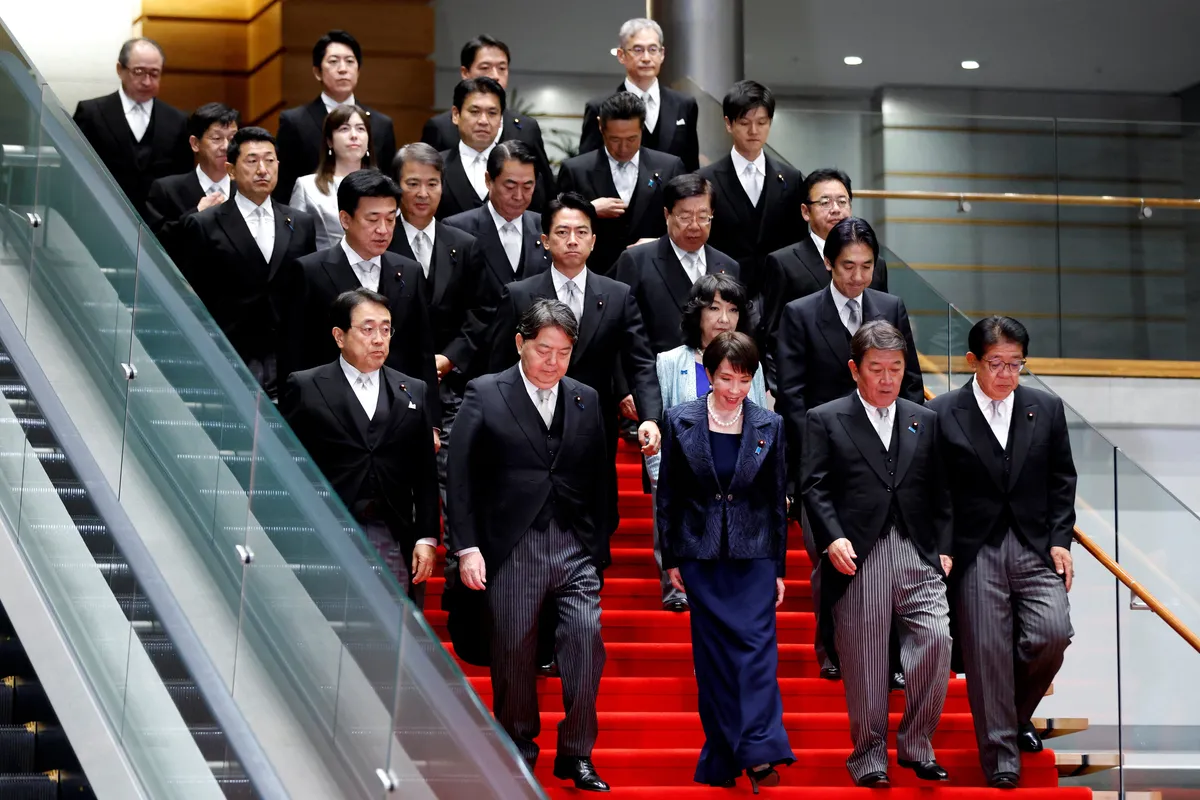
In contemporary Japan, the political landscape is currently dominated by the “Dakaichi Color,” a policy approach characterized by continuity across economic, foreign, and security sectors. This strategy, particularly concerning fiscal management and economic cooperation with the United States, emphasizes policy stability. Prime Minister Fumio Kishida’s approval ratings have seen a notable increase, with a recent poll showing his support at 62%, up from 58% a month prior, while disapproval ratings dropped to 32%. This level of public confidence surpasses that of his predecessor, Shinzo Abe, during his second term, highlighting a strong national expectation for “stable U.S.-Japan diplomacy” under Kishida’s administration.
Japan’s Strategic Focus on U.S. Relations
For Japan, the year 2026 is marked by a primary focus on foreign policy, with the U.S. relationship at its core. Every aspect of national policy—economic, military, energy, and technological—is prioritized through the lens of U.S. alignment. The Japan-U.S. alliance serves as the cornerstone of Japan’s foreign and security strategy, with coordination with the U.S. becoming increasingly critical in currency, trade, and advanced technology policies. Japan views the United States, regardless of the sitting president, as the ultimate entity to engage with. Unlike some European nations that may criticize a U.S. president like Donald Trump to boost domestic approval, Japan perceives Trump as representing the U.S. itself—the reality that Japanese foreign policy must contend with. Whether seen as an “악당” (villain) or a “정의의 사도” (apostle of justice), Trump embodies the United States for Japan’s diplomatic considerations. This pragmatic approach, acknowledging the U.S. as Japan’s most significant ally, demonstrates a profound understanding of Kennedy’s warning about the potentially fatal consequences of foreign policy misjudgments.
South Korea’s Domestic Focus Amidst Global Instability
Meanwhile, South Korea finds itself at a juncture of domestic reform, with a slate of candidates for key government positions spanning law, finance, defense, transportation, SMEs, and gender equality. The proposed appointments, including the Minister of Economy and Finance who would also oversee the Ministry of Strategy and Finance, along with ministers for defense and transportation, indicate a broad scope of changes affecting critical economic and security portfolios. While the specifics of each candidate are not the primary focus here, the underlying question is the meaning behind the current administration’s reform drive.
South Korean media often interprets these reforms as a national transition, an enhancement of policy execution capabilities, and a consolidation of political alliances. These explanations provide a plausible background, but from a broader perspective, they appear to be largely confined to domestic political maneuvering. Instead of a profound reorientation of foreign policy, these actions seem to resemble political tactics or academic discourse relevant only within South Korea. There is a noticeable lack of attention or preparedness regarding global issues such as the situations in Venezuela, Ukraine, Iran, the Strait of Hormuz, or relations with Taiwan and North Korea.
In an era where conflicts, trade disputes, energy security, and supply chain realignments are occurring simultaneously worldwide, it is increasingly difficult to consider domestic policy independently from foreign and security affairs. This detachment from global realities echoes historical patterns, such as the limitations of Joseon Dynasty politics, which often suffered from a lack of awareness and engagement with the outside world. For instance, during the 1876 Treaty of Ganghwa, Joseon Korea struggled to adapt to modern Western international law and treaty systems, which differed significantly from the traditional East Asian order. The profound implications of the treaty’s clauses, which infringed upon Korean sovereignty, were not fully grasped or adequately addressed. While adept at internal factional disputes, Joseon’s foreign policy illiteracy, marked by a failure to comprehend even basic international documents, led to a loss of diplomatic autonomy amidst the power struggles between Qing China, Japan, Russia, and Great Britain. This ultimately resulted in over half a century of Japanese colonial rule.
Understanding Hubris: A Cautionary Tale
The epic poem “The Odyssey,” recently brought back into the spotlight through film adaptations, repeatedly explores the concept of “hubris.” In ancient Greek, hubris signifies “arrogance, excessive pride, or insolence.” It transcends mere self-confidence, referring to the act of humans overstepping their bounds, challenging divine order, or defying fate. In Christopher Nolan’s recent film adaptation, the concept is presented with a slightly different nuance. The theme of human overreach and its subsequent retribution, a recurring motif in ancient Greek myths and tragedies, speaks to the timeless warning against challenging divine authority or entering the gods’ domain.
The myth of Niobe serves as a potent illustration. Niobe, Queen of Thebes, boasted excessively about her numerous children, belittling Leto, the mother of Apollo and Artemis, who had only two offspring. Enraged, Apollo and Artemis unleashed a volley of arrows, killing all fourteen of Niobe’s children. Thus, hubris, when transgressing against the divine, signifies death and damnation.
Observing the current news cycle, it appears South Korea is entering a period of significant domestic political upheaval, potentially leading to a bleak and dire future for the nation and its people. While not expecting Japan’s level of foreign policy focus, the fundamental understanding that foreign policy can lead to national ruin is crucial. Ultimately, the actors conducting foreign policy are domestic politicians and policy experts. Consequently, the effectiveness of foreign policy is intrinsically linked to the standard of domestic politics. Without a solid foundation at home, a nation cannot effectively navigate the complexities of the international stage.
