

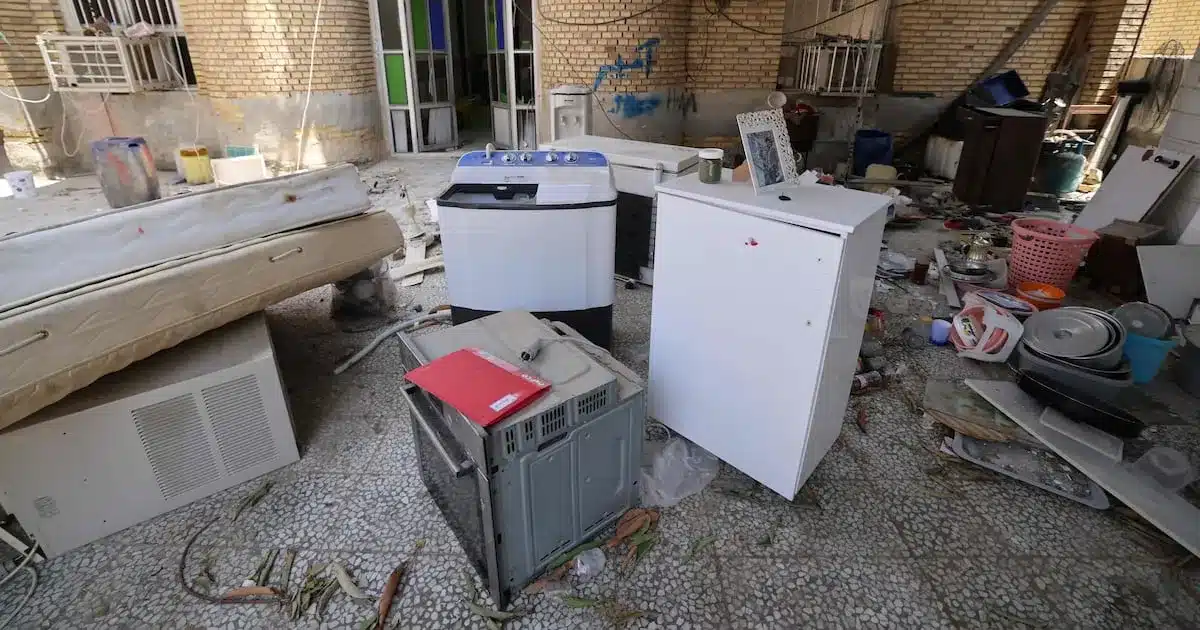
An investigation is underway into a U.S. missile strike in southern Iran that struck a residential building during a wedding ceremony, killing at least four people, including two children. The incident occurred in the city of Kuh-e-Meydan, near a military facility. Officials are examining the possibility that the strike was a misfire, with a U.S. military aircraft’s ordnance deviating from its intended target.
U.S. Military Investigating Potential Misfire
The Washington Post, citing sources familiar with the matter, reported that the U.S. Department of Defense is prioritizing the possibility of a misfire and is actively investigating the exact circumstances of the incident. The strike took place on January 1st, targeting what U.S. forces believed to be a communications facility in Kuh-e-Meydan. While the facility was located in a civilian area, the U.S. military assessed that it was being utilized by Iranian forces for certain military operations.
According to one source, out of six missiles fired by a U.S. Navy fighter jet, five reportedly hit their intended target at the communications facility. However, the sixth missile appears to have missed, striking the nearby residential building where the wedding was taking place. Video footage reviewed by The Washington Post indicates that the targeted building was approximately 134 meters away from the designated communications facility.
Devastating Casualties and Iranian Response
Iranian authorities reported that the explosion resulted in the deaths of at least four individuals, including two women and two children aged four and sixteen. More than 90 other people were injured in the blast. The U.S. government has indicated that it has ruled out the possibility that the residential building was deliberately targeted or that it was mistaken for another target. At the time of the strike, the communications facility was the sole target designated by the U.S. military in Kuh-e-Meydan.
Investigators are also exploring the possibility that Iranian anti-missile systems, which may have been deployed in the air, could have fallen and struck the residential building. However, weapons experts reportedly consider this scenario highly unlikely. Tim Hawkins, a spokesperson for the U.S. Central Command, stated, “Unlike the Islamic Revolutionary Guard Corps (IRGC), the U.S. military never targets civilians.”
Context of the Strike and Broader Concerns
This operation was one of several retaliatory strikes conducted by the U.S. following an escalation of threats from Iran, including confrontations in the Strait of Hormuz. The U.S. military reportedly has multiple layers of verification in place to confirm target locations before engaging, aiming to minimize civilian casualties. However, the potential misfire has reignited debate surrounding the U.S. military’s target selection process and its procedures for preventing civilian harm.
This incident echoes a previous event on February 28th, the day the current conflict in Iran began. A U.S. strike, also targeting Iranian military facilities, reportedly hit a nearby elementary school. That incident resulted in the deaths of at least 175 people, including children and teachers. The Washington Post had previously reported that this earlier accident may have occurred due to the U.S. military using outdated target information.
U.S. Commitment to Civilian Protection
The U.S. military has consistently maintained its commitment to avoiding civilian casualties, especially in densely populated areas. The protocols in place are designed to ensure that targets are accurately identified and that the risk to non-combatants is minimized. The recent incident, however, raises serious questions about the effectiveness of these protocols and the intelligence used to guide military operations in complex environments.
The investigation is expected to provide a clearer picture of the events leading up to the strike, including the precise nature of the target, the ordnance used, and any potential malfunctions or errors in the targeting system. The findings will be crucial in determining accountability and in reassessing procedures to prevent similar tragedies in the future. The U.S. Department of Defense has pledged full transparency throughout the investigation process.
International Scrutiny and Diplomatic Implications
The incident is likely to draw international scrutiny and could have diplomatic implications, particularly given the ongoing tensions in the region. Iran has condemned the strike and is demanding a thorough investigation and accountability from the United States. The U.S. response and the outcome of the investigation will be closely watched by global powers and international human rights organizations.
The U.S. military’s adherence to international humanitarian law and its efforts to distinguish between combatants and civilians are under renewed focus. The Pentagon’s commitment to its stated policy of never targeting civilians will be tested by the findings of this investigation. The incident underscores the inherent risks and complexities of military operations in populated areas and the critical importance of precise intelligence and robust verification measures.
