

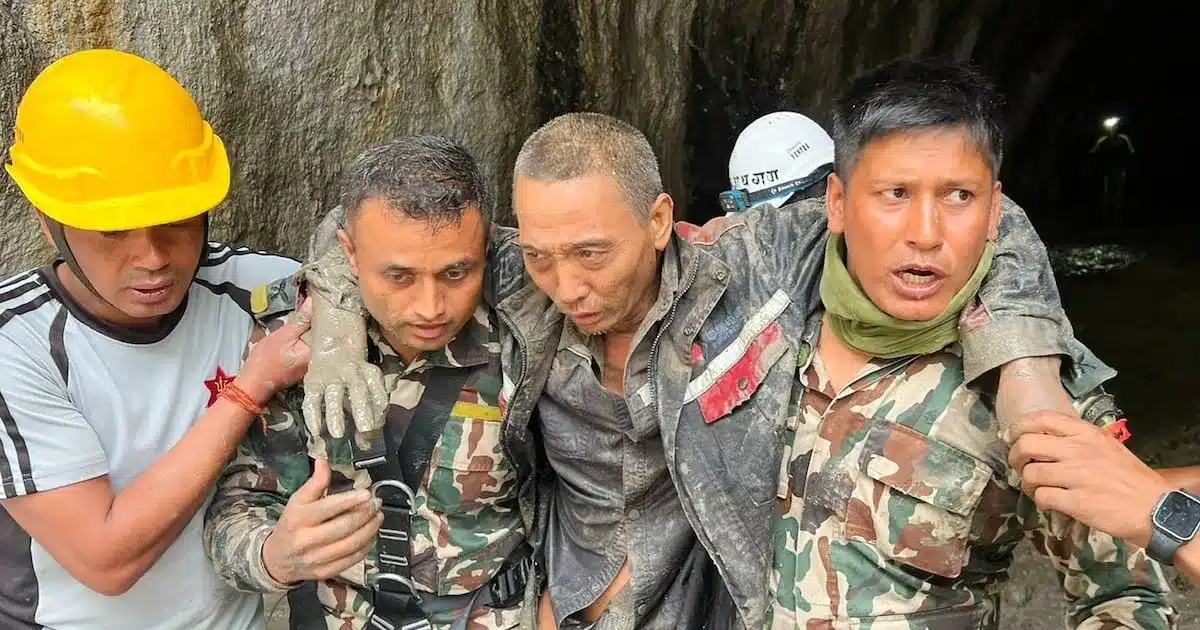
A Chinese national has been rescued from the Upper Trishuli-1 hydropower project site in Nepal, ten days after devastating floods struck the region. The rescue operation is now intensifying its focus on locating nine South Korean nationals who went missing at the same site. The Chinese survivor was found inside a tunnel at the dam construction area.
Rescue Operation Details
Nepal’s Army and the Prime Minister’s Office confirmed the rescue of the Chinese citizen, identified as Luhaitao, from within a tunnel at the Upper Trishuli-1 hydropower project. A joint rescue team, comprising members of the Nepal Army and a South Korean emergency rescue contingent, successfully extracted Luhaitao from the tunnel. He was found approximately 225 meters deep inside the tunnel.
The Upper Trishuli-1 project is a significant undertaking in Nepal, being developed by a consortium including South Korean companies like DL E&C and Daelim Industrial, alongside Nepal Water and Energy Development Company. The site is where nine South Korean workers were reported missing following the severe flooding.
Following the successful rescue of the Chinese national, authorities are closely monitoring his health condition. Simultaneously, rescue efforts are continuing with the hope of finding additional survivors. The previous day, Nepalese rescue teams had successfully saved two Nepalese citizens from the flood-affected areas.
Background of the Floods and Site
The floods that inundated parts of Nepal were triggered by torrential monsoon rains, which are common during this season but were particularly intense this year. The deluge caused widespread damage, landslides, and significant disruption to infrastructure, including the remote construction sites of major projects like the Upper Trishuli-1 hydropower plant.
The Upper Trishuli-1 project, located in the Rasuwa district of Nepal, is a critical component of the country’s efforts to expand its hydropower capacity and reduce reliance on imported energy. The project involves the construction of a diversion dam, an underground waterway, and a powerhouse. The underground tunnel system, where the rescue took place, is a complex part of the infrastructure designed to channel water to the turbines.
The presence of international workers, including South Koreans and Chinese nationals, at the site highlights the global collaboration involved in such large-scale infrastructure projects. The disaster has underscored the inherent risks associated with construction in challenging terrains, especially during extreme weather events.
Challenges in Rescue Operations
Rescue operations in the aftermath of natural disasters are often fraught with difficulties. In this case, the rugged terrain of the Himalayas, coupled with the damage caused by the floods, has made access to the affected areas extremely challenging. The ongoing monsoon season also poses a continuous threat, with the possibility of further rainfall and landslides.
The focus on the tunnel system at the Upper Trishuli-1 project is due to the belief that survivors might be trapped within its confined spaces. The depth and complexity of the tunnel present significant logistical hurdles for the rescue teams. Ensuring the safety of the rescuers themselves while navigating these hazardous conditions is a paramount concern.
The joint effort between Nepalese and South Korean rescue teams demonstrates international cooperation in disaster response. Such collaborations are vital for pooling resources, expertise, and equipment to tackle complex rescue missions effectively. The South Korean emergency rescue contingent likely brought specialized skills and technology suited for confined space rescue operations.
Ongoing Search and Future Implications
As the search for the nine missing South Korean nationals continues, the Nepalese authorities and the involved companies are committed to exhausting all possibilities. The condition of the rescued Chinese national will provide valuable information about the circumstances survivors might have faced within the tunnel.
The incident serves as a stark reminder of the vulnerabilities of large infrastructure projects in disaster-prone regions. It is expected that a thorough investigation will follow to understand the exact cause of the workers’ disappearance and to assess the safety protocols in place at the construction site. Lessons learned from this event will likely influence future safety standards and disaster preparedness measures for similar projects in Nepal and other mountainous regions globally.
The successful rescue of one individual and the ongoing efforts to find others underscore the resilience and determination of the rescue teams. The international community’s support, particularly from South Korea, highlights the interconnectedness of global efforts in times of crisis. The focus remains on bringing all missing individuals to safety and providing support to those affected by this tragic event.
