

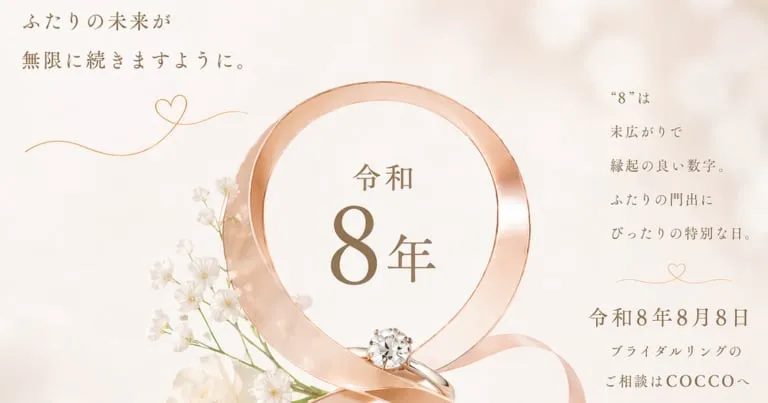
Tokyo experienced a significant surge in marriage registrations on August 8th, a date considered auspicious in Japan due to the repeated occurrence of the number ‘8’. A total of 7,650 couples registered their marriages on this day, surpassing the 7,274 registrations recorded in August of the previous year. This increase is attributed, in part, to a promotional campaign by the Tokyo Metropolitan Government encouraging unions on dates featuring the lucky number.
The Significance of the Number ‘8’ in Japan
In Japanese culture, the number eight (八, hachi) is widely regarded as a symbol of prosperity and good fortune. Its character, when written, widens towards the bottom, visually representing expansion and growth. This belief system influences various aspects of life, including the selection of significant dates for important events like weddings.
The current imperial era in Japan is known as Reiwa, and August 8th marked the eighth year of Emperor Naruhito’s reign. The date, therefore, presented a unique convergence: Reiwa 8, August 8th. The Tokyo Metropolitan Government capitalized on this by designating the day as ‘Honey Tie Day’ (はちみつ結びの日, hachimitsu musubi no hi). The term ‘hachimitsu’ not only sounds like ‘eight, eight, eight’ but also translates to ‘honey,’ further associating the day with sweetness and connection.
Tokyo’s ‘888’ Marriage Campaign
To promote marriage on this auspicious date, the Tokyo Metropolitan Government launched a campaign that included several initiatives. Couples who married on Reiwa 8, August 8th, and shared their photos using a special frame on social media were eligible to receive 8,888 yen. Additionally, commemorative photo panels were set up at the founding sites of wards, cities, towns, and villages within Tokyo to encourage couples to capture their special moments.
Governor Yuriko Koike attended a large-scale ‘marriage activation’ event held in Azabudai Hills on August 8th, underscoring the government’s commitment to supporting unions. The campaign’s success is likely amplified by similar promotional efforts from wedding-related businesses and matchmaking services across Japan, which also encouraged couples to tie the knot on August 8th.
Comparing Marriage Rates on Lucky Dates
The impact of auspicious dates on marriage registrations is not a new phenomenon in Japan. Last year, on July 7th (Reiwa 7, July 7th), a date also considered fortunate due to the repetition of the number seven, 4,114 couples registered their marriages. The ‘888’ date saw nearly double that number, highlighting the strong cultural preference for such numerological significance.
Conversely, certain numbers are avoided in Japan due to their association with negative connotations. The number four (四, shi) is often shunned because its pronunciation is similar to the word for death (死, shi). Similarly, the number nine (九, ku) is sometimes avoided as it sounds like the word for suffering (苦, ku).
Broader Government Initiatives for Relationships and Birth Rates
Beyond specific date-driven campaigns, the Tokyo Metropolitan Government is actively pursuing broader policies to encourage dating and marriage. These include operating a matchmaking app for registered singles and organizing exchange events like the ‘Ueno Zoo Love Matchmaking’ event.
Furthermore, the government has implemented various support measures for childbirth and childcare. Notably, a benefit of 50,000 yen is provided to women who become pregnant. These comprehensive efforts appear to be yielding positive results, as Japan’s birth rate saw an increase last year, the first rise in nine years.
