

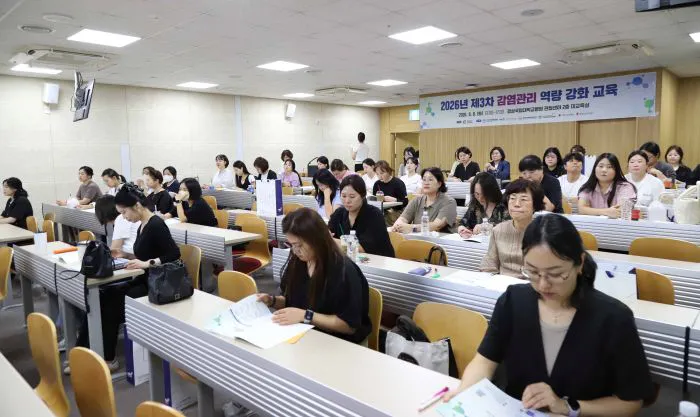
Gyeongsang National University Hospital recently conducted an advanced infection control training program for personnel responsible for managing infections at nursing hospitals across the Gyeongsangnam-do province. This initiative, held on the second floor of the hospital’s convention center, aimed to strengthen infection control capabilities within the region’s healthcare facilities.
Strengthening Regional Infection Control
The training session, held on the 8th, was organized under the auspices of the Gyeongsangnam-do Responsible Medical Institutions. Gyeongsang National University Hospital, serving as the provincial responsible institution, collaborated with several local medical facilities. These included Changwon Gyeongsang National University Hospital, Yangsan Busan National University Hospital, Gyeongsangnam-do Masan Medical Center, Geochang Public Health Center Hospital, and Tongyeong Public Health Center Hospital. This collaborative effort underscores a commitment to a unified approach to infection prevention and control across the province.
This event marked the third in a series of four planned infection control capacity-building workshops for the current year. The Gyeongsangnam-do Responsible Medical Institutions have outlined a comprehensive schedule of educational sessions designed to address critical aspects of infection management. The program’s progression indicates a sustained focus on enhancing the skills and knowledge of healthcare professionals dealing with infectious diseases.
Key Training Modules and Objectives
The training curriculum was meticulously designed to cover essential topics relevant to current healthcare challenges. Key presentations included:
- Infection Prevention and Control Activity Planning and Performance Analysis: Led by Park Nam-jeong, Team Leader at the Infection Control Center of Busan National University Hospital, this module focused on strategic planning and the evaluation of infection control measures.
- Key Points for Fourth-Quarter Nursing Hospital Certification Evaluation: Presented by Choi Soon-im, former Team Leader of the Infection Control Center at Gye Myung University Dongsan Medical Center, this session provided critical insights into the upcoming certification process for nursing hospitals.
- Reading the Situation from the Investigator’s Perspective: This module aimed to equip participants with the ability to understand and respond to infection control challenges from an observational and evaluative standpoint.
The training was particularly noted for its broad scope, covering the overall practical aspects of infection control and specific strategies for responding to the fourth-quarter nursing hospital certification evaluation. Participants reported that the program significantly contributed to enhancing their practical infection control expertise.
Future Directions and Commitment
Park Ki-soo, Deputy Director of the Public Health Division, expressed his hopes that the training would provide tangible benefits for participants preparing for the fourth-quarter nursing hospital certification and for improving practical infection control work within the region. He emphasized the ongoing commitment of Gyeongsang National University Hospital and the Gyeongsangnam-do Responsible Medical Institutions.
“Moving forward, Gyeongsang National University Hospital and the Gyeongsangnam-do Responsible Medical Institutions will continue to collaborate closely with local medical institutions,” stated Park. “We are dedicated to consistently providing practical, on-site focused infection control education that meets the needs of healthcare professionals.” This commitment signals a long-term strategy to build robust infection control infrastructure and expertise throughout Gyeongsangnam-do.
The Importance of Continuous Education
Infection control is a cornerstone of patient safety and public health. Regular and advanced training is crucial for healthcare professionals to stay abreast of evolving infectious threats, new prevention strategies, and regulatory requirements. Nursing hospitals, in particular, play a vital role in caring for vulnerable populations, making stringent infection control protocols paramount. The proactive approach taken by Gyeongsang National University Hospital and its provincial partners demonstrates a clear understanding of this necessity.
The collaborative nature of this training is also a significant factor. By bringing together a diverse group of healthcare facilities, the program fosters a shared understanding and consistent application of best practices. This regional cooperation is essential for creating a resilient healthcare system capable of effectively managing and mitigating the spread of infections.
Looking Ahead
The success of this training initiative is expected to translate into improved patient outcomes and a safer healthcare environment across Gyeongsangnam-do. The focus on practical application and preparedness for certification evaluations ensures that the knowledge gained is directly applicable to the daily operations of nursing hospitals. The ongoing partnership between Gyeongsang National University Hospital and regional facilities promises continued advancements in infection control, reinforcing the province’s dedication to high standards of healthcare delivery.
