

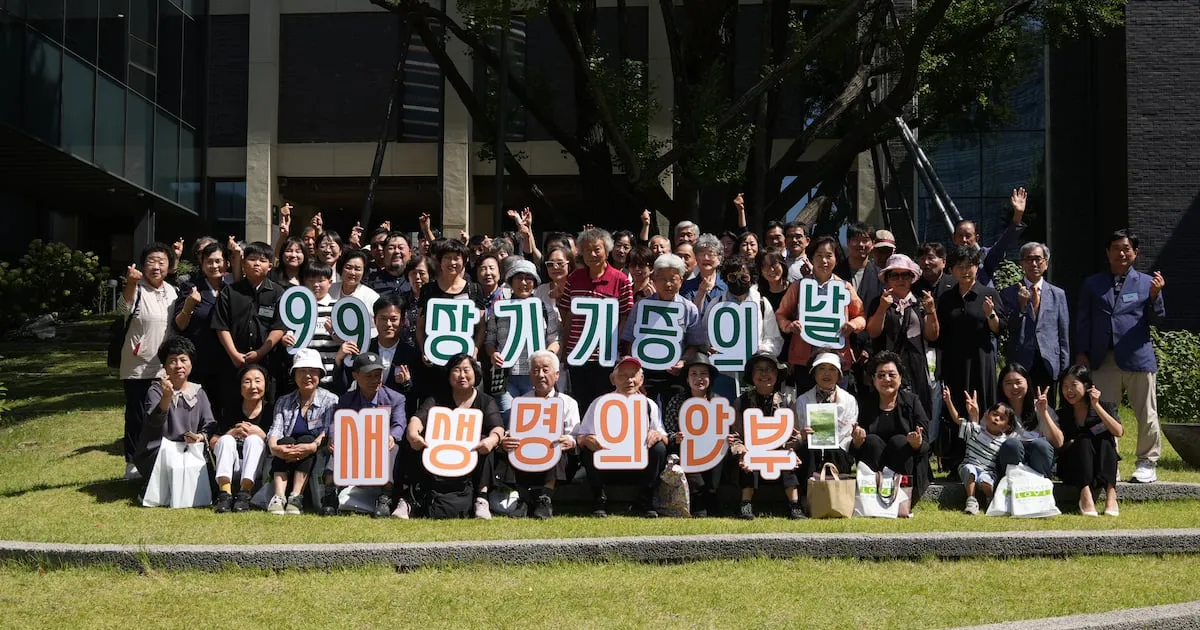
Seoul, South Korea – On September 9th, National Organ Donation Day, a ceremony in Seoul brought together organ donors, recipients, and their families to emphasize the critical need for increased awareness and understanding of organ donation. The 13th Seoul Organ Donation Day Commemorative Ceremony, organized by the Seoul Metropolitan Government and the Love Organ Donation Movement Headquarters, was held at the Seoul Museum of Craft Art.
The event saw over 100 attendees, including families of brain-dead donors, recipients of organ transplants, and living donors. Their presence underscored the profound impact of organ donation on countless lives.
A 30-Year Legacy of Giving: Seung In-seon’s Story
Among those honored was Seung In-seon, 67, who received the ‘Life Sharing 30 Years Commemorative Plaque.’ Thirty years ago, Seung made the life-altering decision to donate one of her kidneys to a stranger suffering from end-stage renal failure. She shared that the decision wasn’t about performing a heroic act, but rather the immense difficulty lay in obtaining her husband’s consent.
“I didn’t think of it as a grand gesture,” Seung recounted. “The hardest part was getting my husband’s agreement.” She deliberated extensively before finally receiving his support. Her husband, upon agreeing, expressed his own willingness to donate if the opportunity arose, fully backing her decision.
The recipient of Seung’s kidney, who was an unmarried man at the time in 1996, later married and had children. He invited Seung to his wedding, marking the continuation of their intertwined lives. Seung expressed her hope that everyone, when healthy, would consider the act of sharing with a benevolent heart, especially given life’s unpredictability. “I hope the recipient lives a long, healthy, and happy life with his family,” she added.
Remembering Lee Geun-jeong: A Family’s Enduring Love
Jang Hye-im, 57, attended the ceremony to honor her late husband, Lee Geun-jeong, who donated his organs after being diagnosed with a subarachnoid hemorrhage last May. Jang expressed the lingering pain of his absence, stating, “There are still so many things I want to do with my husband, and I still can’t accept that he’s no longer by my side.”
Before his passing, Lee was described as a devoted husband who would prepare kimchi pancakes for his family on rainy days. The decision to donate his organs was fraught with hesitation. Jang admitted to agonizing over the possibility of a miracle, a spontaneous recovery. However, she ultimately decided that donation was the right path if it could help those fighting for their lives.
“I want to tell the person who received my husband’s organs that he is our family’s greatest pride for saving a life at the last moment,” Jang said, her voice filled with emotion.
A Child’s New Beginning: The Hopes of Oh Yu-on
Oh Yu-on, a 5-year-old boy who received a heart transplant in 2023, and his mother, Jo Hye-seong, 31, also spoke at the event. Jo described the complex emotions she experienced while waiting for a transplant for her son. The wait was agonizing, filled with the guilt of hoping for another child’s tragedy to save her own.
“Today, I wondered if I was waiting for good news, but also if I was wishing for another child’s accident for my own child’s sake, and my heart felt heavy,” Jo confessed.
Pediatric organ transplants are rare, often leading to prolonged and uncertain waiting periods. Jo offered words of encouragement to those still waiting and their families: “We also faced an uncertain future, but thanks to someone’s difficult decision, Yu-on is now attending kindergarten. I hope you don’t give up and endure well.”
A Second Chance at Life: Lee Young-jun’s Journey
Lee Young-jun, 69, who received a kidney transplant in February, was diagnosed with end-stage renal failure in 2010. After working as a taxi driver for 18 years, he missed crucial medical attention due to his demanding work schedule. By the time he sought treatment, he was informed he needed regular blood dialysis.
The grueling treatment, three times a week, led to severe swelling and difficulty drinking water. His livelihood was disrupted, and life became a struggle. Several attempts at securing a transplant were unsuccessful. Then, just two days before his birthday, Lee received the miraculous news that a kidney transplant was possible.
Now, Lee finds joy in simple activities like walking in his neighborhood and enjoying a cool drink when thirsty – a stark contrast to his previous life of constant dialysis and restricted hydration. He recalled his past volunteer work, including assisting with baths and delivering meals at a nursing home when he was healthy. “When my health fully recovers, I want to resume my volunteer work and repay the gift of life I received from the donor to society,” he stated.
Understanding Brain Death and Organ Donation
Brain death is a state where all functions of the brain cease, leading to the irreversible cessation of heart function within days, regardless of medical intervention. In such critical situations, organ donation allows for the transplantation of organs like the heart and lungs, potentially saving up to nine lives per donor. This is why September 9th is recognized as National Organ Donation Day.
For brain death organ donation to proceed, the consent of a legal guardian is required. However, the rate of family consent for organ donation has seen a decline. According to the Korean Network for Organ Sharing, the family consent rate dropped from 36.7% in 2021 to 28.1% last year. While the number of potential brain-dead donors reported to the network increases annually, the decreasing consent rate has led to a reduction in actual donors, falling from 483 in 2023 to 370 last year.
The Path Forward: Increasing Donation Rates
Experts emphasize that to revitalize organ donation in South Korea, increasing the family consent rate is crucial. The prior documented intention of the brain-dead individual to donate organs plays a pivotal role when their family faces the shock of brain death. Therefore, encouraging more individuals to register their donation wishes is seen as a vital step.
Yoo Jae-soo, Director of the Love Organ Donation Movement Headquarters, expressed profound gratitude to the families who made the noble decision to donate organs, saving lives during their most difficult and sorrowful moments. “The altruism of living kidney donors who shared their organs while alive is a positive influence that our society must remember,” Yoo stated.
The ceremony served as a poignant reminder of the selfless acts that sustain life and the ongoing need for greater public engagement and understanding of organ donation.
