

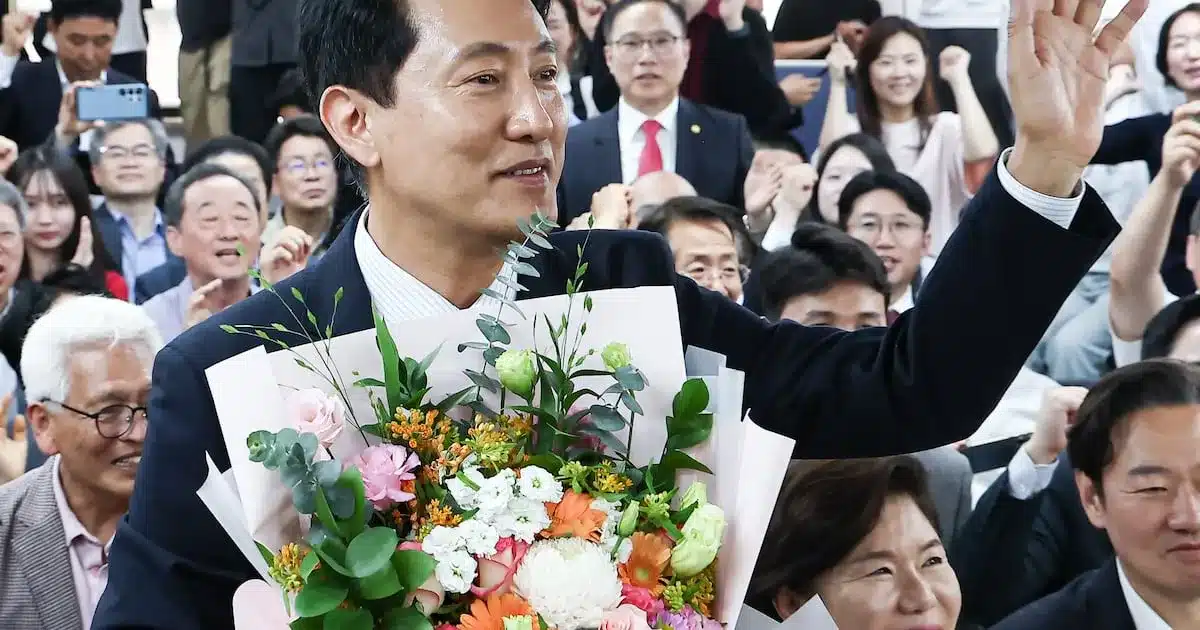
Oh Se-hoon Makes History as First Five-Term Seoul Mayor
In a significant electoral victory, Oh Se-hoon has been re-elected as the Mayor of Seoul for a third consecutive term, marking an unprecedented achievement as the first five-term mayor of the metropolitan government. The incumbent secured a decisive win in the June 3rd local elections, overcoming his Democratic Party opponent.
This latest triumph adds to his previous mayoral tenures in 2006 and 2010, bringing his total time as Seoul’s chief executive to six terms. While early exit polls indicated a close race, with Oh trailing his opponent, the final results showed a dramatic shift. The gap narrowed rapidly after voting concluded, and by approximately 7:17 PM, Oh had overtaken his rival for the first time. He then widened his lead, solidifying his victory.
Around 9:30 PM, the opposing candidate conceded defeat. Following his win, Mayor Oh stated, “This election result is a victory for ordinary and sincere citizens. I will definitely create a Seoul that instills pride.”
A Resilient Political Career
Oh Se-hoon’s path to this record-breaking fifth term is a testament to his political resilience. First elected Mayor in 2006 and re-elected in 2010, his tenure was cut short when he resigned from office in August of that year, taking responsibility for the unsuccessful recall referendum. He subsequently faced setbacks, losing bids for a seat in the 20th National Assembly in 2016 and the 21st National Assembly in 2020.
His political comeback began in 2021 with his election in a by-election for Seoul Mayor, following the passing of the previous mayor, Park Won-soon. This marked his return to City Hall after a decade. He was re-elected in the 2022 local elections, becoming a four-term mayor, and now, with this latest victory, he ascends to the historic five-term milestone.
Record-Breaking Tenure and Future Vision
Mayor Oh’s current term as Seoul Mayor, when combined with his previous service, already exceeds ten years. Upon completing his current term, his total tenure will surpass 14 years. This extended period in office is being hailed as a historically long tenure, comparable to that of officials who served as Hanseong Pan-yun (the administrative head of Seoul during the Joseon Dynasty) and subsequent Seoul mayors after liberation.
Historical records indicate that during the Joseon Dynasty, there were 1,952 Hanseong Pan-yuns, with an average term of just 3.6 months. Since liberation, Seoul has seen 38 mayors pass through the office.
For this election, Mayor Oh campaigned on the slogan “Starting Change, Overwhelming Completion.” He has outlined a vision focused on enhancing Seoul’s global competitiveness. Key pledges include supplying 310,000 housing units by 2031, implementing “Rapid Integration Plan” Season 2, developing the Gangbuk and Seonam regions, expanding the transportation network, increasing late-night and early-morning bus services, and establishing “10-Minute Walkable Parks” within a 10-minute radius of residents’ homes for exercise.
His re-election not only ensures continuity in the city’s administration but also solidifies his position as a leading figure for the conservative bloc. In a political landscape where the People Power Party experienced a less-than-stellar performance in the June 3rd local elections, Mayor Oh’s victory is seen as a significant boost for the party’s revitalization efforts, positioning him as a key figure in its future rebuilding.
