

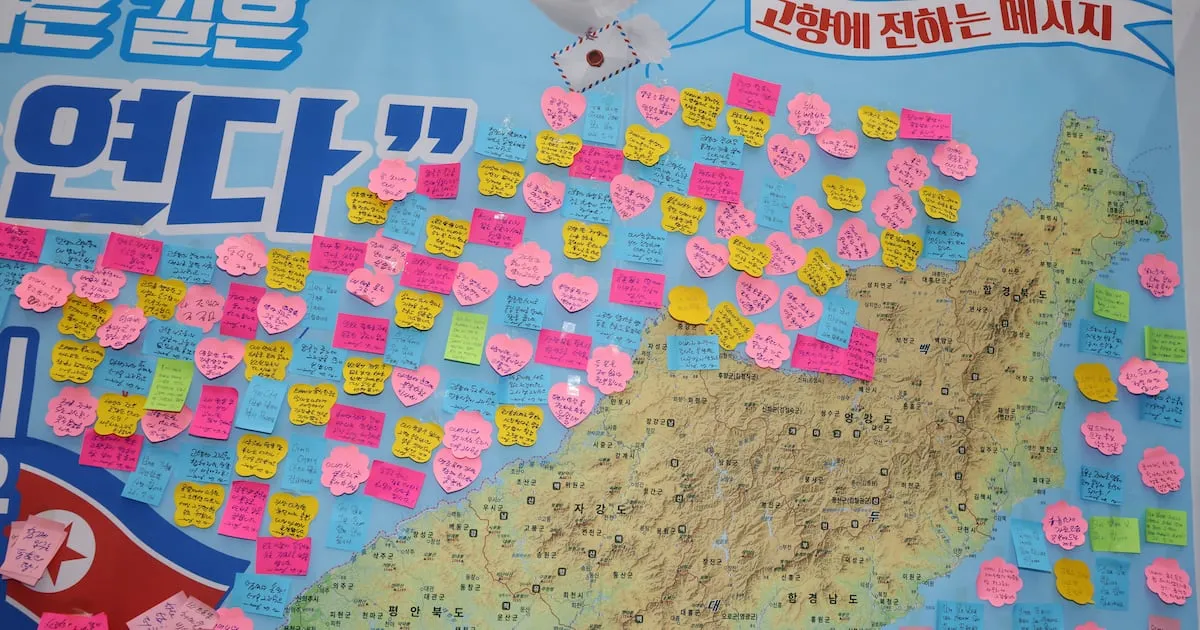
The South Korean Ministry of Unification has called for a humanitarian perspective in cases involving North Korean defectors who send money to family members remaining in North Korea, following a recent court ruling that imposed a fine on one defector. The ministry emphasized the need to balance legal requirements with the unique circumstances of inter-Korean division and the humanitarian goal of supporting separated families.
Court Ruling Sparks Debate on Defector Remittances
The controversy began when a defector, identified as Mr. A, was fined 10 million South Korean won (approximately $7,500 USD) by the Suwon District Court’s Seongnam Branch for violating foreign exchange laws. Mr. A had acted as an intermediary, receiving funds from other defectors and sending them to their relatives in North Korea.
In response to inquiries from journalists on March 16th, a spokesperson for the Ministry of Unification stated the government’s position on such rulings. The ministry indicated that while legal frameworks exist, they do not explicitly cover the specific situation of remittances to North Korea. This lack of clear legal guidelines, the spokesperson explained, has led to cases like Mr. A’s, where existing laws are applied, resulting in penalties.
Understanding the Defector’s Situation
Many North Korean defectors view these remittances as essential support for their families’ livelihoods back home. The ministry acknowledged that current laws do not adequately address these cross-border financial flows, which are driven by familial ties and the difficult economic conditions in North Korea. The court’s decision highlights a gap in legislation, prompting discussions about how to handle such sensitive cases that involve humanitarian concerns alongside legal statutes.
The ministry’s statement suggests that a rigid application of foreign exchange laws may not be appropriate given the complex realities of families separated by the Korean Peninsula’s division. The goal, according to the ministry, should be to find a balanced approach that respects both the law and the humanitarian imperative to support vulnerable family members.
Broader Issues: Missing Persons and Support for Families
Beyond the remittance issue, the Ministry of Unification is also reviewing a proposal from the association of families of those abducted to North Korea. The association has requested the official recognition of three additional individuals as abductees, who were taken to North Korea during or after the Korean War.
A ministry official confirmed that they received documentation from the representative of the Choi Seong-ryong Abductees Family Association, seeking the addition of these three individuals to the official list of abductees. The ministry is currently verifying the submitted materials and consulting with relevant government agencies.
The review process will determine whether to proceed with the formal recognition of these individuals. This decision will also influence discussions regarding potential compensation and support measures for victims of abduction and their families, to be deliberated by a relevant committee.
Statistics on Abductees and Missing Persons
As of the end of last year, the South Korean government has officially confirmed a total of 516 individuals who were abducted to North Korea. This figure includes 457 individuals who were taken during the Korean War (1950-1953) and an additional 59 individuals who were abducted after the armistice.
The ongoing efforts to identify and recognize more abductees underscore the enduring pain and unresolved issues stemming from the Korean War and the subsequent division of the peninsula. The ministry’s dual focus on the remittance issue and the status of abductees reflects a broader commitment to addressing the humanitarian consequences of the division and supporting those affected.
Conclusion: Towards a More Compassionate Policy
The Ministry of Unification’s stance on the remittance cases signifies a potential shift towards a more nuanced policy that acknowledges the humanitarian dimensions of interactions between North and South Koreans. By advocating for a balanced approach, the ministry aims to ensure that legal frameworks are applied with sensitivity to the unique context of inter-Korean relations and the deeply personal circumstances of defectors and their families.
The ongoing review of abductee cases further highlights the government’s commitment to addressing historical grievances and providing support to affected families. These developments suggest a continued effort to navigate the complex challenges of inter-Korean affairs with both legal rigor and profound human compassion.
