

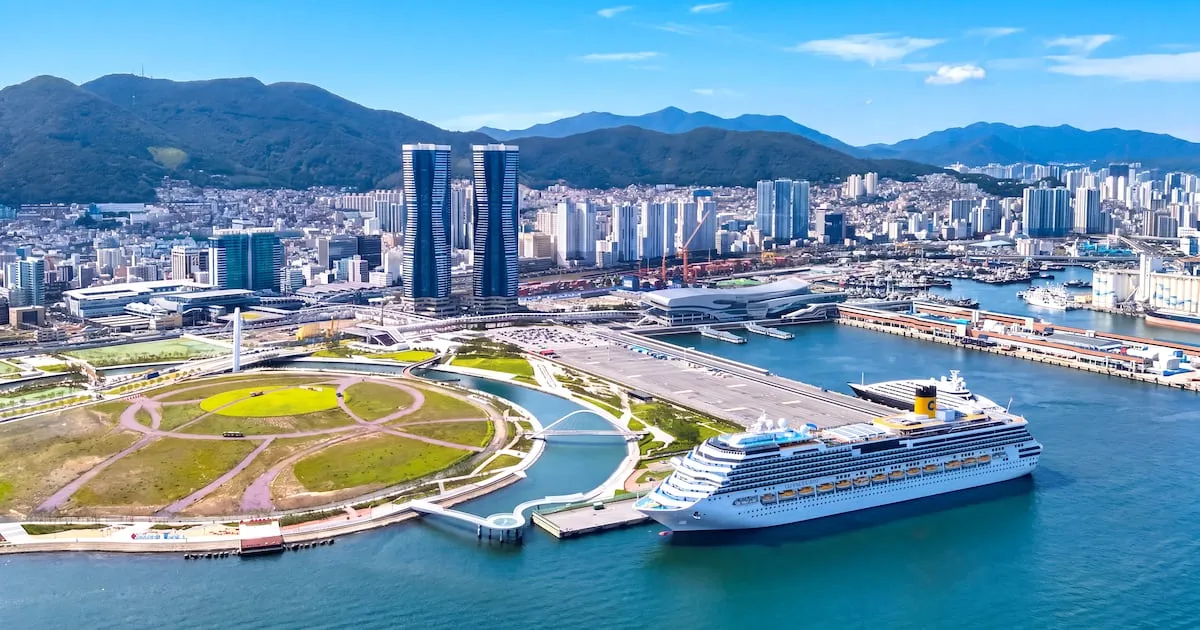
The Ministry of Oceans and Fisheries (MOF) has finalized its decision to construct its new headquarters in the Bukhang 1st Redevelopment Zone of Dong-gu, Busan. This strategic relocation aims to consolidate the ministry’s operations in the southern port city, leveraging the site’s advantages in terms of land acquisition potential, synergy with maritime-related organizations, and accessibility.
Busan Selected as New Ministry Headquarters Site
The selection of the Bukhang 1st Redevelopment Zone followed a comprehensive evaluation process that considered various factors crucial for a government agency’s operational efficiency and long-term growth. The ministry officially announced its choice on the 6th, confirming the Dong-gu location as the preferred site for its new administrative center.
The MOF had previously solicited proposals from local governments in the Busan region for potential headquarters sites. The submission period ran from the 29th to the 31st of the previous month. In response, four local government bodies – Gangseo-gu, Nam-gu, Dong-gu, and Jung-gu – submitted their proposals for consideration.
Evaluation Process and Site Selection Criteria
A dedicated site selection committee, comprising ten members from diverse backgrounds including urban planning, transportation, maritime organizations, academia, civic groups, and ministry staff, meticulously reviewed the submitted proposals. The committee convened on the 5th to hear detailed presentations from each candidate local government. Following these presentations and a thorough evaluation, the Bukhang 1st Redevelopment Zone in Dong-gu emerged as the top choice.
The committee’s assessment highlighted several key strengths of the Bukhang site. Notably, it was deemed to have a relatively high probability of successful land acquisition. Furthermore, its potential for co-location and synergy with existing maritime and fisheries-related institutions was a significant factor. The site also boasts excellent transportation accessibility, making it a convenient location for employees and visitors alike.
Future Plans and Construction Timeline
With the site selection now complete, the Ministry of Oceans and Fisheries is set to proceed with the subsequent phases of the project. The ministry plans to finalize the scale of the new headquarters facilities within the current year. Following this, the process will move into the design and bidding stages, paving the way for the commencement of construction.
The target completion date for the new ministry headquarters is set for 2030. This timeline reflects the significant undertaking involved in constructing a major government facility and ensures adequate time for meticulous planning, design, and execution.
Minister’s Vision for the New Headquarters
Minister of Oceans and Fisheries, Hwang Woo-ye, expressed his enthusiasm for the project, emphasizing its strategic importance. “The location for the core hub of the Southern Sea’s maritime power, which will lead the era of the Northern Sea Route, has been decided,” stated Minister Hwang. He further committed to accelerating the subsequent procedures to ensure the new headquarters can be established without delay.
The relocation of the Ministry of Oceans and Fisheries to Busan represents a significant development for the city and the broader maritime sector in South Korea. The new headquarters is expected to serve as a central node for maritime policy, research, and international cooperation, reinforcing Busan’s status as a leading maritime capital.
Strategic Importance of the Move
The decision to move the ministry’s headquarters to Busan is rooted in a broader national strategy to decentralize government functions and foster regional development. By establishing a significant presence in Busan, the ministry aims to enhance its responsiveness to the needs of the maritime industry, which is heavily concentrated in the southern coastal regions. This geographical shift is anticipated to improve collaboration with related industries, research institutions, and international maritime organizations based in or near Busan.
The concentration of maritime-related organizations in the Busan area is expected to create significant operational efficiencies. Proximity allows for easier communication, faster decision-making, and more integrated policy development. This clustering effect is a well-recognized strategy for boosting innovation and productivity within specific sectors.
Enhancing Accessibility and Connectivity
The chosen site in the Bukhang 1st Redevelopment Zone was specifically praised for its transportation links. Busan is a major transportation hub in South Korea, with extensive port facilities, an international airport, and a well-developed public transportation network. The new headquarters’ location within this infrastructure network is expected to facilitate easier access for ministry officials, staff, and stakeholders from across the country and internationally.
Improved accessibility is not just about convenience; it’s about fostering greater engagement and participation in the ministry’s activities. A well-connected headquarters can host more conferences, workshops, and public consultations, thereby strengthening the ministry’s ties with the public and industry partners.
Looking Ahead: Design, Construction, and Inauguration
The journey from site selection to the operationalization of the new headquarters is a complex one. Following the finalization of the facility’s scale this year, the ministry will engage in detailed architectural design. This phase will involve creating blueprints that meet modern standards for energy efficiency, sustainability, and technological integration.
The subsequent bidding process will select a construction firm capable of undertaking the project. The construction phase itself will require careful project management to adhere to the schedule and budget, while ensuring the highest quality standards. The ultimate goal is to deliver a state-of-the-art facility that will serve the nation’s maritime interests effectively for decades to come.
The inauguration of the new Ministry of Oceans and Fisheries headquarters in Busan in 2030 will mark a new chapter for the ministry and a significant milestone in the ongoing development of Busan as a global maritime hub. The move underscores a commitment to strengthening national maritime capabilities and promoting balanced regional growth.
