

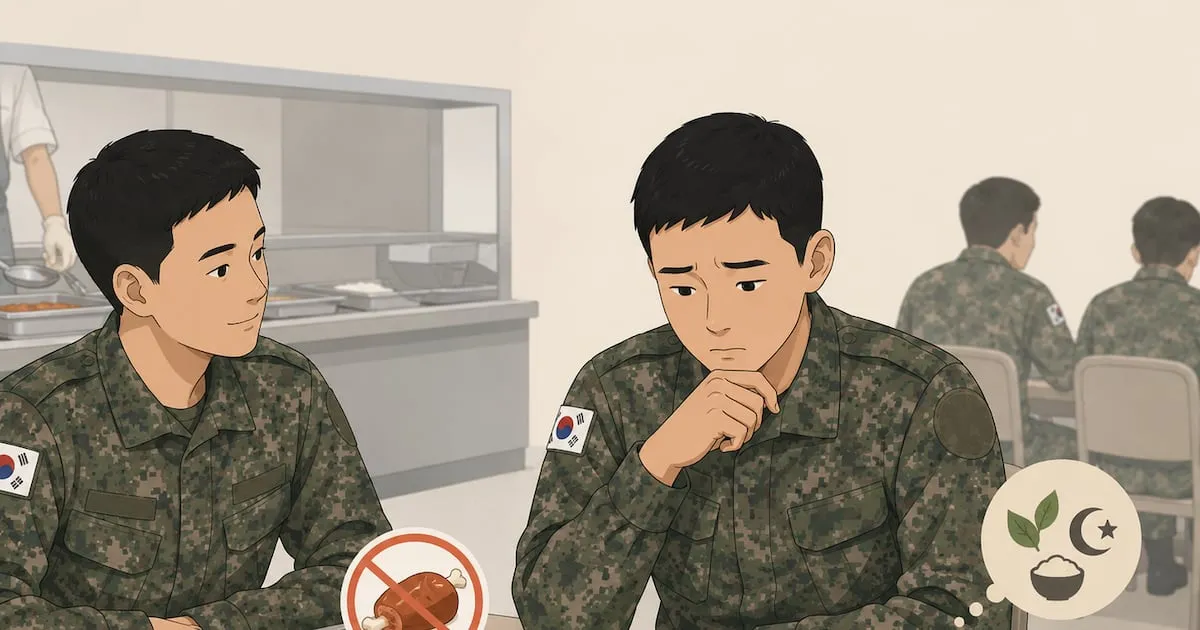
The National Human Rights Commission of Korea (NHRCK) has formally recommended that the Ministry of National Defense and military branches implement comprehensive measures to safeguard the health and well-being of soldiers with special dietary requirements. These soldiers, often referred to as “meal minorities,” face challenges with standard military rations due to dietary restrictions such as vegetarianism, food allergies, or religious beliefs.
The commission’s recommendations, announced on March 22nd, stem from a thorough review of data provided by the Ministry of National Defense, the Joint Chiefs of Staff, and individual military branches between January 2024 and February 2024. The NHRCK’s findings highlight the critical need for systemic improvements in how the military caters to soldiers with unique dietary needs.
Key Recommendations for Enhanced Soldier Welfare
The NHRCK has put forth several specific directives aimed at ensuring that all soldiers, regardless of their dietary restrictions, receive adequate and safe meal provisions. These include:
- Explicit Policy Inclusion: The Ministry of National Defense’s meal policies and each military branch’s specific guidelines must clearly and unequivocally state the military’s fundamental responsibility to protect the dietary rights of soldiers. This ensures that catering to meal minorities is not an afterthought but a core operational duty.
- Diverse Alternative Meal Options: The military should establish clear standards and operational procedures for a variety of alternative meal solutions. This includes, but is not limited to, alternative side dishes, beverages, and the provision of select-menu or customized meals to accommodate specific needs. The goal is to move beyond a one-size-fits-all approach to meal provision.
- Information Integration for Support: Standards for information sharing must be developed to allow for the utilization of dietary information collected during medical examinations, such as pre-enlistment and in-service physicals. This data should be leveraged to proactively provide appropriate meal support during a soldier’s service.
The Importance of Adequate Nutrition in Military Service
The NHRCK emphasized that military meals extend beyond mere welfare or convenience; they are a fundamental prerequisite for maintaining soldiers’ health and ensuring the effective execution of their duties. For soldiers stationed in remote or isolated areas where selecting meals freely or arranging for external food delivery is difficult, the military’s meal service plays an even more crucial role.
The commission specifically addressed the heightened risks faced by soldiers with food allergies. “For soldiers with food allergies, even the consumption of specific ingredients or cross-contamination can lead to serious health risks,” the NHRCK stated. Furthermore, the rights of vegetarian soldiers and those requiring meals aligned with religious practices are implicated, potentially infringing upon their freedom of conscience and religion.
A Call for Systemic Change
The NHRCK clarified that supporting soldiers with dietary needs should not be treated as an exceptional request from individual soldiers or a matter of discretionary allocation of resources by specific units. Instead, it should be recognized as a fundamental right that the military is obligated to manage systematically.
“Through these recommendations, we anticipate the establishment of a systemic foundation that allows soldiers who are meal minorities to confidently and clearly communicate their dietary needs without fear of disadvantage or neglect,” the commission expressed. “We hope for a future where these soldiers can reliably receive the necessary meal support.”
This initiative underscores a growing recognition of the diverse needs within military populations and the importance of adapting support systems to ensure the health, morale, and operational readiness of all service members. By addressing these specific dietary concerns, the military can better uphold its commitment to the comprehensive welfare of its personnel.
