

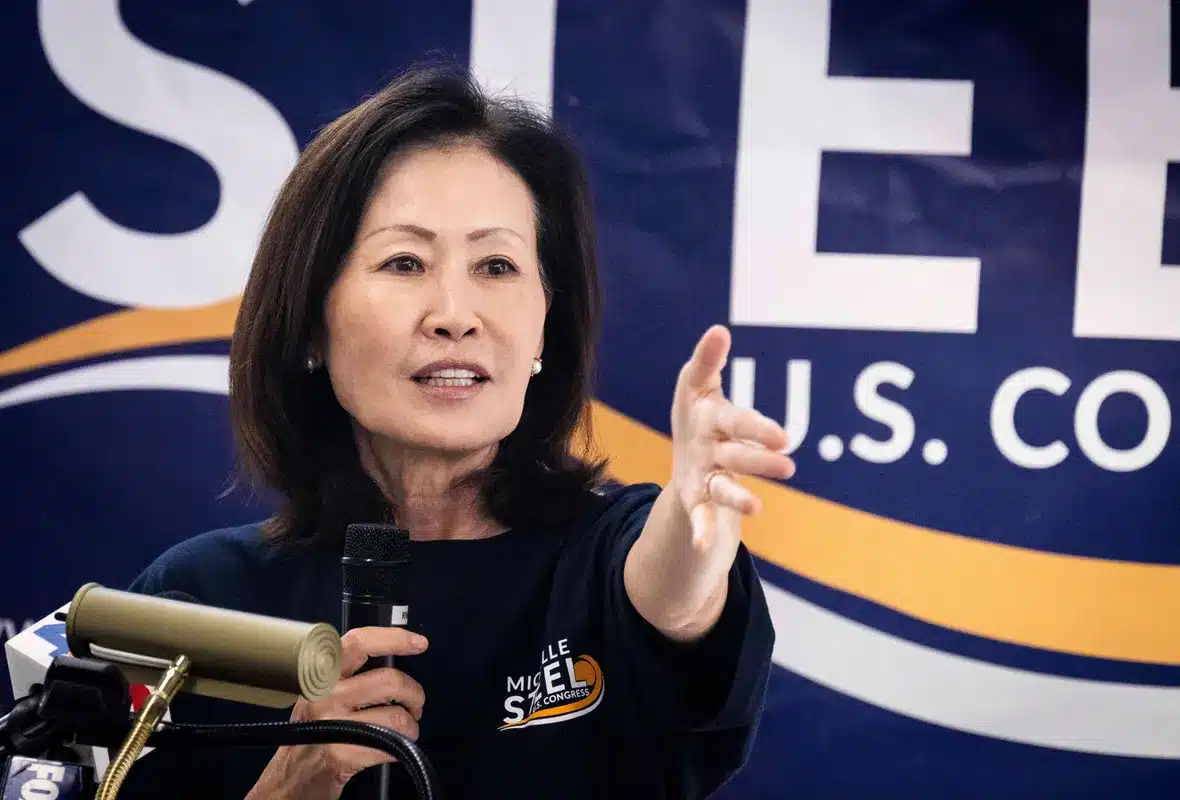
Seoul, South Korea – Michelle Donahoe Steel, the first woman of Korean heritage to serve as the U.S. Ambassador to South Korea, is set to arrive in Seoul on July 30th. Her appointment marks the end of a roughly 18-month vacancy in the ambassadorial post, following the departure of her predecessor, Philip Goldberg. During the interim, the U.S. Embassy in Seoul operated under a charge d’affaires system, with Joseph Yun, Kevin Kim, and James Heller filling the role.
A Historic Appointment Faces Criticism
Ambassador Steel, born in Seoul in 1955 to refugee parents, is the second Korean-American to hold the position. However, unlike the warm reception that greeted Sung Kim, the first Korean-American ambassador, Steel’s nomination has not received the endorsement of the ruling party in South Korea. Progressive factions within the South Korean political landscape have voiced strong opposition, citing Steel’s past policy stances on North Korea and China. Critics argue that her approach has historically aligned with conservative elements in South Korea and has been perceived as confrontational.
In response to potential protests, including at Incheon International Airport upon her arrival, the U.S. Embassy has reportedly bolstered its security detail and requested enhanced police protection from South Korean authorities. The embassy itself appears to be exercising caution regarding public statements about Steel’s arrival.
Roots of the Opposition
The opposition from South Korea’s progressive parties began shortly after Steel’s nomination was announced in April. Various civic groups have organized demonstrations outside the U.S. Embassy in Seoul, issuing joint statements demanding the withdrawal of her appointment. These groups have characterized Steel as an appointee who would champion the Trump administration’s “hostage policy” and turn the Korean Peninsula into a battlefield. Reports indicate that over 400 organizations have participated in these protests.
During a rally in May concerning the ‘National Security Law’, a speaker asserted that Michelle Steel should be designated as an ambassador to North Korea rather than South Korea, accusing her of aiming to attack the current South Korean government and lead extreme right-wing forces domestically. This sentiment highlights a core concern among her critics: that her policies would be detrimental to inter-Korean relations and potentially destabilize the region.
Political Figures Voice Concerns
Song Young-gil, a prominent member of the Democratic Party and a potential candidate for future Foreign Minister, has been a leading voice in the negative sentiment surrounding Steel’s appointment. In June, Song commented on the nomination of Steve Biren, former Deputy Secretary of State for East Asian and Pacific Affairs, to the U.S. Senate Committee on Foreign Relations. Song expressed regret, stating, “It is a great pity that someone like him is not coming as the U.S. Ambassador to Korea.” He further suggested that in the future, “we need to develop the influence to recommend individuals whom both countries can trust before they are appointed as ambassadors.”
This critical stance is not limited to the Democratic Party but also extends to the Justice Party, which is considered a potential coalition partner. Kim Joon-hyung, floor leader of the Justice Party, previously referred to Steel as one of the “five anti-Korean figures” during a confirmation hearing for former Foreign Minister Cho Hyun last year. In a media interview, he also expressed concerns about her alleged ties to extreme right-wing elements in South Korea, employing a cautious approach.
U.S. Perspective and Concerns
The White House and the State Department are reportedly aware of these sentiments from the South Korean ruling party and have conveyed their concerns to the South Korean government. They view the opposition to a Trump-appointed ambassador, particularly one with a distinguished career, as potentially detrimental to U.S.-South Korea relations. The U.S. maintains that its fundamental position is that North Korea and the Chinese Communist Party should not threaten neighboring countries, and that human rights in North Korea should be prioritized. They perceive the progressive South Korean factions’ labeling of Steel as “extreme” or “hardline” as a mischaracterization.
Steel’s public record includes a letter sent in May 2022, during the early days of the Yoon Suk-yeol administration, along with Representative Young Kim. In this letter addressed to the Secretaries of Defense and State, Steel highlighted concerns about North Korean leader Kim Jong Un’s focus on enhancing missile capabilities, including intercontinental ballistic missiles (ICBMs) and tactical nuclear weapons, rather than adhering to previous declarations. She emphasized the critical importance of cooperation with the South Korean government to strengthen U.S. deterrence in East Asia and prevent further escalation by North Korea.
The letter also urged the Chinese government to cease the forced repatriation of North Korean defectors, noting the active pursuit and apprehension of defectors by North Korean and Chinese authorities. This stance reflects a consistent focus on human rights and regional security issues that have characterized Steel’s career.
Ambassador Steel’s Background and Experience
Michelle Steel, a former member of the California State Assembly, was elected to the U.S. House of Representatives in 2020 and re-elected in 2022. Throughout her tenure in Congress, she has been a vocal advocate for North Korean human rights, China’s economic policies, and the strengthening of the U.S.-ROK alliance. Her husband, Shawn Steel, is a prominent Republican figure and former chair of the California Republican Party, who played a crucial role in organizing and fundraising for Donald Trump’s presidential campaigns. Steel’s frequent presence at key White House events during Trump’s presidency is believed to have influenced her appointment as ambassador.
Donald Trump has described Steel as a “patriot” and “an immigrant who courageously escaped communism.” She is also recognized as a politician who could immediately contact the White House via phone during Trump’s presidency. A former senior State Department official, speaking on condition of anonymity, noted the current complexities in U.S.-South Korea relations, including issues such as the U.S. Forces Korea (USFK) cost-sharing, the transfer of wartime operational control, renegotiating the nuclear materials agreement, and ongoing trade and tariff negotiations.
The official added, “Ambassador Steel should make efforts to resolve misunderstandings about herself, and the ruling party should also exercise restraint regarding excessive praise or criticism.” This sentiment underscores the need for a constructive approach from both sides as the new ambassador assumes her duties.
Looking Ahead
The diplomatic community is reportedly concerned about the potential for friction, drawing parallels to past tensions during the tenure of former U.S. Ambassador to Korea, Harry Harris. During Harris’s time, progressive groups criticized his pro-Japan policies, with some even drawing comparisons between his demeanor and that of Ito Hirobumi, the first Governor-General of Korea under Japanese colonial rule. Harris’s emotional responses to certain situations reportedly strained relations between the two countries.
As Ambassador Steel begins her term, the hope is that she can effectively navigate these challenges, address misunderstandings, and further strengthen the vital alliance between the United States and South Korea during this critical period.
