

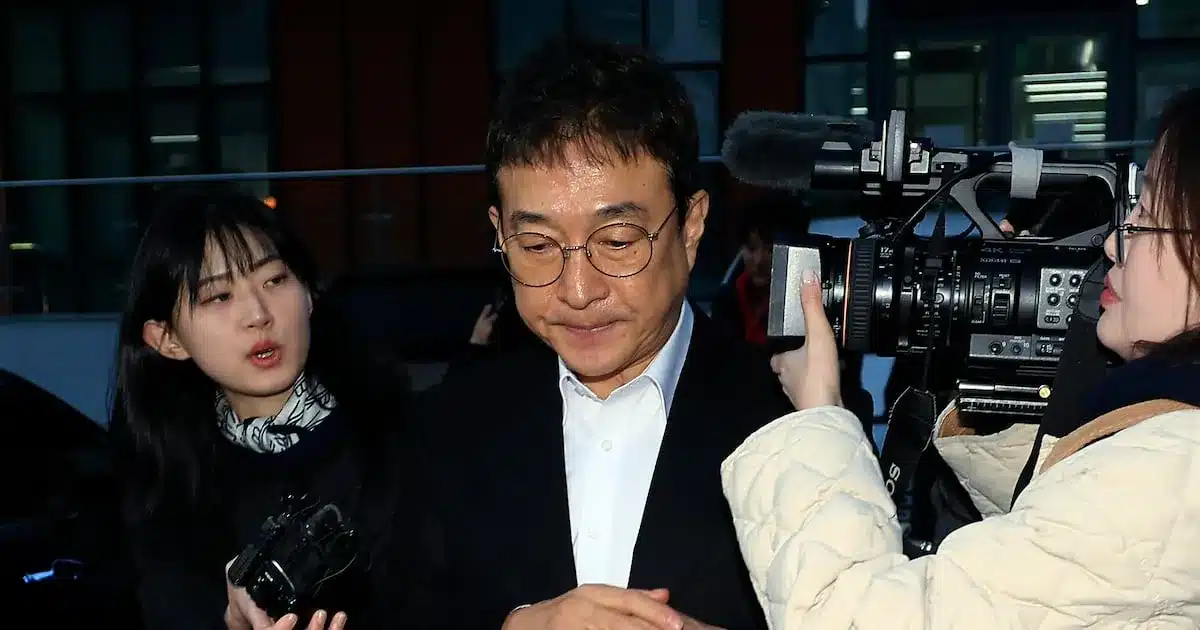
Actor Lee Jae-yong is reportedly under investigation for allegedly consuming alcohol after a car accident in Seoul’s Gangnam district, a move authorities suspect was an attempt to obscure his blood alcohol level at the time of the collision. The incident, which occurred on March 6th, involved Lee driving a vehicle while under the influence and subsequently crashing into a central reservation barrier.
Drunk Driving Allegations Surface After Accident
According to reports, the accident took place around 11:03 PM near Cheongdam Station in Gangnam-gu, Seoul. Lee was reportedly driving his vehicle when he collided with the central reservation barrier, causing significant damage estimated at approximately 3 million won. Following the crash, Lee allegedly left the scene without taking immediate action regarding the damage.
Approximately 20 minutes after the accident, around 11:23 PM, Lee is said to have visited a restaurant in Sinsa-dong, also in Gangnam-gu. It is here that he allegedly consumed additional alcohol, reportedly several bottles of soju, for about 50 minutes. He was later apprehended at a friend’s home around 2:00 AM.
Initial Denial and Changed Testimony
Upon initial questioning by authorities, Lee reportedly denied being under the influence of alcohol at the time of the accident. However, his account later shifted during the police investigation. He is said to have admitted to drinking about four glasses of soju before driving and initially believed he had only lightly bumped the central reservation barrier.
Investigators are examining Lee’s actions, including drinking before the accident and then consuming more alcohol shortly afterward, as a potential strategy to complicate the measurement of his blood alcohol concentration (BAC) at the time of the initial crash. This tactic is sometimes referred to as “alcohol evasion” or “sool taki” in Korean.
Challenges in Proving BAC at Time of Crash
Despite the suspicions surrounding Lee’s post-accident drinking, investigators have stated that definitively determining his blood alcohol level at the precise moment of the collision is proving difficult. The subsequent consumption of alcohol makes it challenging to accurately extrapolate his BAC from the time of the crash. Consequently, the charge of driving under the influence (DUI) is currently difficult to substantiate based on concrete BAC evidence from the accident itself.
History of DUI Offenses
This is not the first time Lee Jae-yong has faced scrutiny for alleged drunk driving. He has a prior record involving alcohol-related traffic violations. In 2003, Lee was involved in a drunk driving accident. At that time, he refused a breathalyzer test administered by the police, which resulted in the suspension of his driver’s license.
The current investigation is ongoing, with authorities continuing to gather evidence and statements to ascertain the full circumstances surrounding the March 6th incident. The legal ramifications for Lee Jae-yong will depend on the findings of the police investigation and the prosecution’s subsequent decisions.
The incident highlights the persistent challenges law enforcement faces in prosecuting DUI cases, particularly when drivers attempt to alter evidence after an accident. The legal system often relies on precise BAC measurements, and actions taken by a suspect to obscure these levels can create significant hurdles in achieving a conviction.
Legal experts emphasize the importance of immediate reporting and cooperation with authorities following any traffic incident. While the investigation into Lee’s case progresses, it serves as a reminder of the serious consequences associated with impaired driving and the legal measures in place to address it.
Further details are expected to emerge as the investigation concludes and any potential charges are formally filed. The public and media will be monitoring the developments in this case closely, given the actor’s public profile.
