

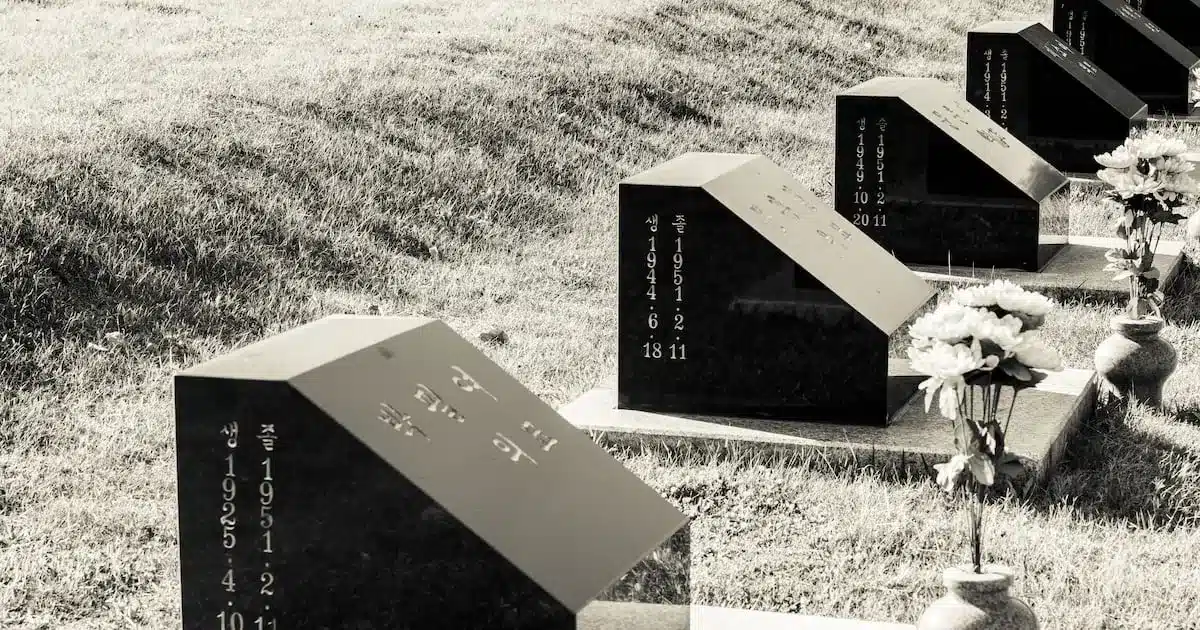
Seventy-five years after the Korean War, families of victims from the Geochang, Sancheong, and Hamyang civilian massacres are still seeking state accountability, compensation, and redress. Despite ongoing public attention to historical events and a government commitment to addressing state violence, the specific plight of those affected by these wartime atrocities remains largely unaddressed.
The Geochang, Sancheong, and Hamyang Civilian Massacres
The Geochang, Sancheong, and Hamyang civilian massacres occurred in February 1951 during the Korean War. The 11th Division of the South Korean Army, while engaged in operations against North Korean forces and the ‘ 빨치산’ (partisans) in the Jirisan area, is reported to have killed 719 civilians in the Geochang region and an additional 705 in the Sancheong and Hamyang regions. These killings were allegedly carried out during the army’s pursuit of communist forces.
In 1996, the ‘Special Act on the Restoration of Honor for those involved in the Geochang Incident and others’ was enacted. This legislation allowed for the recognition of victims’ families and the establishment of memorial monuments. However, the law did not include provisions for compensation or reparations, leaving surviving family members without the financial and material support they have long requested.
Decades of Unfulfilled Promises
In 2004, a revised bill that included provisions for compensation payments passed the National Assembly unanimously. However, then-President Roh Moo-hyun exercised his veto power, citing ‘fiscal burden’ as the reason. Since then, numerous related bills have been introduced in subsequent National Assembly sessions, but they have repeatedly failed to pass or have been discarded at the end of legislative terms.
Between the 16th and 22nd National Assemblies, a total of 16 bills related to compensation and reparations for these massacres were introduced. In the current 22nd National Assembly, two separate bills are under consideration: one proposed by Min Hong-chul of the Democratic Party of Korea and another by Shin Sung-bum of the People Power Party.
Min Hong-chul has highlighted the lack of bipartisan interest in the issue, urging greater national attention to the Geochang, Sancheong, and Hamyang civilian massacres. He stated, “The level of interest from both parties is not high.”
The ‘Fiscal Burden’ Argument
The primary reason cited by the government for resisting compensation and reparations is the financial implications. Documents submitted by the Ministry of the Interior and Safety to Shin Sung-bum’s office in January indicated that “substantial national funds are expected to be required if compensation and reparation payments are made, necessitating social consensus and agreement with the Ministry of Economy and Finance.”
During a parliamentary inquiry in February, Interior and Safety Minister Yoon Hee-jung informed Shin Sung-bum’s side that “approximately 100 billion won (roughly $75 million USD) is expected to be needed for compensation, requiring close consultation with the Ministry of Economy and Finance.”
A representative from Shin Sung-bum’s office countered this by pointing to the Jeju 4.3 incident, where compensation payments have reached nearly 1 trillion won (approximately $750 million USD). “We believe this is a matter of the government’s will to properly compensate for historical wrongs,” the representative stated.
Hope Pinned on the Current Administration
Victims’ families are placing their final hopes on the current administration led by President Lee Jae-myung. This optimism stems from President Lee’s remarks in March regarding the Jeju 4.3 incident, where he pledged to “completely abolish the statute of limitations for state violence offenses.”
Furthermore, at a meeting of the Truth and Reconciliation Commission for Past Affairs held at the Blue House on July 7th, President Lee stated, “I offer words of comfort and apologies to all victims of state violence that have occurred in this land since liberation.” He added, “There is no statute of limitations on state responsibility.”
Families of the massacre victims are urging President Lee to extend the same level of attention and commitment to the Geochang, Sancheong, and Hamyang civilian massacres as he has shown towards other instances of state violence. They expressed, “We hope that the President, who has the will to address state violence with national responsibility and compensation, will also give due attention to the ‘Geochang, Sancheong, and Hamyang civilian massacre incidents’.”
Voices of the Survivors
Lee Seong-yeol, 72, the head of the Geochang Incident Victims’ Association, expressed his frustration, asking, “I don’t understand why only we are not being helped.” He emphasized, “It’s not about the amount of money. It is simply about the state offering a proper apology and taking responsibility.”
Song Jin-hyun, 84, who lost his father in the massacre in Sancheong in February 1951 when he was just nine years old, stated, “There isn’t much time left to wait.” He added, “My last wish is for the special bill currently being deliberated to pass quickly.”
Broader Calls for Redress
The families awaiting resolution for compensation and reparations are not limited to the Geochang, Sancheong, and Hamyang incidents. Survivors of the No Geun Ri massacre, another civilian killing incident during the Korean War in the Chungbuk region in 1950, are also seeking a legal basis for compensation and reparations.
A partial amendment bill to the ‘Special Act on the Deliberation and Restoration of Honor for Victims and Survivors of the No Geun Ri Incident’ that includes provisions for victim compensation is also currently pending in the National Assembly.
Survivors hoping for the passage of these bills expressed their earnest desire: “We hope that the compensation issue can be resolved within this government, before the remaining 20 or so survivors grow any older.”
Conclusion
The lingering pain and unresolved grievances of the Korean War civilian massacre victims’ families underscore a critical need for the government to fulfill its commitment to addressing historical injustices. While progress has been made in acknowledging past wrongs, the path to comprehensive compensation and reparations remains arduous. The families’ persistent calls for justice, particularly in light of recent government statements on state violence, highlight the urgency of resolving these long-standing issues to provide closure and honor the memory of the victims.
