

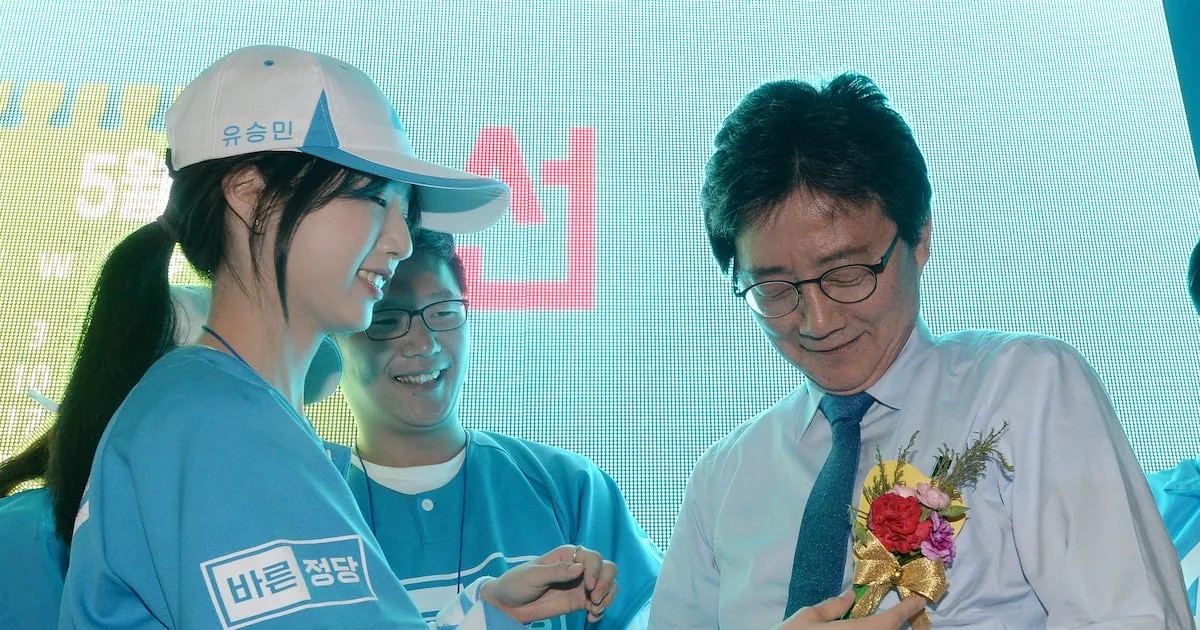
Korea University has concluded its investigation into allegations of research misconduct concerning a thesis submitted by Yoo Dam-bi, daughter of former lawmaker Yoo Seong-min. The university announced on October 4th that it determined Ms. Yoo’s thesis does not constitute research misconduct, and therefore, no further disciplinary actions or procedures will be pursued.
Investigation into Thesis Allegations
The inquiry was initiated following reports in the Kookmin Ilbo newspaper, which raised questions about Ms. Yoo’s academic work. Specifically, allegations centered on self-plagiarism and the alleged “copying” of thesis content. These concerns were reportedly linked to a thesis she submitted while a professor at Incheon University.
Korea University commenced its investigation approximately seven months ago, dedicating significant resources to thoroughly examine the claims. The university’s research integrity committee reviewed Ms. Yoo’s academic portfolio, which included seven journal articles and her master’s and doctoral theses. The committee’s objective was to ascertain whether the similarities identified in research materials and analytical frameworks constituted academic impropriety.
University’s Findings and Rationale
After a comprehensive review, the research integrity committee concluded that the similarities observed in Ms. Yoo’s work fall within the scope of acceptable academic practice. The committee’s findings indicate that the identified overlaps do not meet the threshold for research misconduct as defined by academic standards.
The university’s decision implies that while certain sections or analytical approaches might appear similar across different works, this is considered a normal aspect of academic research progression. This perspective suggests that researchers may build upon or revisit similar themes and methodologies in their scholarly pursuits, provided it adheres to established academic norms.
Background of the Allegations
The controversy surrounding Ms. Yoo’s thesis gained public attention through media reports. The core of the allegations involved the reuse of material in a manner that critics suggested amounted to improper self-citation or a lack of original contribution in subsequent works. Such accusations, when substantiated, can have serious repercussions for an academic’s career and reputation.
Ms. Yoo, who has a background in economics and has held academic positions, faced scrutiny over her published research. The process undertaken by Korea University aimed to provide an objective assessment of these claims, ensuring that academic standards were upheld while also giving due process to the individual involved.
Academic Integrity and Research Standards
The concept of research misconduct encompasses a range of unethical practices, including fabrication, falsification, and plagiarism. Plagiarism, in particular, involves presenting someone else’s work or ideas as one’s own, whether intentionally or unintentionally. Self-plagiarism, also known as duplicate publication or redundant publication, refers to the reuse of one’s own previously published work without proper attribution or justification.
Universities and academic institutions worldwide have established strict guidelines and committees to investigate such allegations. The process typically involves a detailed examination of the research in question, comparison with existing literature, and interviews with the involved parties. The goal is to maintain the integrity of academic research and ensure that scholarly work is original, accurate, and ethically sound.
In this case, Korea University’s research integrity committee applied these principles. Their evaluation focused on whether Ms. Yoo’s thesis demonstrated a pattern of misconduct or if the observed similarities were consistent with standard academic practices. The committee’s determination that the work did not constitute misconduct suggests that the similarities were deemed acceptable within the context of scholarly development.
Conclusion of the Review
With Korea University’s decision to close the case without further action, the allegations against Yoo Dam-bi regarding research misconduct have been officially resolved by the institution. The university’s thorough, albeit lengthy, investigation process aimed to address the concerns raised by the media reports. The outcome signifies that, according to the university’s assessment, Ms. Yoo’s academic work met the required standards for originality and proper research methodology, and no disciplinary measures are warranted.
